Fuenllana
Interesting facts
Population
204
Altitude
912 m
Demonym
Fuenllaneros and Fuenllaneras
Extension
60 km2
Welcome to
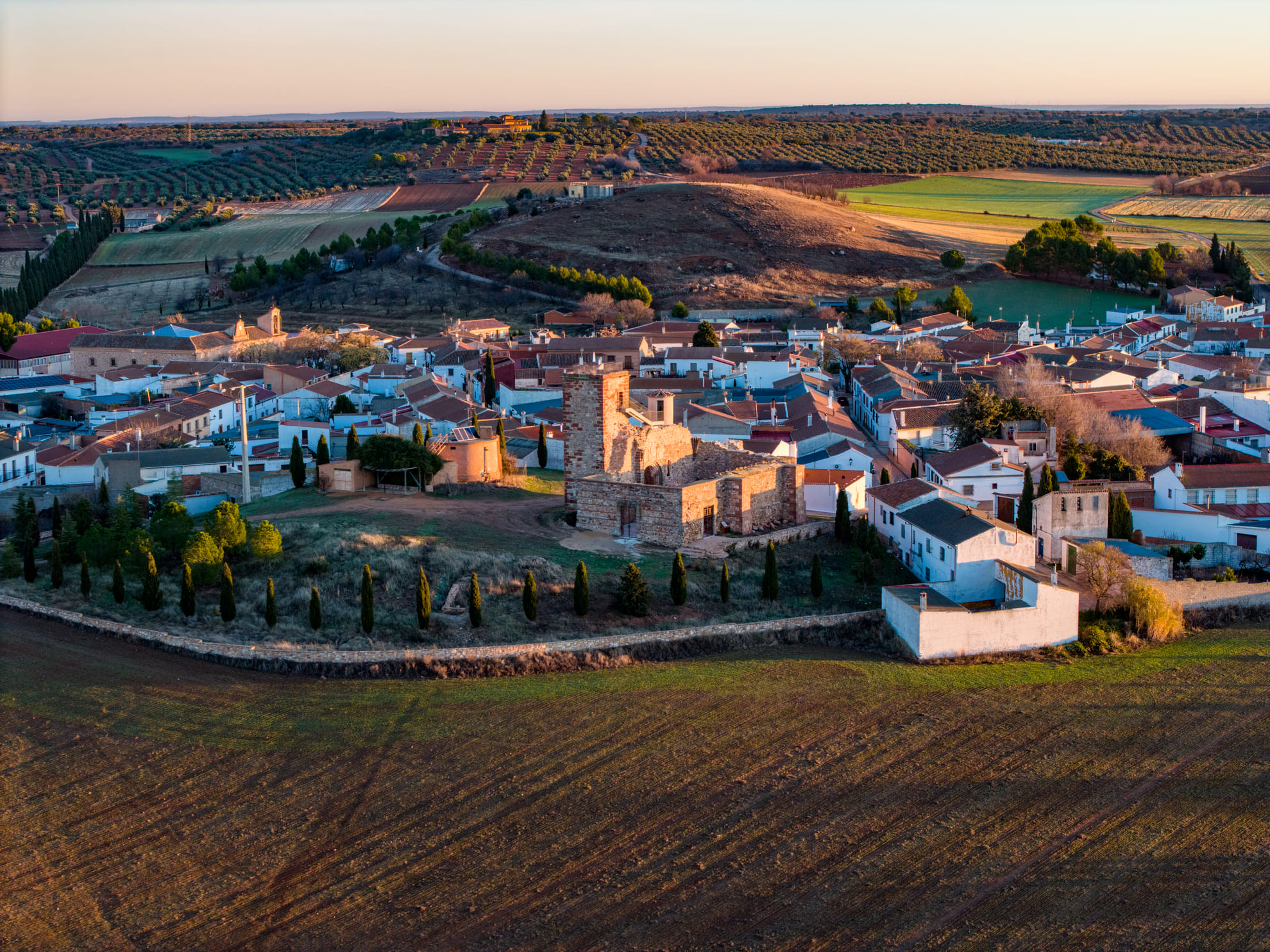
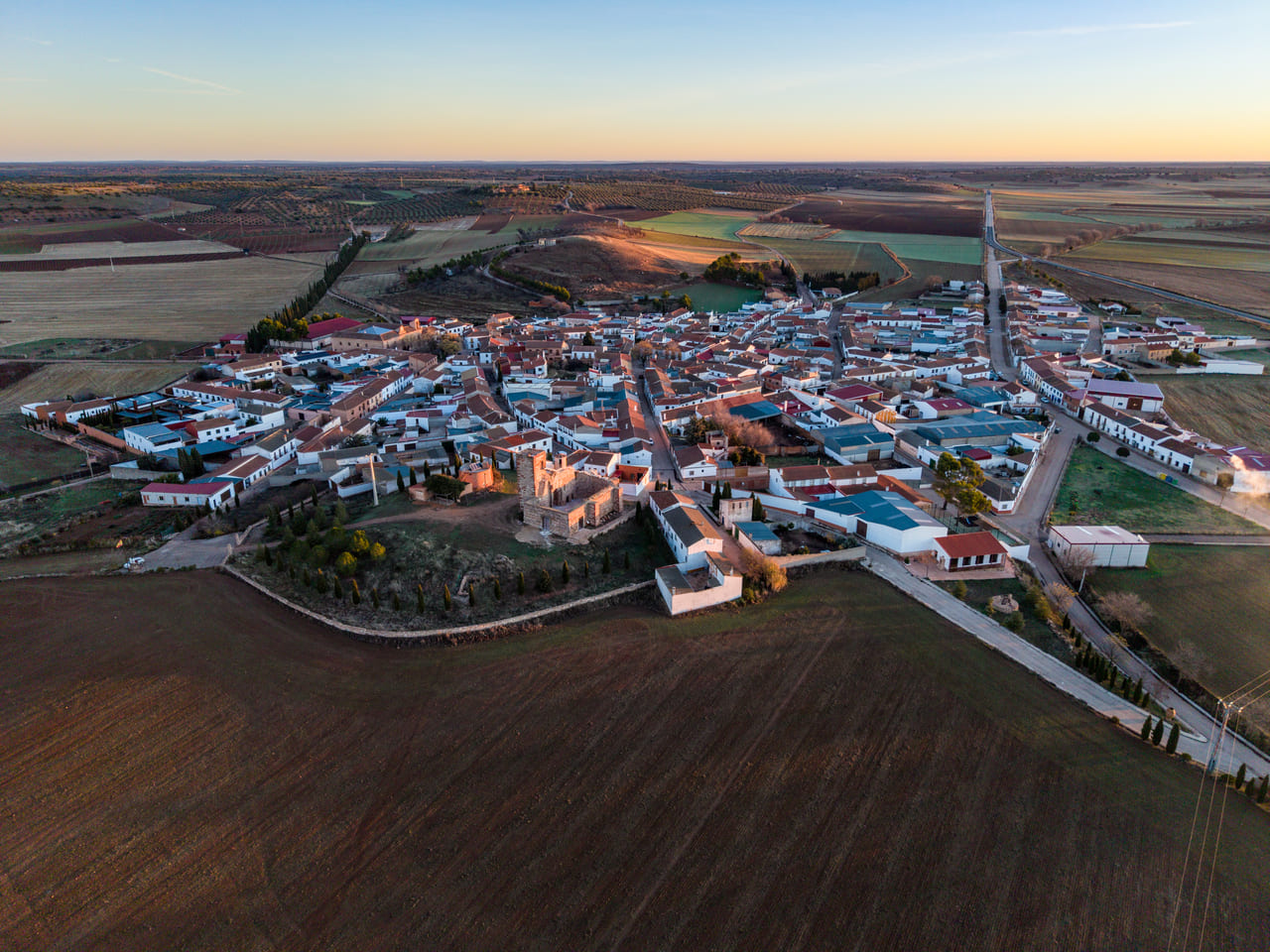
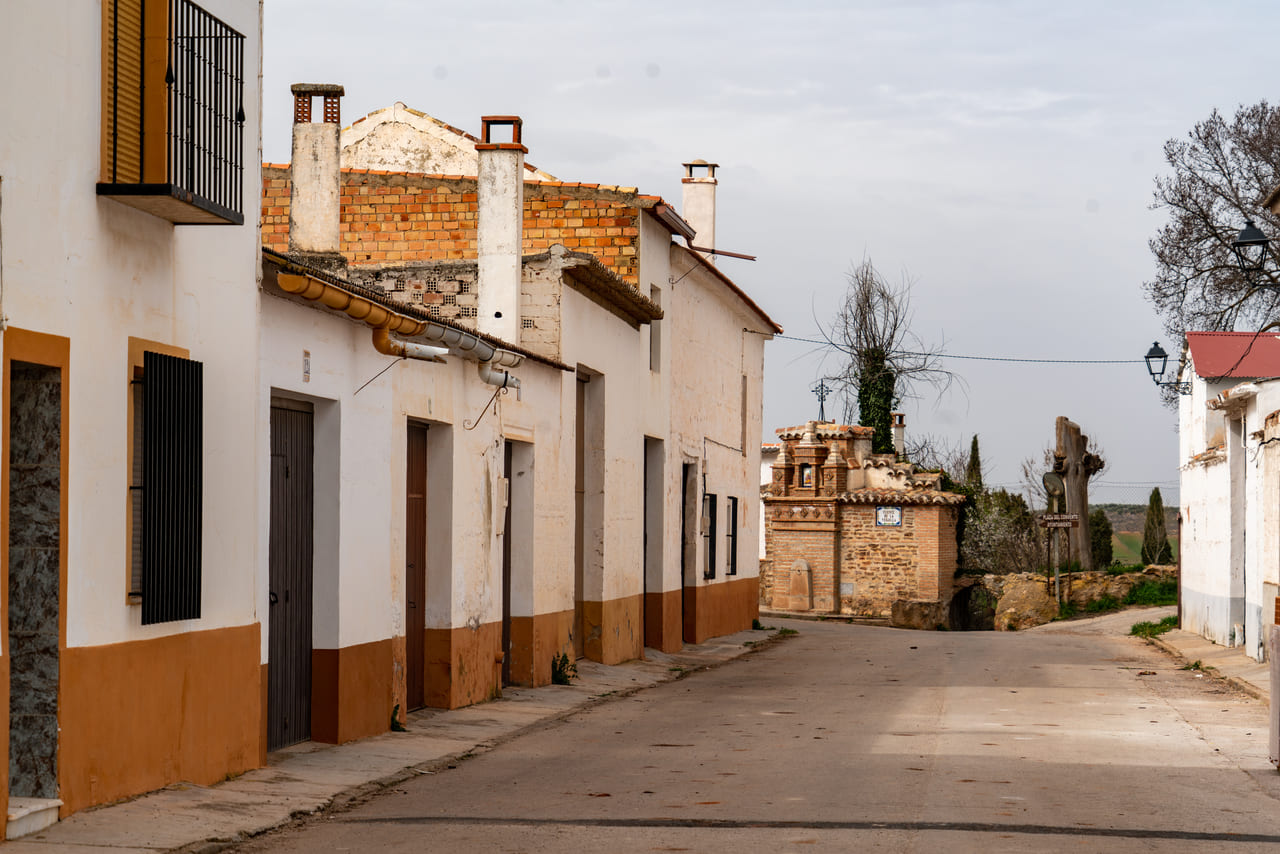
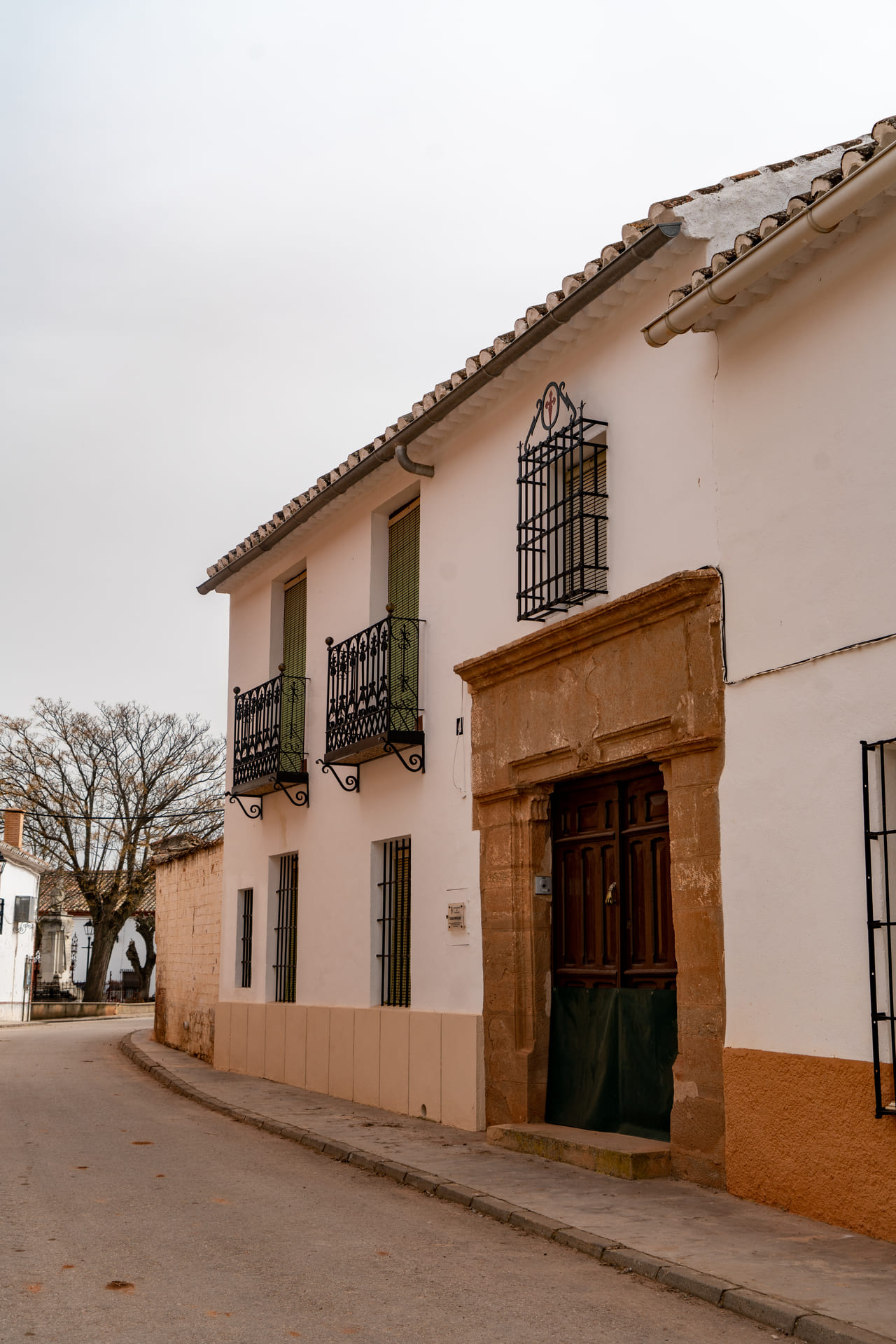
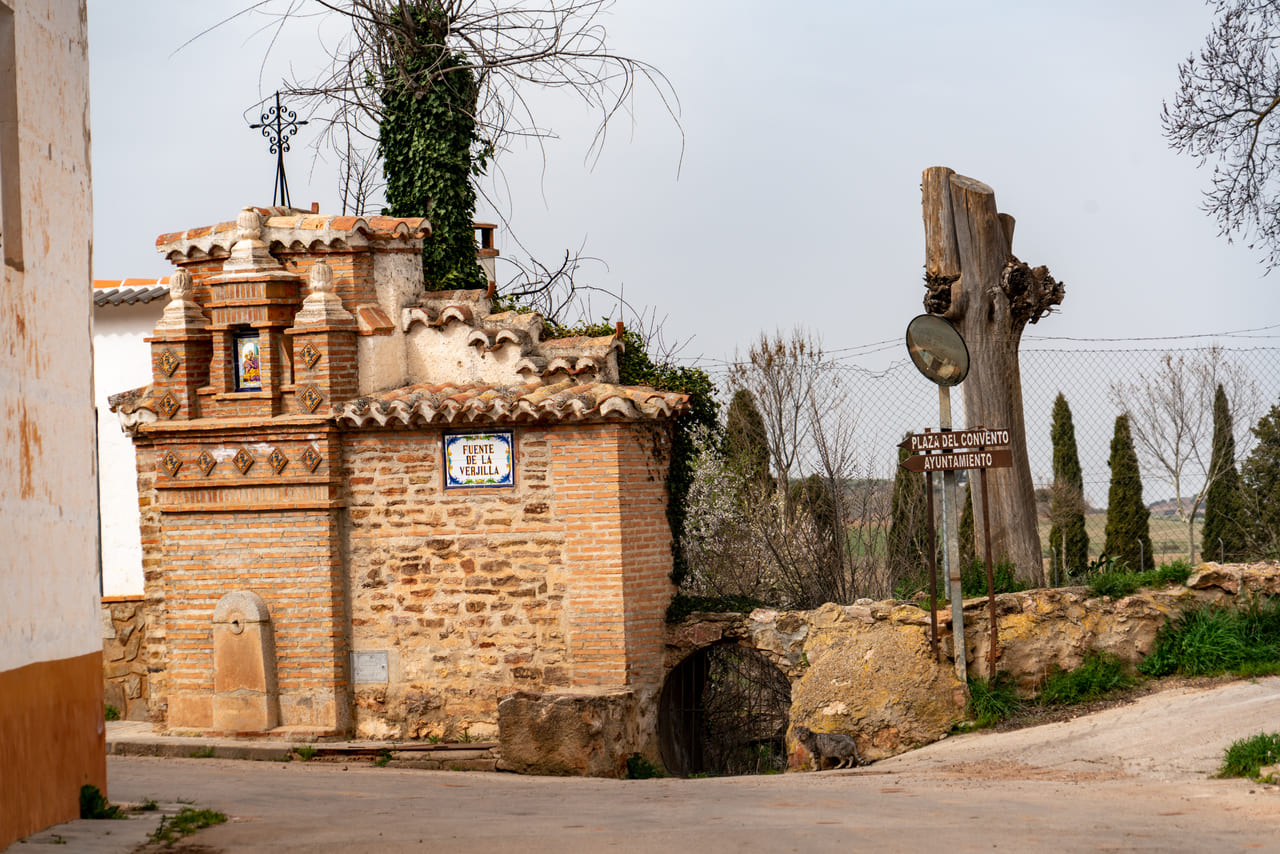
Fuenllana is one of the oldest towns in the region and one of the best-preserved examples of traditional architecture in the Campo de Montiel. The town center adapts to the contours of the small hills and is laid out at the foot of the old castle, later transformed into a church and cemetery. This has resulted in a network of sloping streets, secluded corners, and a distinctly historical character. A stroll through Fuenllana reveals whitewashed facades, gabled roofs, wrought-iron grilles, balconies, and small squares that maintain the scale and atmosphere of a cohesive heritage ensemble.
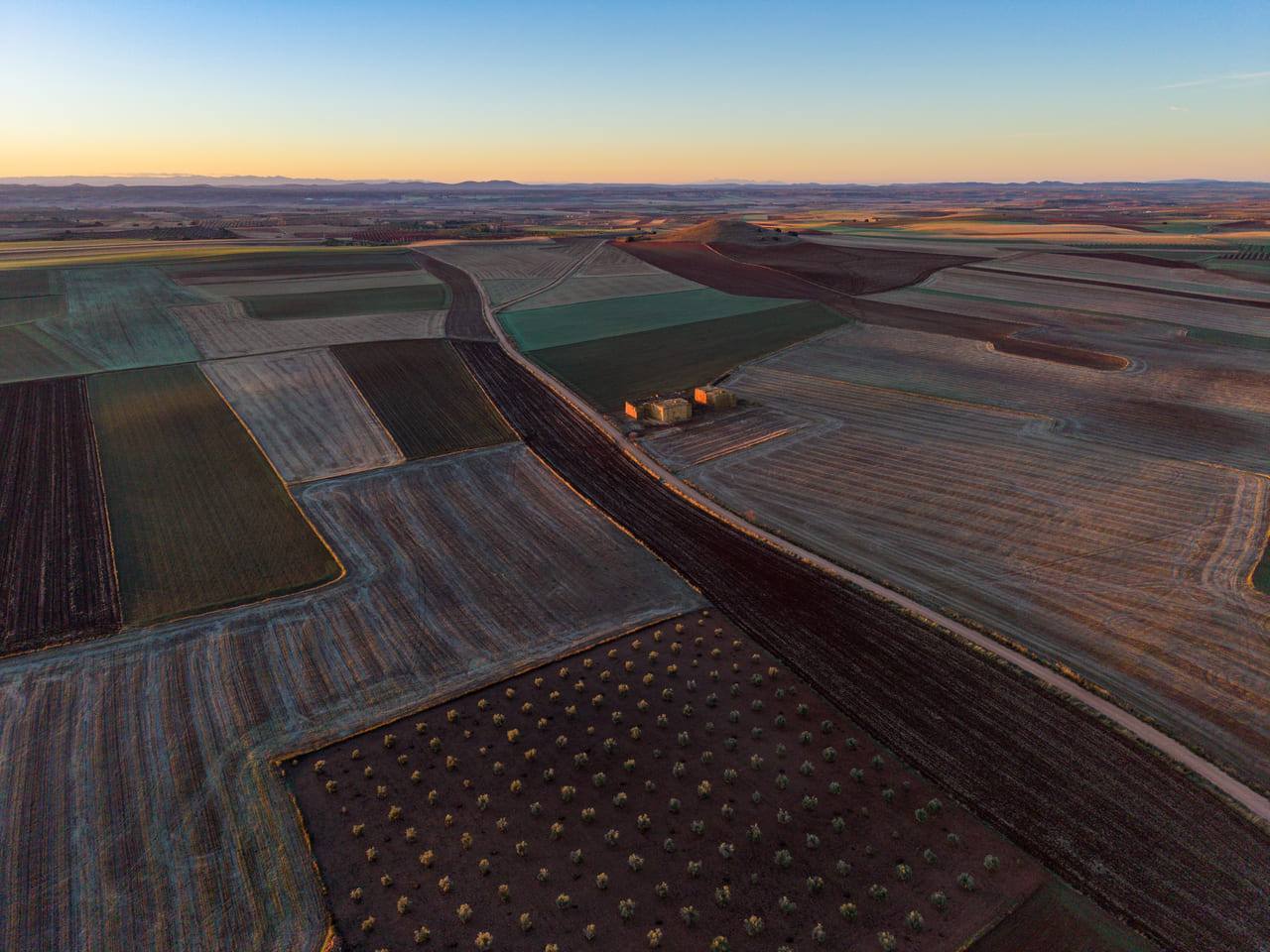
Fuenllana a bird's-eye view
Deep roots
Its origins date back at least the medieval period, although there are also people in its surroundings evidence of Roman occupation.
In Islamic period A modest fortress was built here on a small hill, later integrated into the defensive network of the territory.
After the Christian conquest, the Order of Santiago repopulated the place in the 13th century and Fuenllana received towards 1293 the rank of town, being incorporated into the Villahermosa Commandery.
Later, during the conflicts of 15th century, The fortress was destroyed and its materials were reused to build the Church of Saint Catherine on the same site, one of the most unique features of local history.
Fuenllana's identity is also linked to Saint Thomas of Villanova, born here in 1468, a figure who profoundly marked the religious memory of the municipality and explains the presence of Augustinian convent built upon the tradition of his birthplace.
Living culture
The celebrations that keep the spirit alive Fuenllana
Fuenllana celebrates various festivals and traditions throughout the year.
For example, the May 22 The festival in honor of the town's patron saint is celebrated., St. Rita of Cascia.
Later, in the month of July the Camacho's Wedding and a celebration in honor of the Savior of the World on Pentecost Sunday.
In contrast, the Patron Saint Festivities of Saint Thomas of Villanueva begin the September 18.
Deep roots
Discover the historical and architectural treasures that make up Fuenllana a unique destination
Calle Sta. Rita de Cassia, 10, Fuenllana
Plaza del Convento, 1, Fuenllana
Church Street, 36, Fuenllana
Fuenllana
Calle Sta. Rita de Cassia, 10, Fuenllana
Plaza del Convento, 1, Fuenllana
Church Street, 36, Fuenllana
Fuenllana
Establishments where you can quench your thirst and hunger and give your body a rest after a day of adventures and discoveries in this wonderful town
Country house
Country house
Events
Routes
Golden Age Literature
The Campo de Montiel region was the birthplace and refuge of the leading authors and figures of Spanish Golden Age literature. Therefore, we propose a route that includes the main locations where history continues to unfold even today.
Distance
43 km
Duration
2 days
Difficulty
Easy
Municipality
Several
Golden Age Literature
The Campo de Montiel region was the birthplace and refuge of the leading authors and figures of Spanish Golden Age literature. Therefore, we propose a route that includes the main locations where history continues to unfold even today.
Distance
43 km
Duration
2 days
Difficulty
Easy
Municipality
Several

© Campo de Montiel - 2026