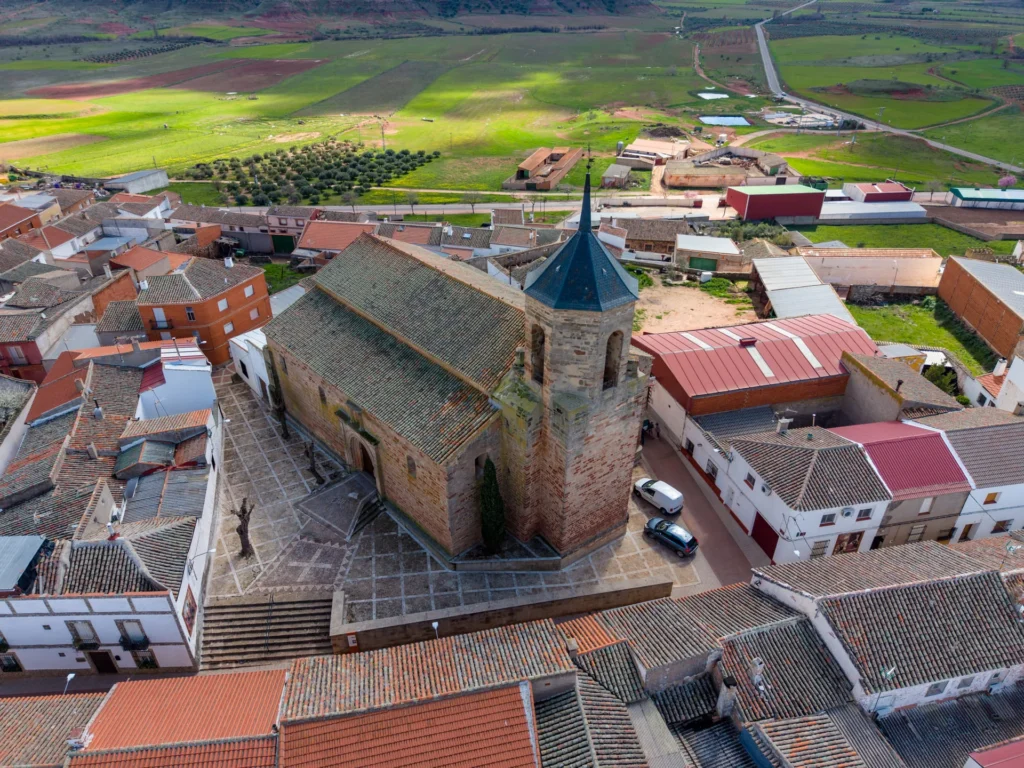
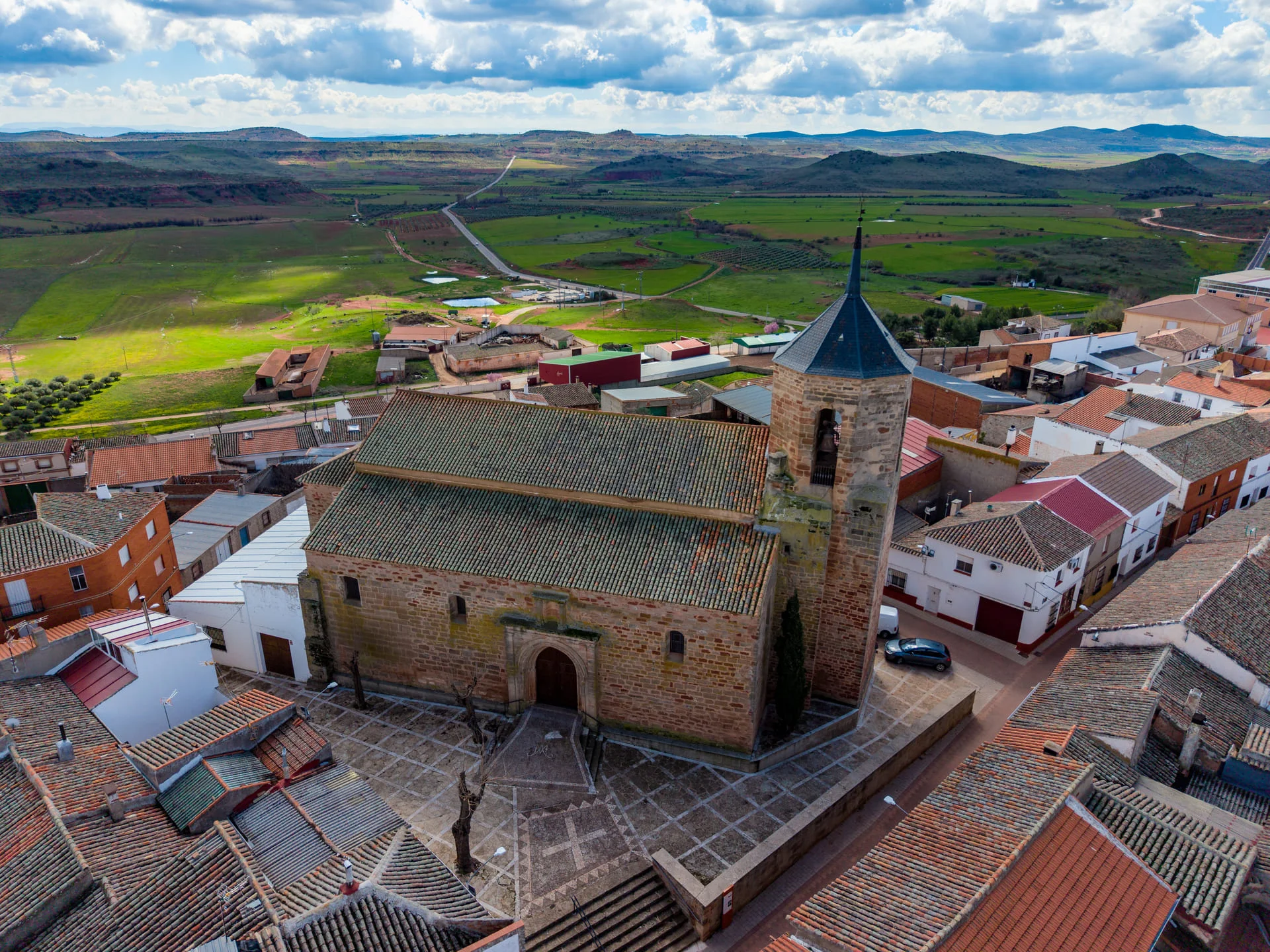
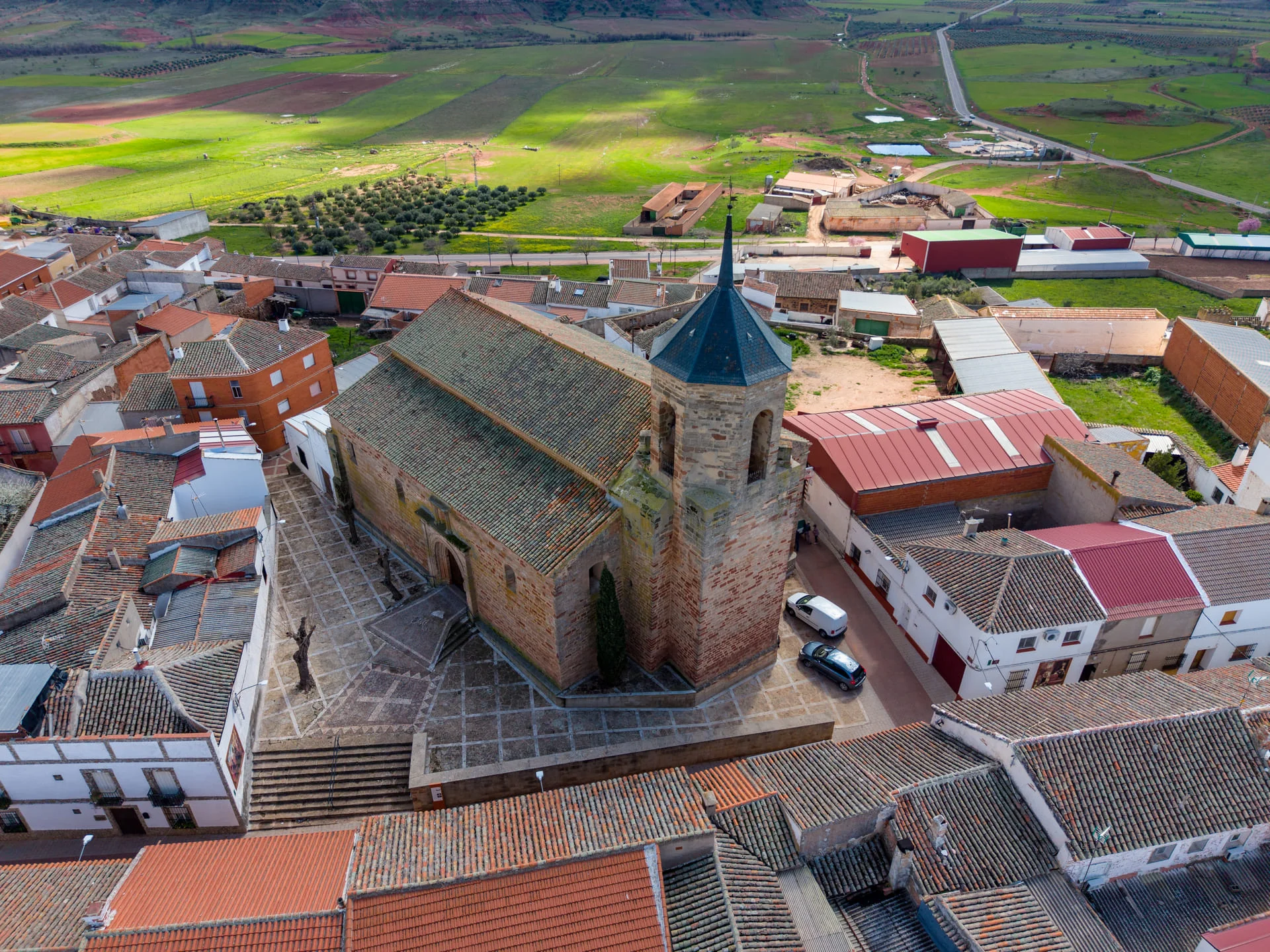
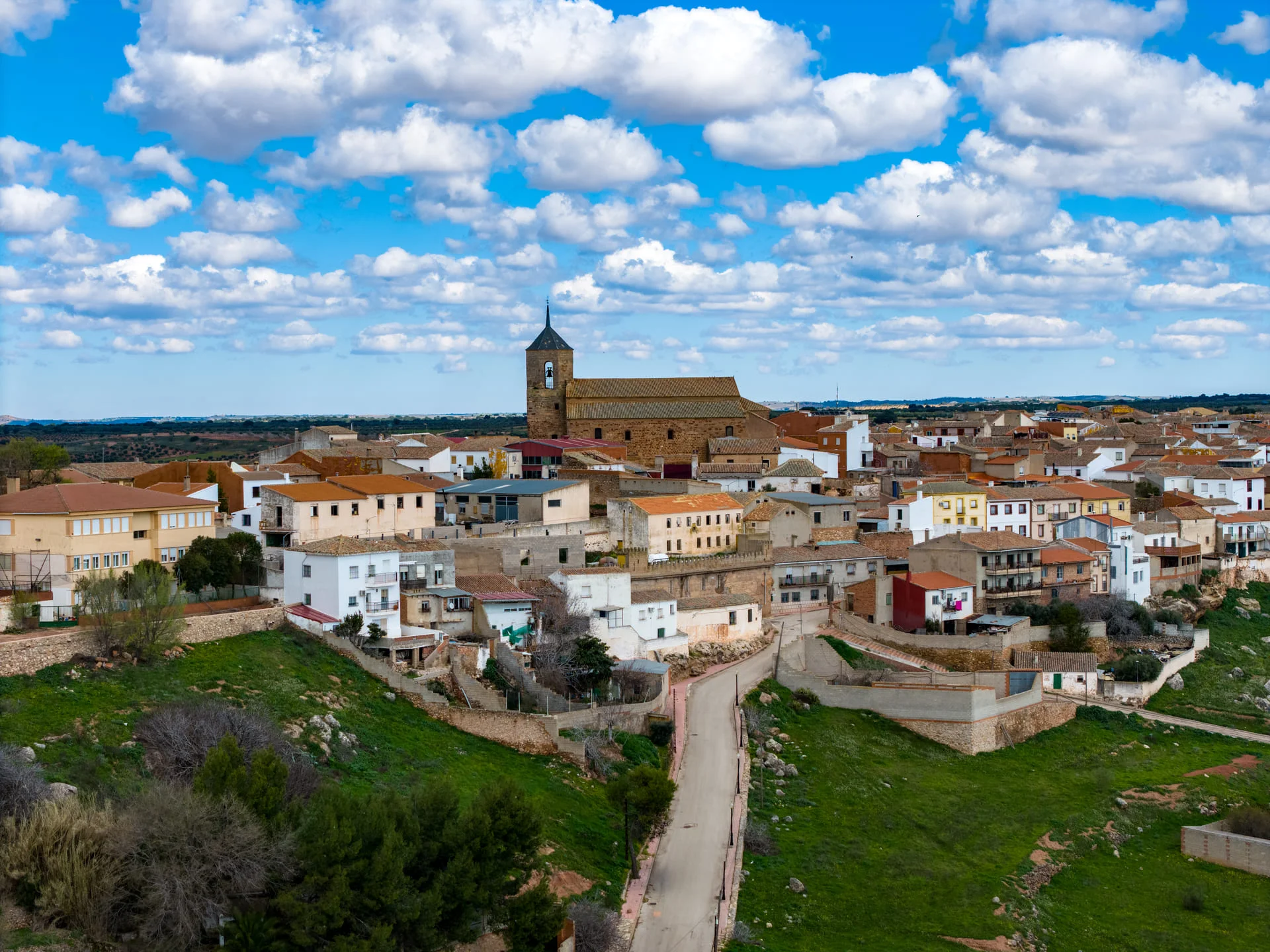
The Church of Saint Mary It stands at the highest point of the hill on which Almedina is located, dominating the village and the surrounding landscape.
Its position is not accidental, as it occupies the main place in the historic center and reinforces the image of the town as a settlement adapted to the topography.
Upon reaching it, the visit allows one to understand very well the relationship between architecture, relief and settlement, at a point that must also have concentrated a long continuity of sacred uses.
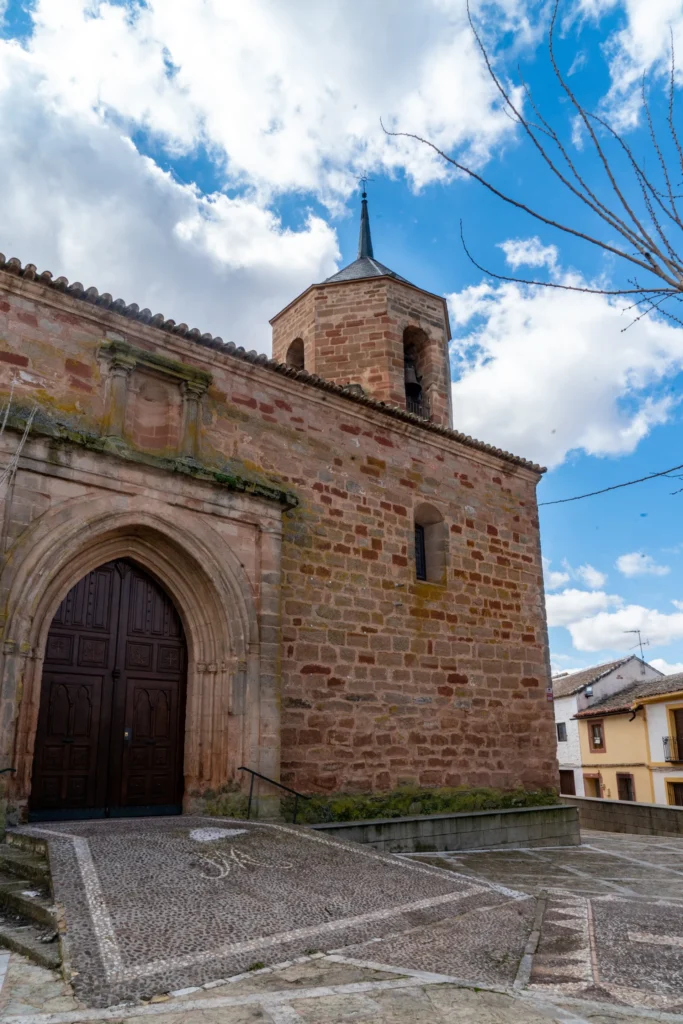
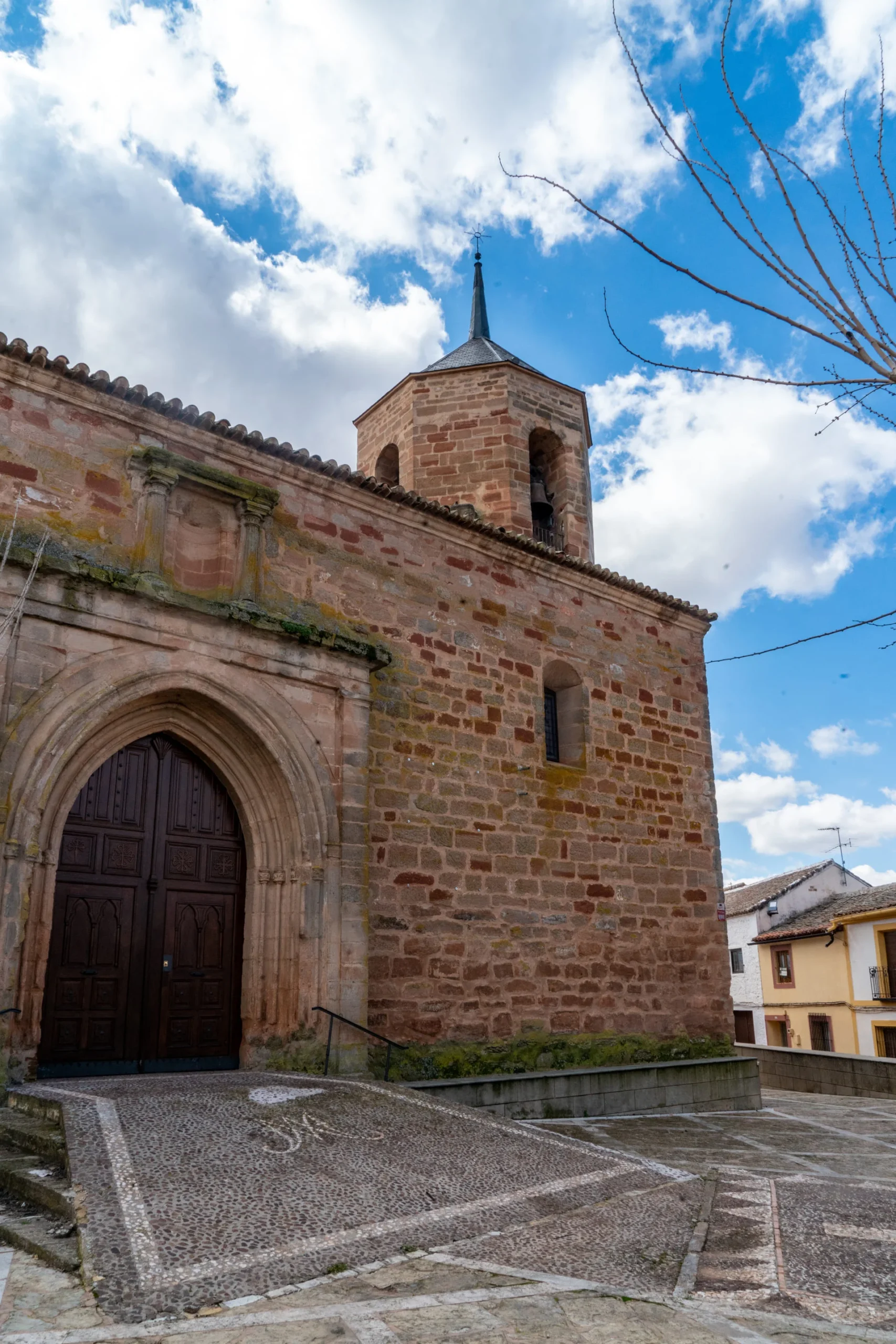
The temple was built in two major phases. The first, between 1494 and 1550, It resulted in a single-nave church with three chapels, a rectangular chancel, a stone ribbed vault and a square tower, within a late Gothic style that still retains wooden roofs. The second phase, between 1550 and 1560, He designed a basilica-style church with three naves at different heights, uniquely combining local building traditions with new classical forms. This evolution makes Santa María one of the most distinctive examples in the Campo de Montiel region.
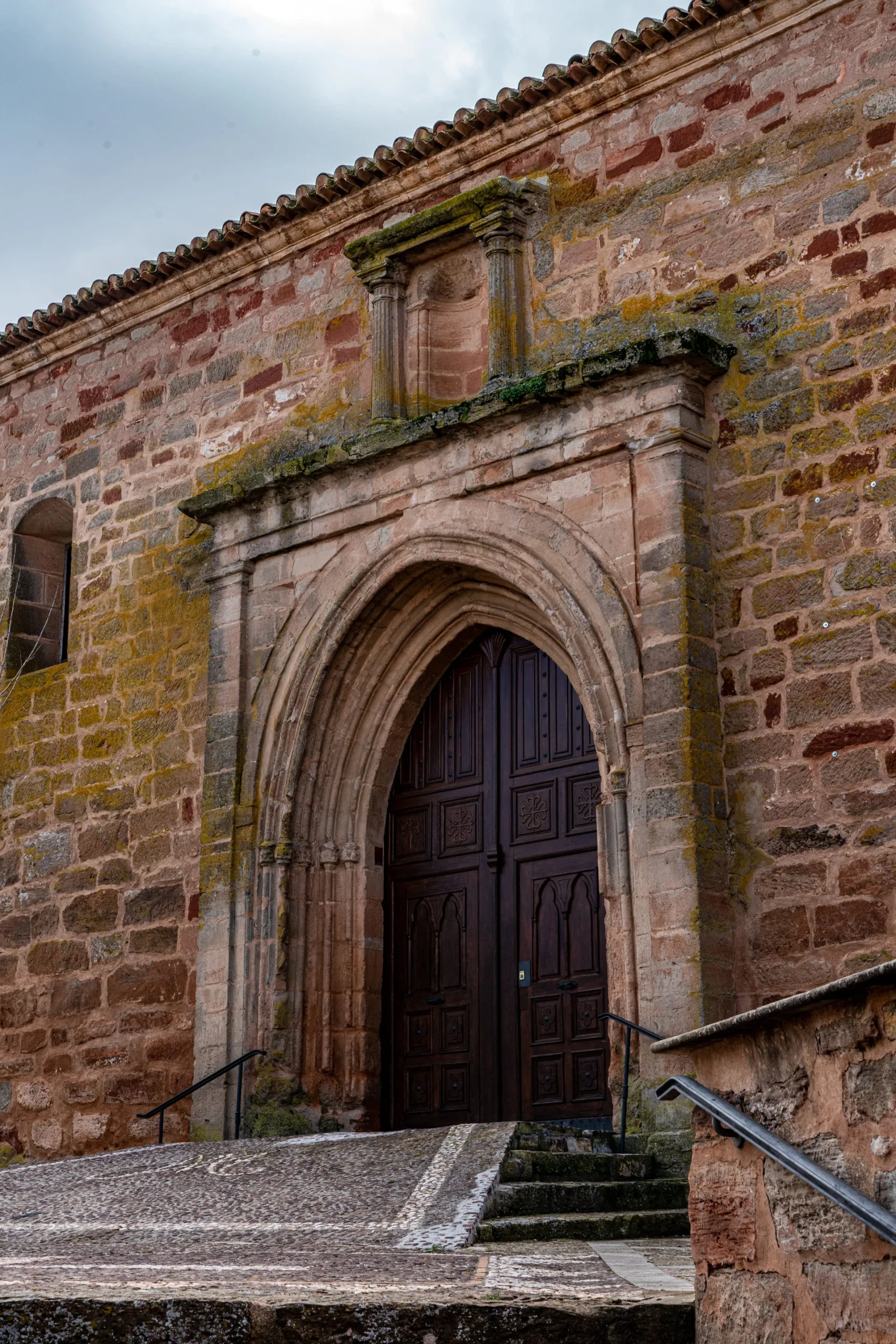
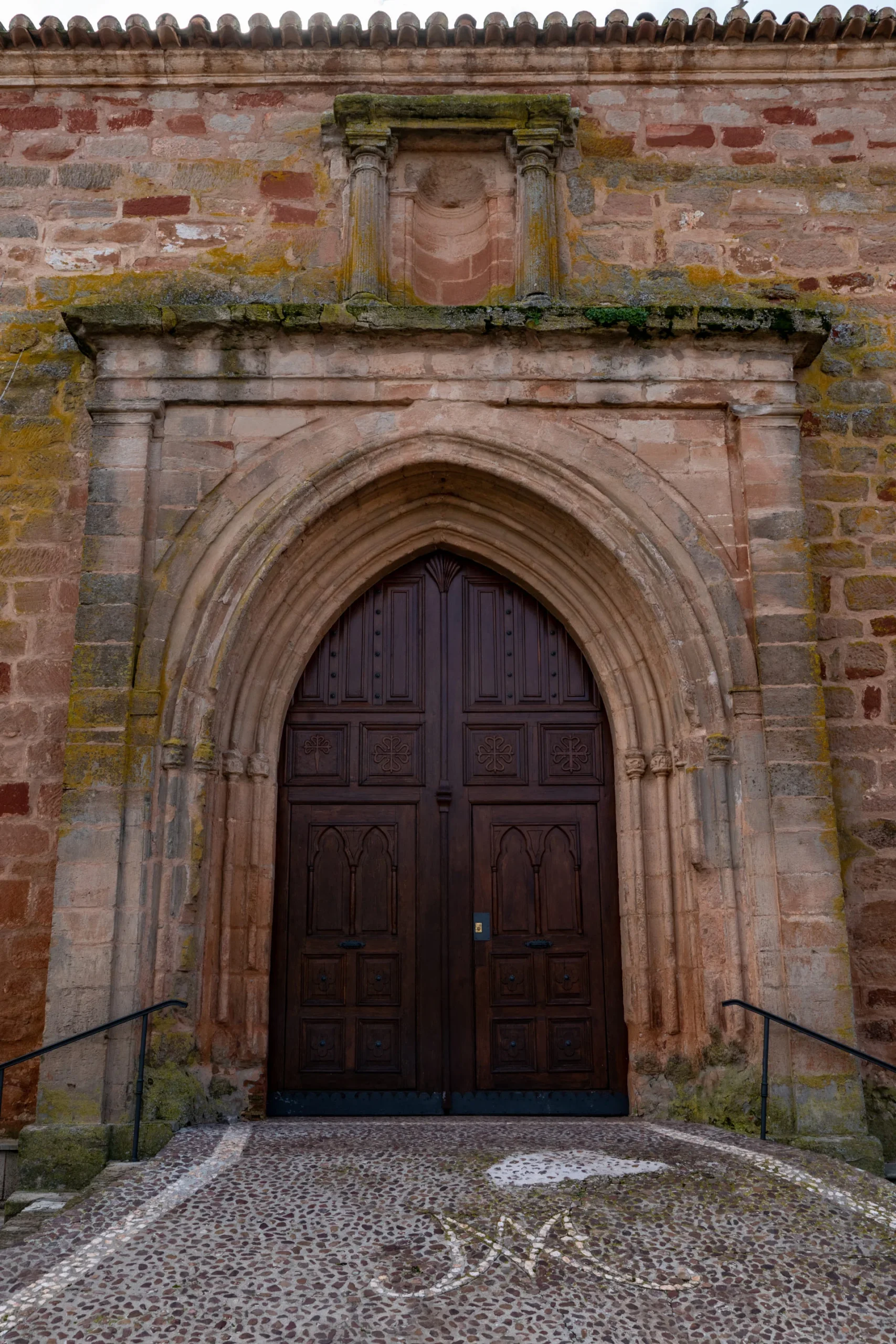
Among its most outstanding features are the slender columns with Ionic capitals, the half-orange dome with lantern, the transformation of the late Gothic facade towards more classical forms and a tower that adopts a model popularized by the Vandelvira school, combining square and octagonal bodies.
The building suffered serious damage in the Lisbon earthquake of 1755, which affected the west wall, the tower, part of the roof and the main altar, which explains the subsequent repairs and, for a time, the transfer of worship to the hermitage of Los Remedios.
Even so, the church continues to stand out for its monumentality, the simplicity of its architecture, and the intelligent integration of tradition and renewal.