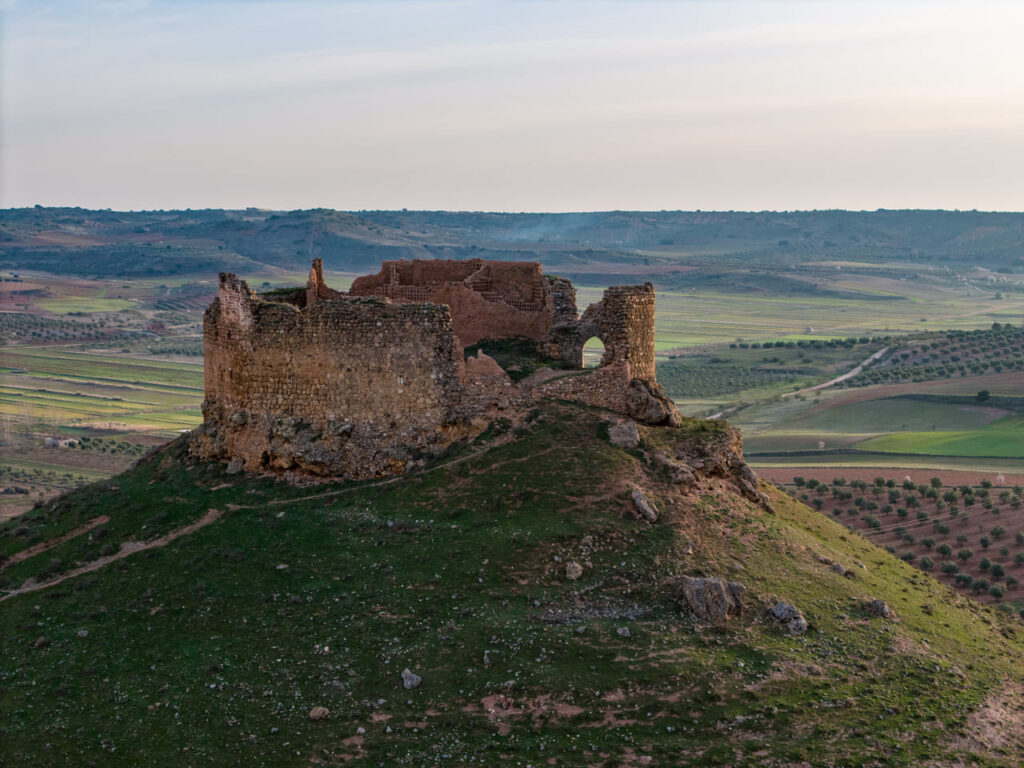
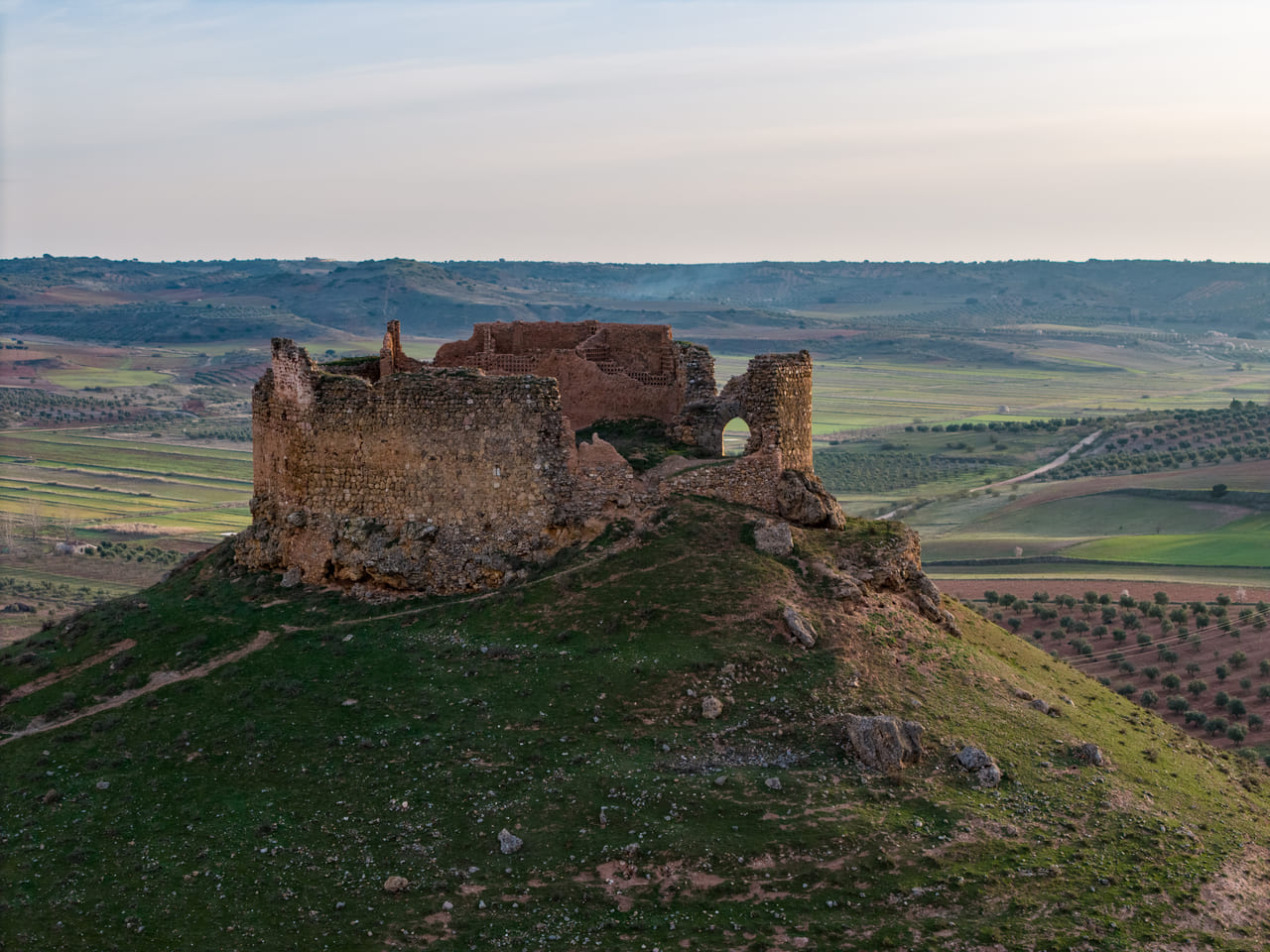
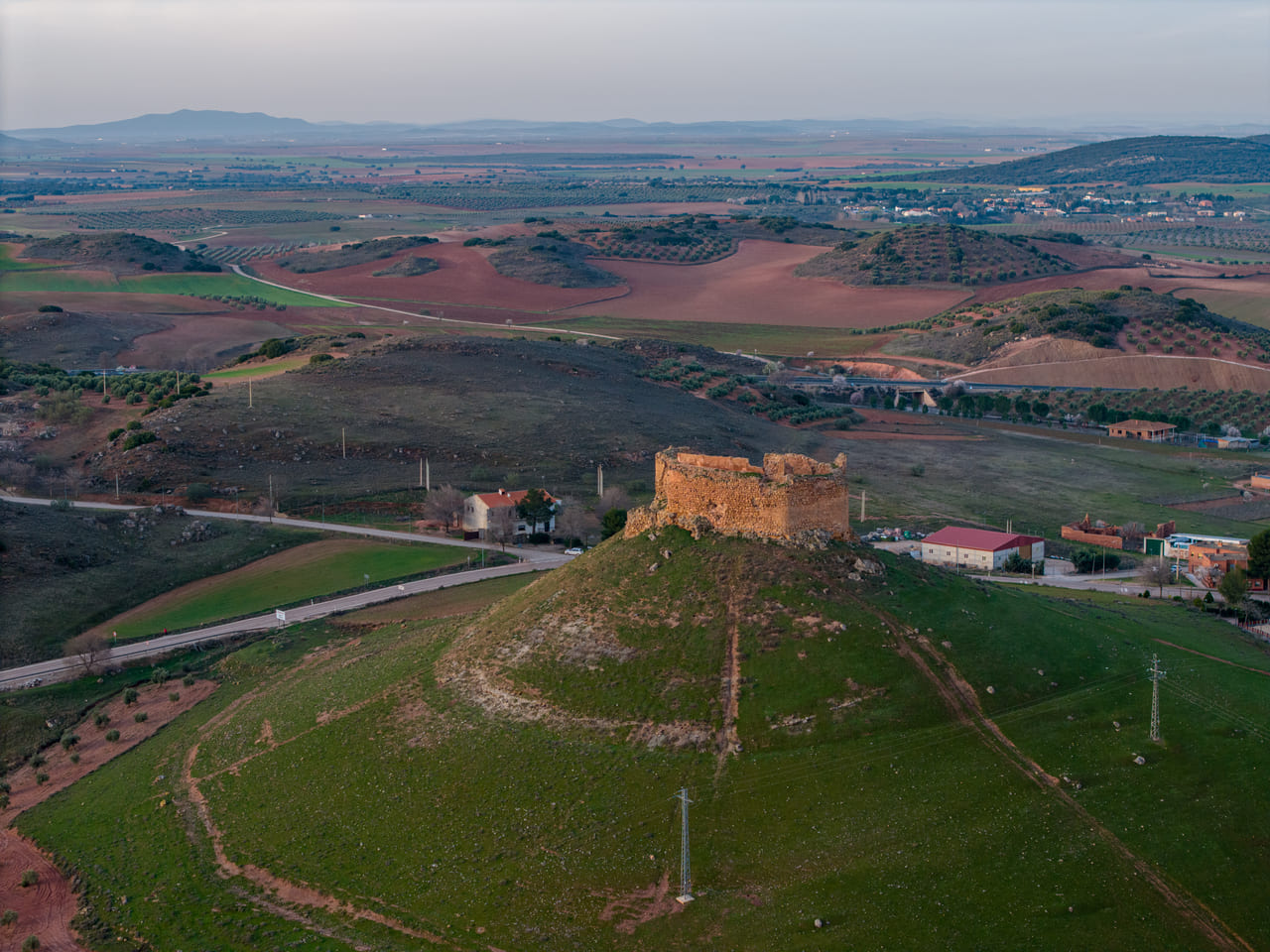
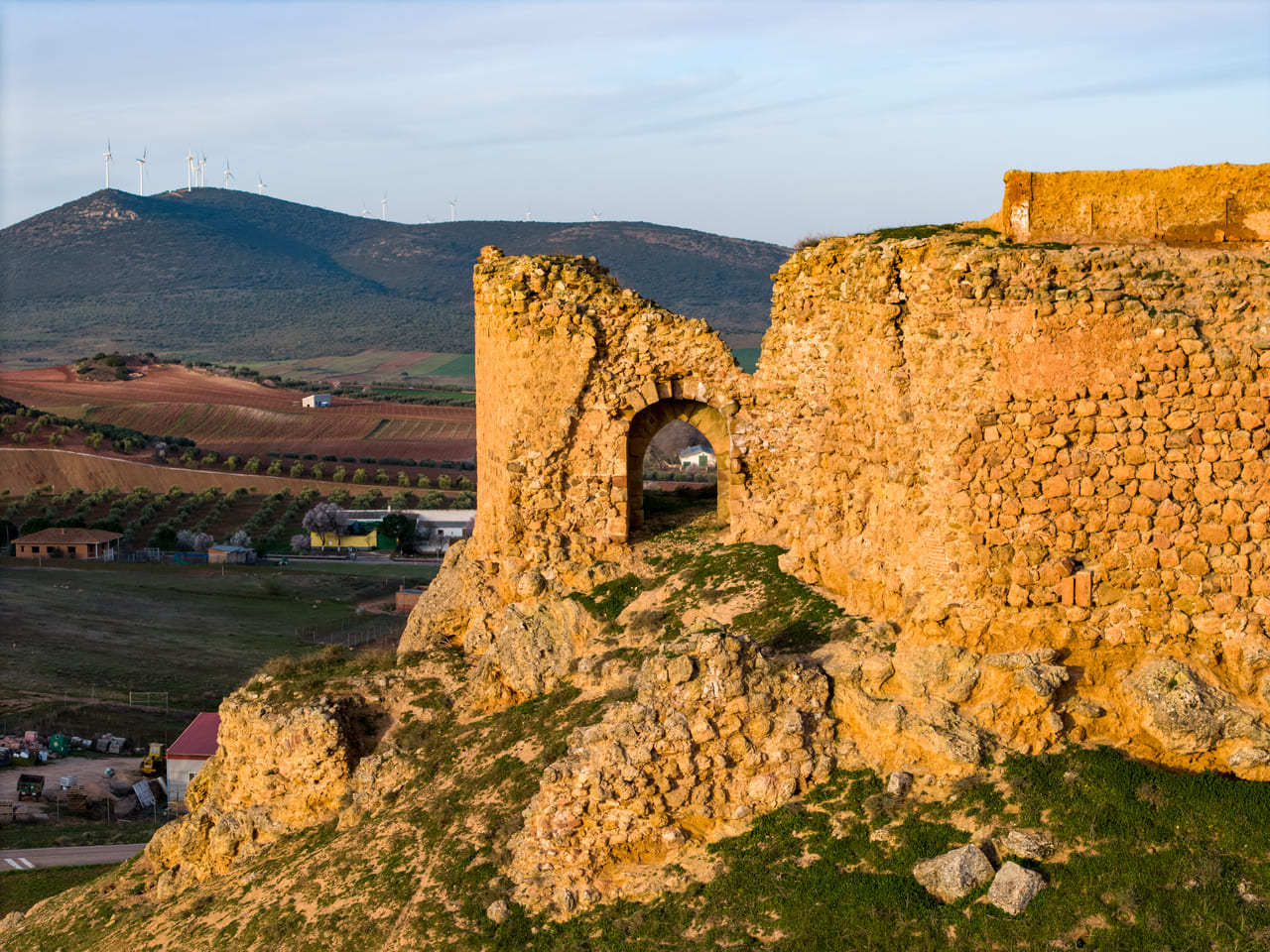
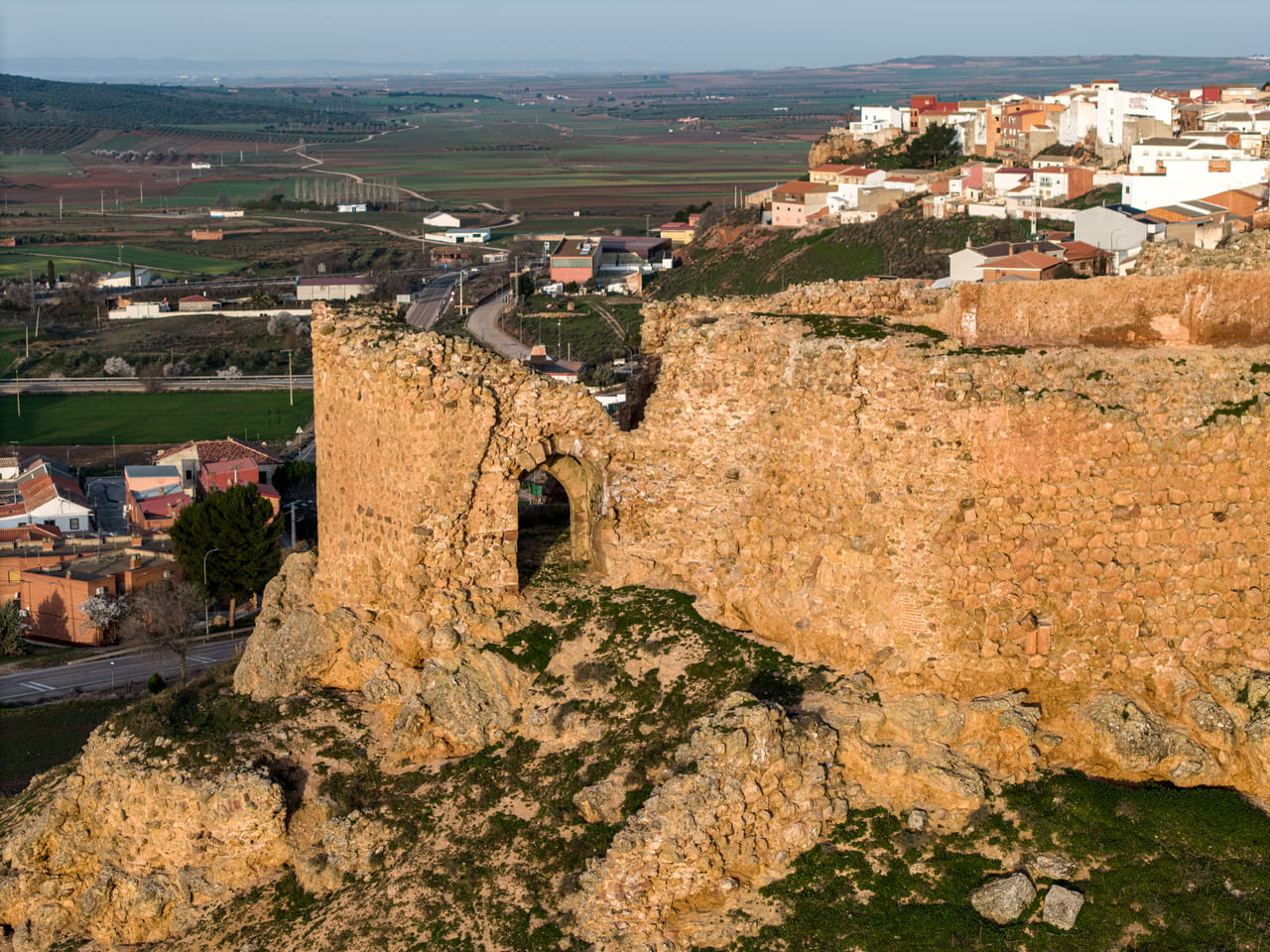
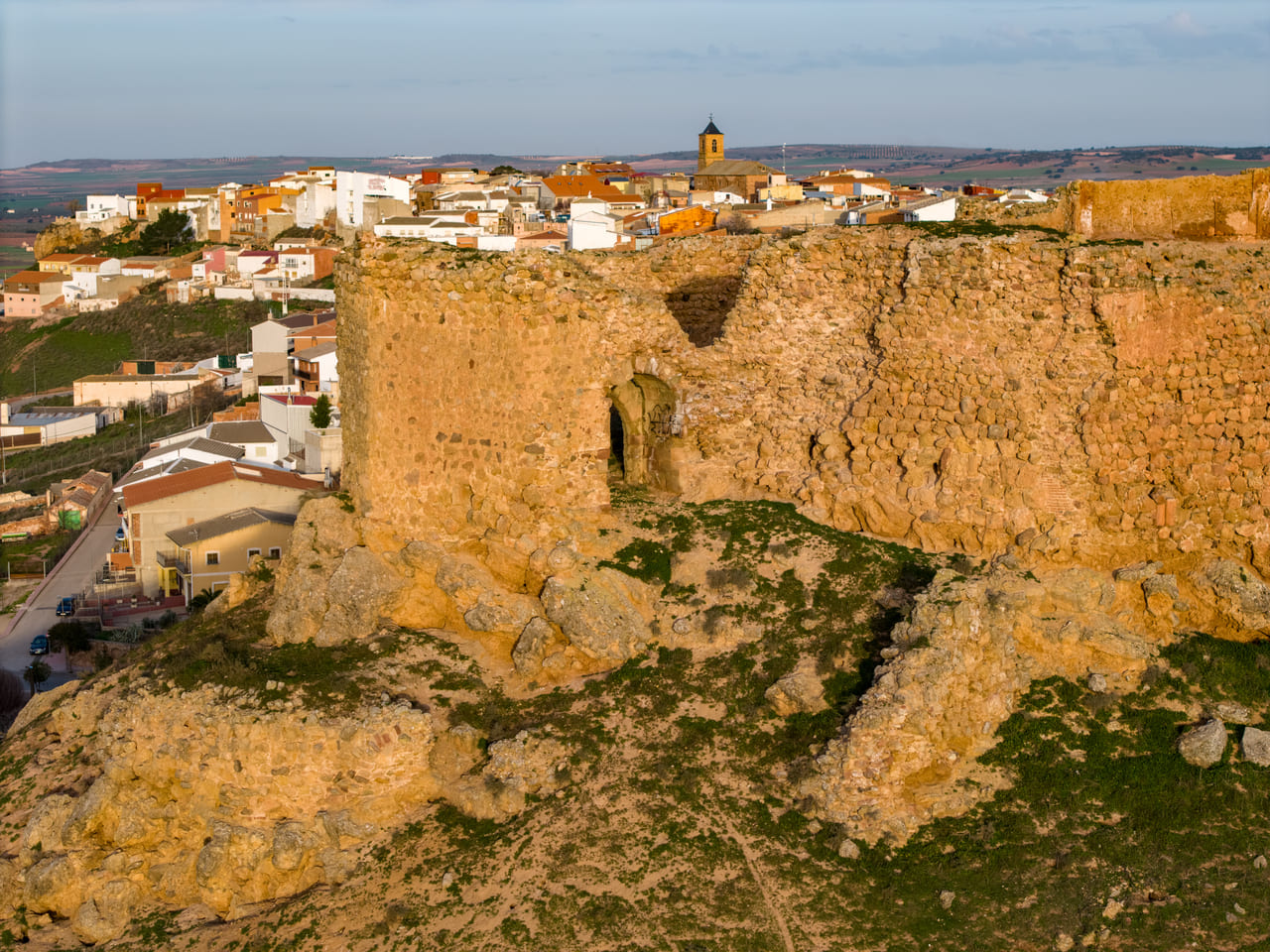
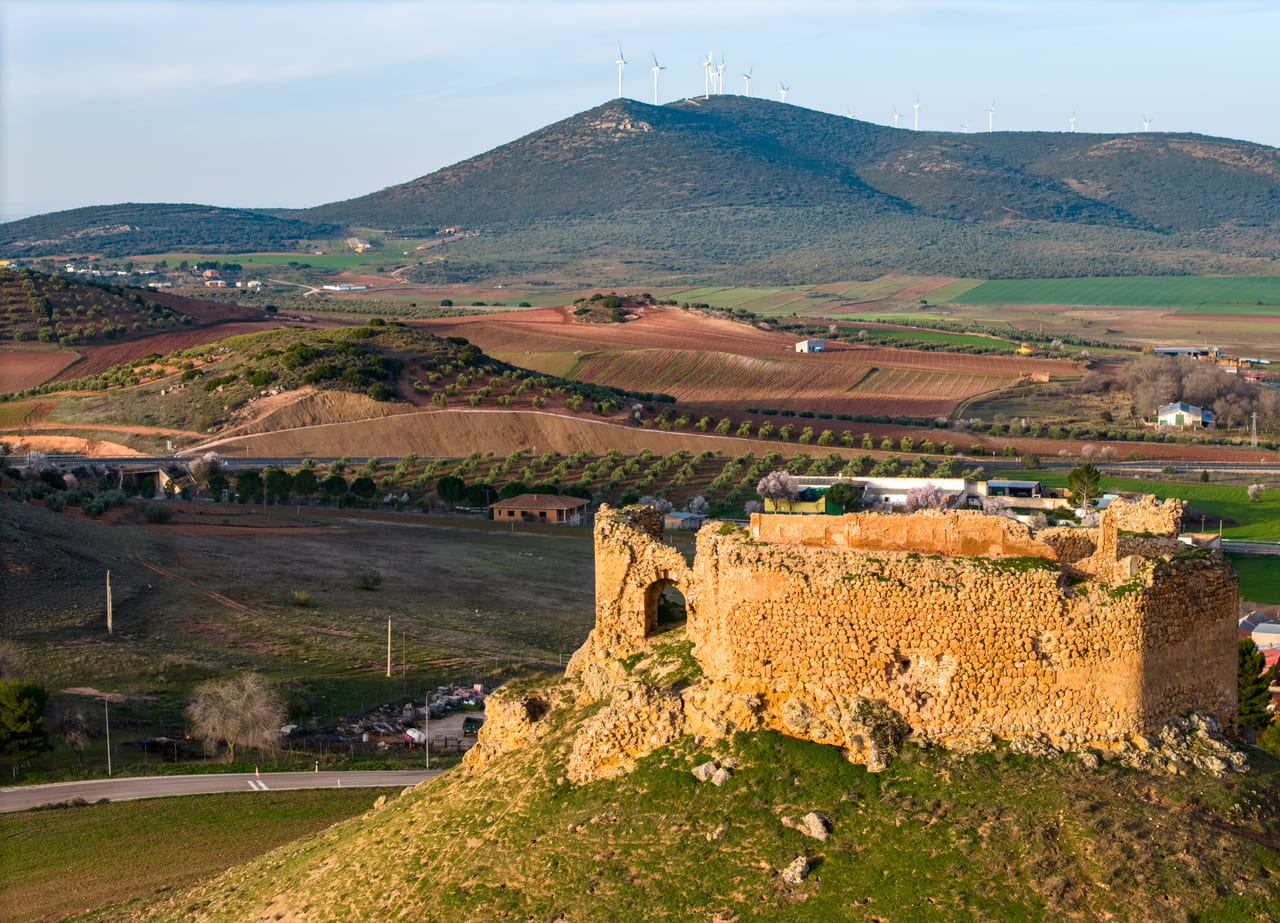
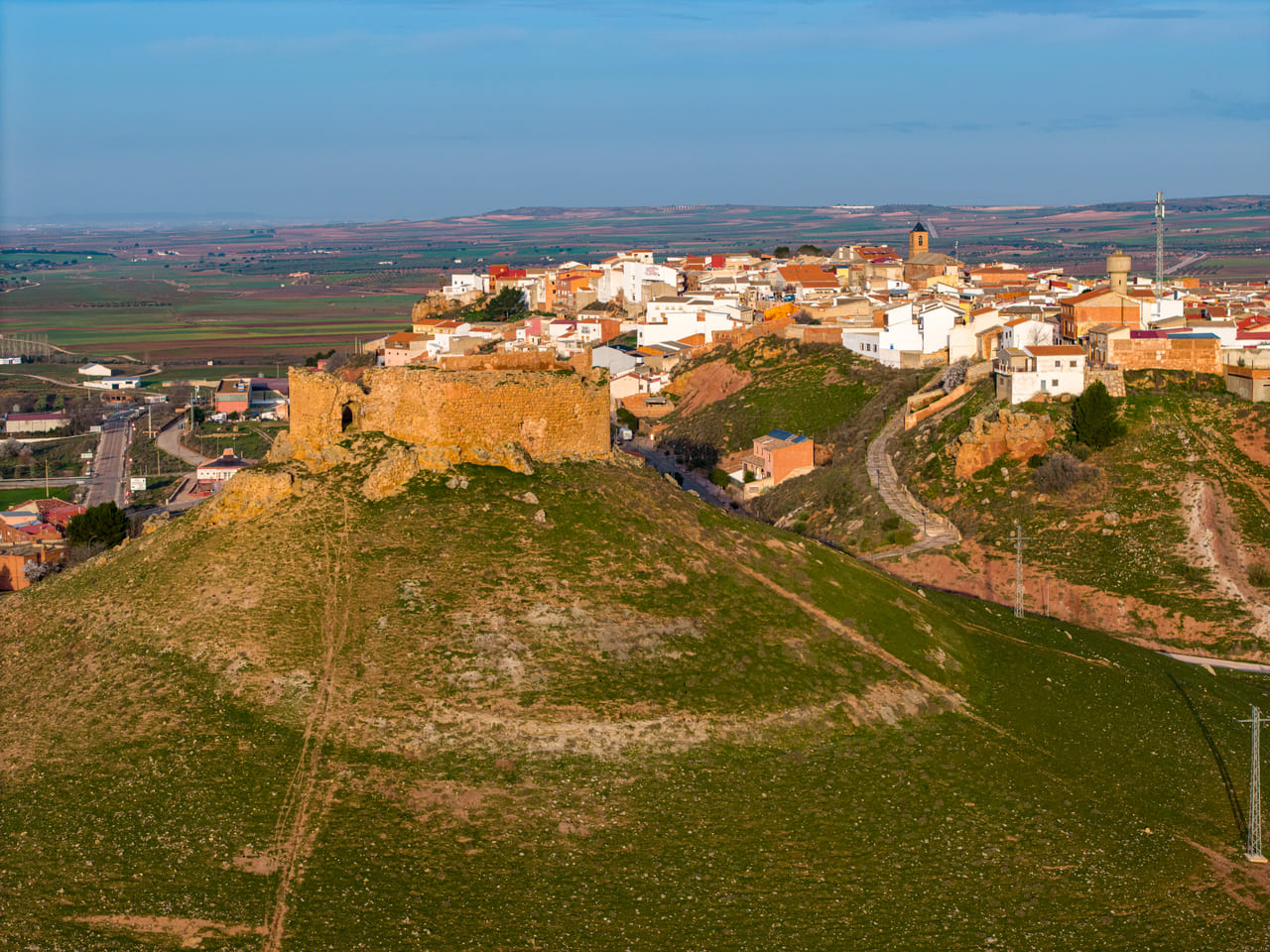
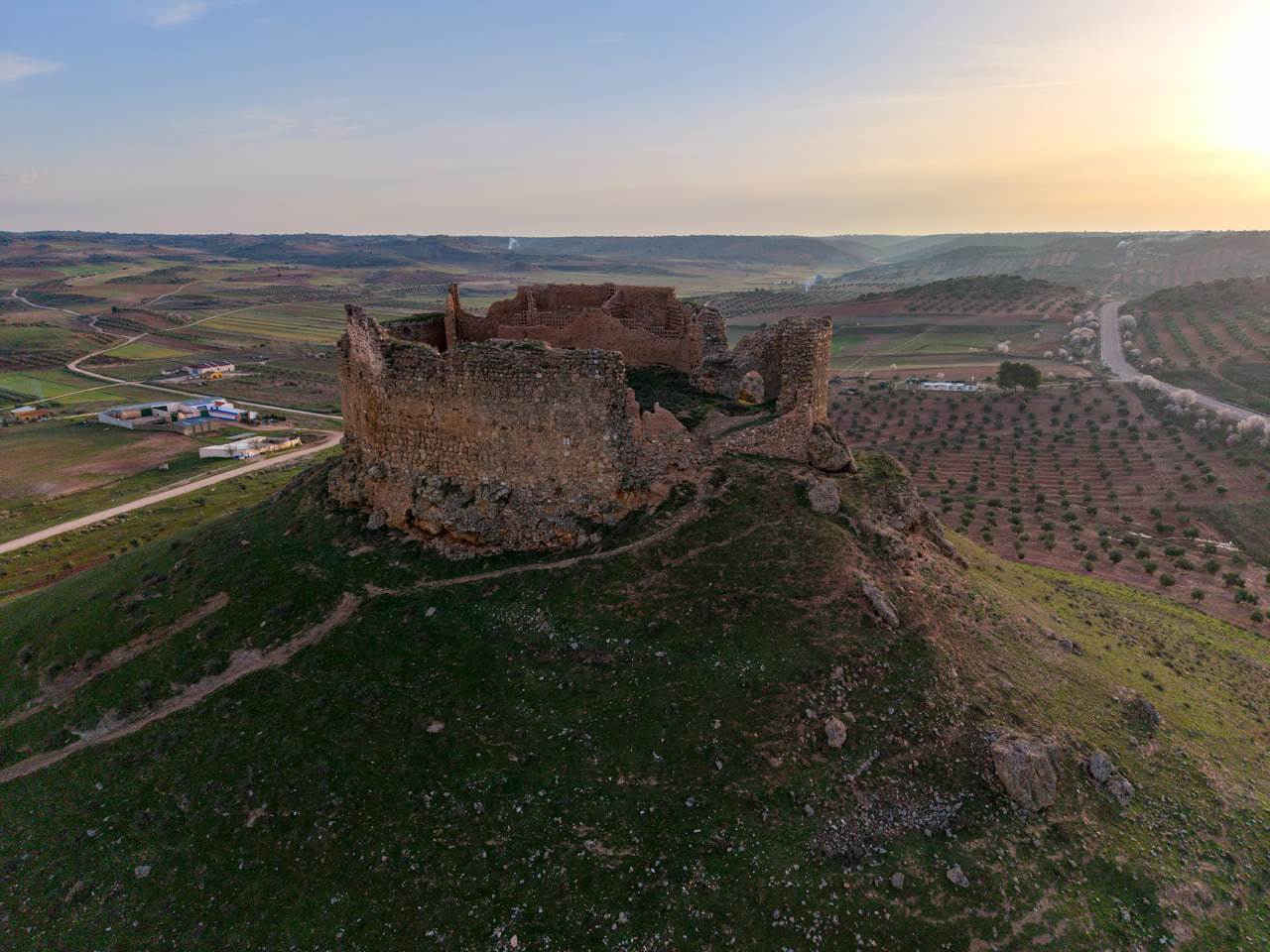
Just steps away from Alhambra hamlet, is located the castle on a butte 806 m, Located at the foothills of the Alhambra, Cristo, and Bailones mountain ranges, the summit, formed by a tufa rock outcrop atop clay, defines the character of the place: a natural balcony overlooking a rolling landscape dotted with small hills. Traditionally, this area was pastureland and a cattle route, key to understanding the enclave's historical significance.
Its location also explains its long historical trajectory. The area had strategic value since Antiquity, linked to the territory of the Iberian-Roman city of Laminium. Evidence of occupation has been documented on the hill. Umayyad and, already in Christian era, The market consolidates its position after the campaigns following the Navas de Tolosa: at the beginning of In the 13th century it passed to the Order of Santiago. In 1241 the encomienda is organized and in 1243 Alhambra obtains charter, reinforcing its regional role. The castle's construction dates from the mid-to-late 13th century, and it served administrative and territorial control purposes throughout the Late Middle Ages.
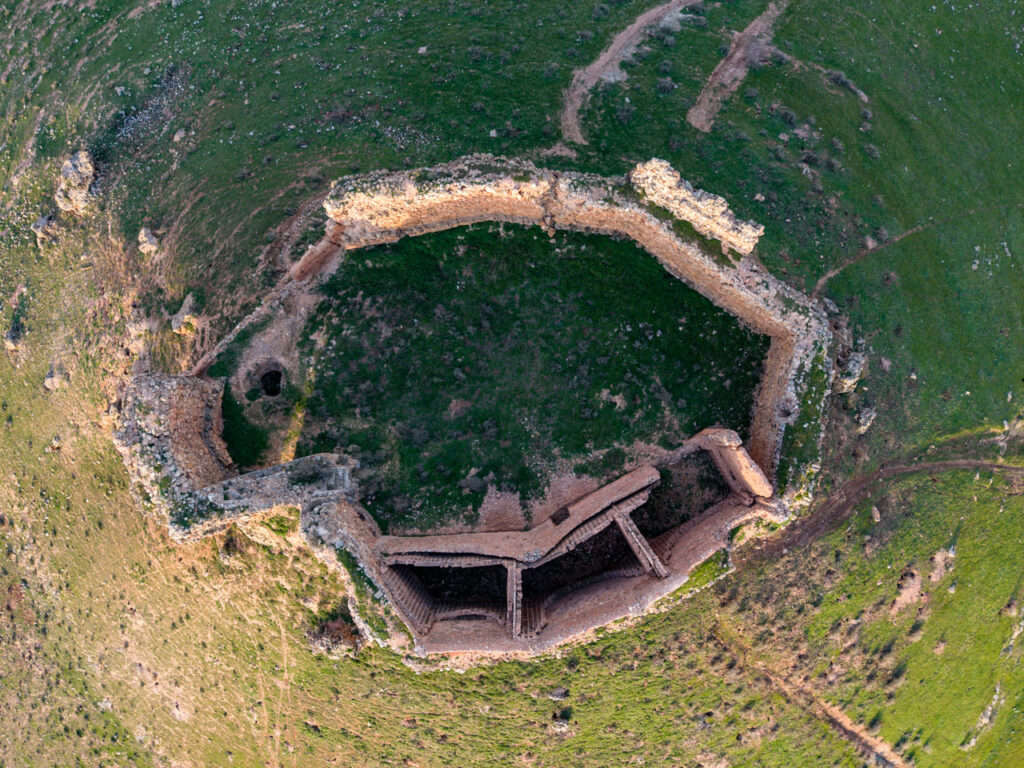
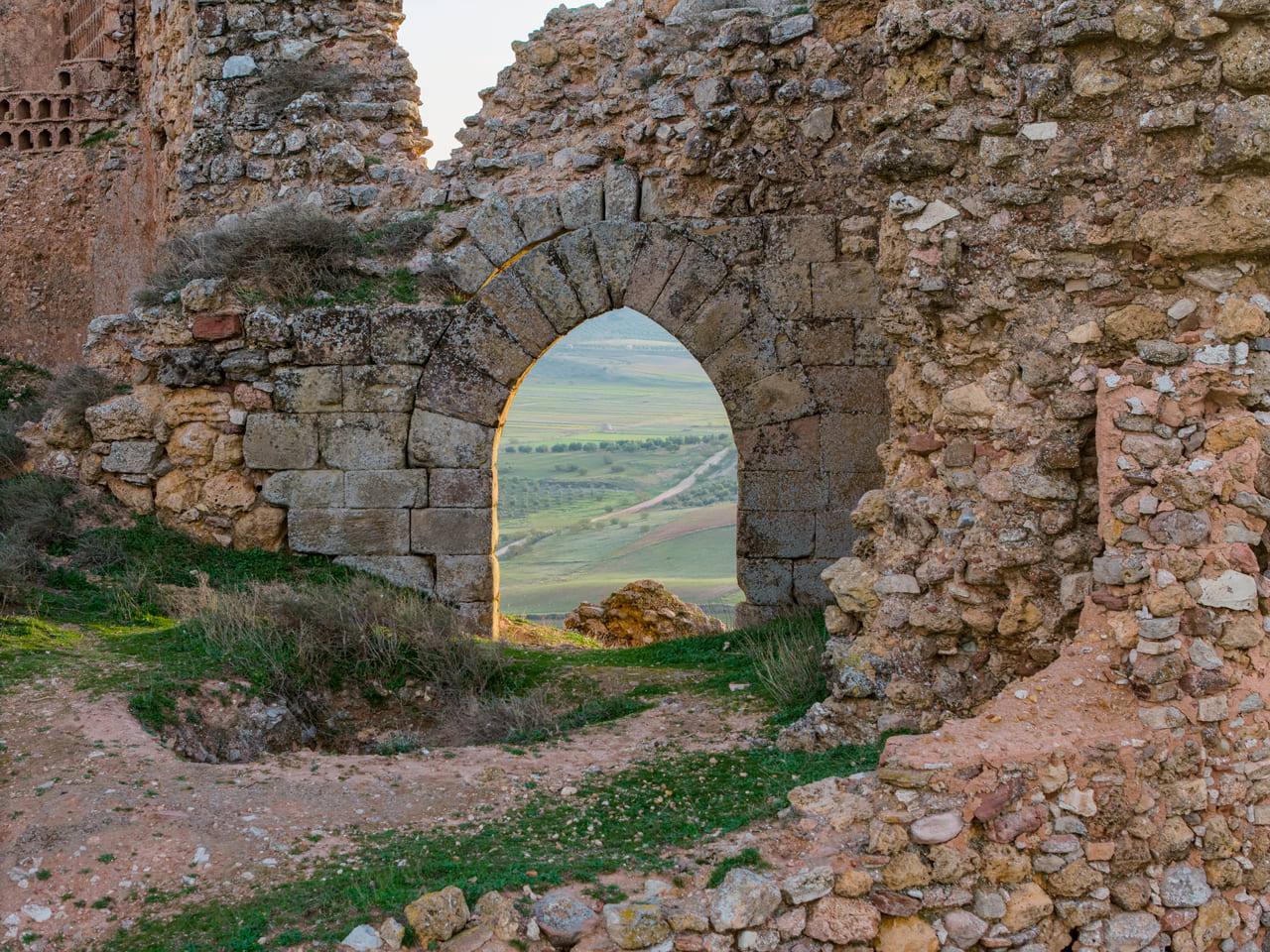
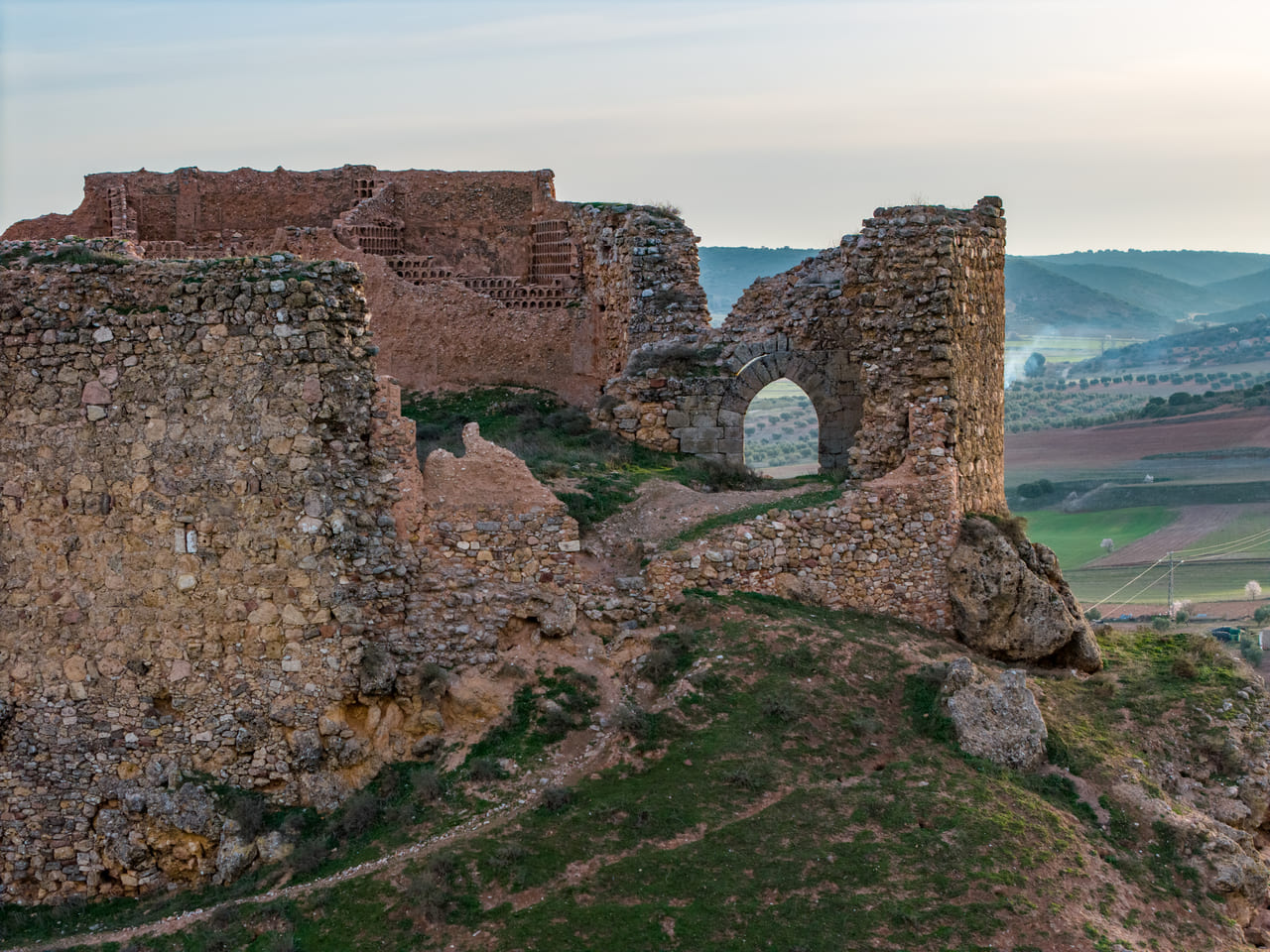
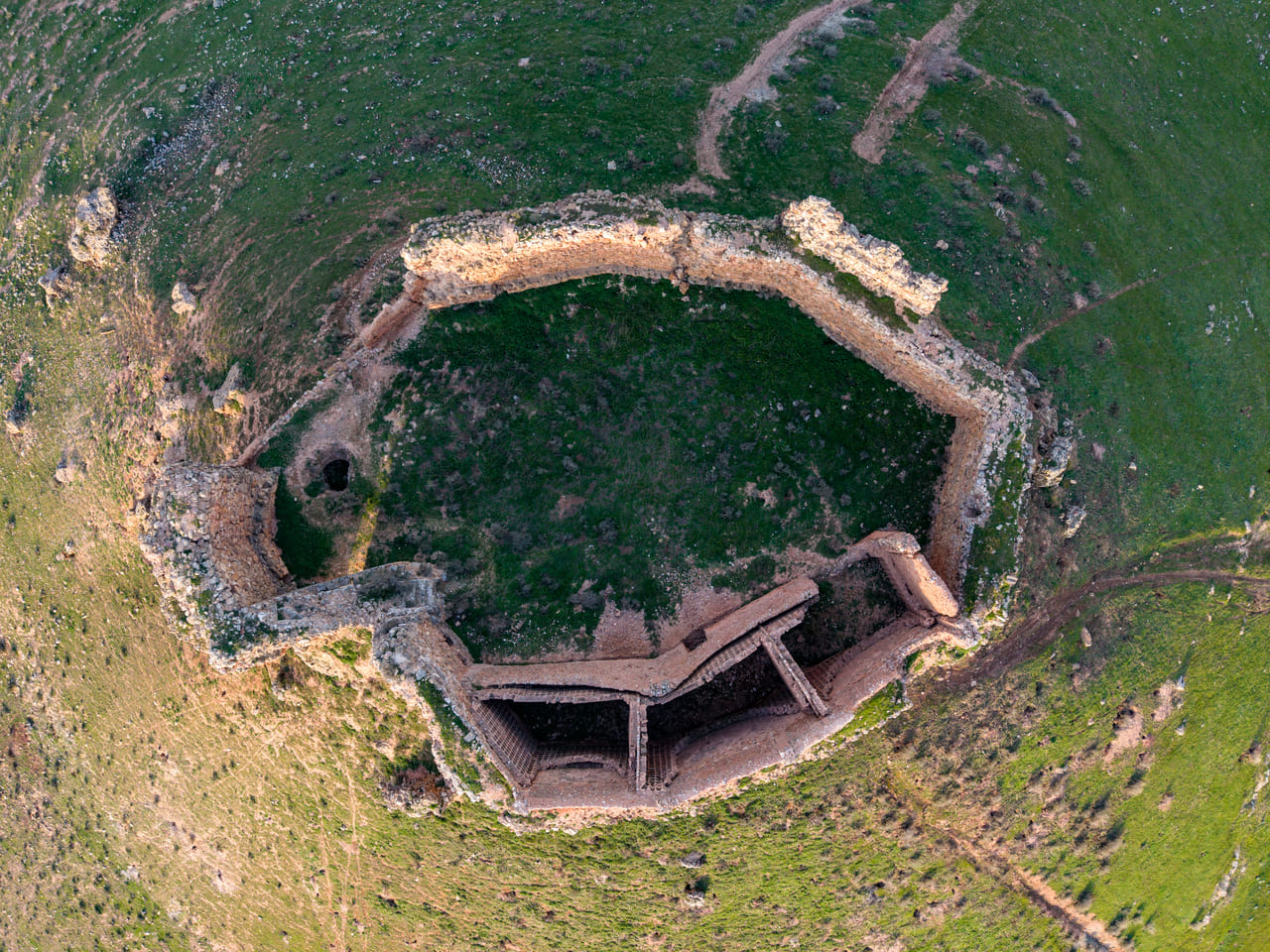
Today, the visit allows one to recognize a stately fortification of remarkable singularity, in which coexist Islamic and Christian building traditions. The castle features a polygonal plan It was surrounded by an outer wall, now partially preserved. From this area, one accesses the Gothic entrance gate, built of ashlar blocks, which still bears visible stonemason's marks. Inside, sections of the wall and some structures associated with daily use, such as a larder, are still visible. Finally, the presence of a dovecote built in the 20th century is eloquent evidence of the popular reoccupation of these fortresses after their defensive and administrative function had ceased.