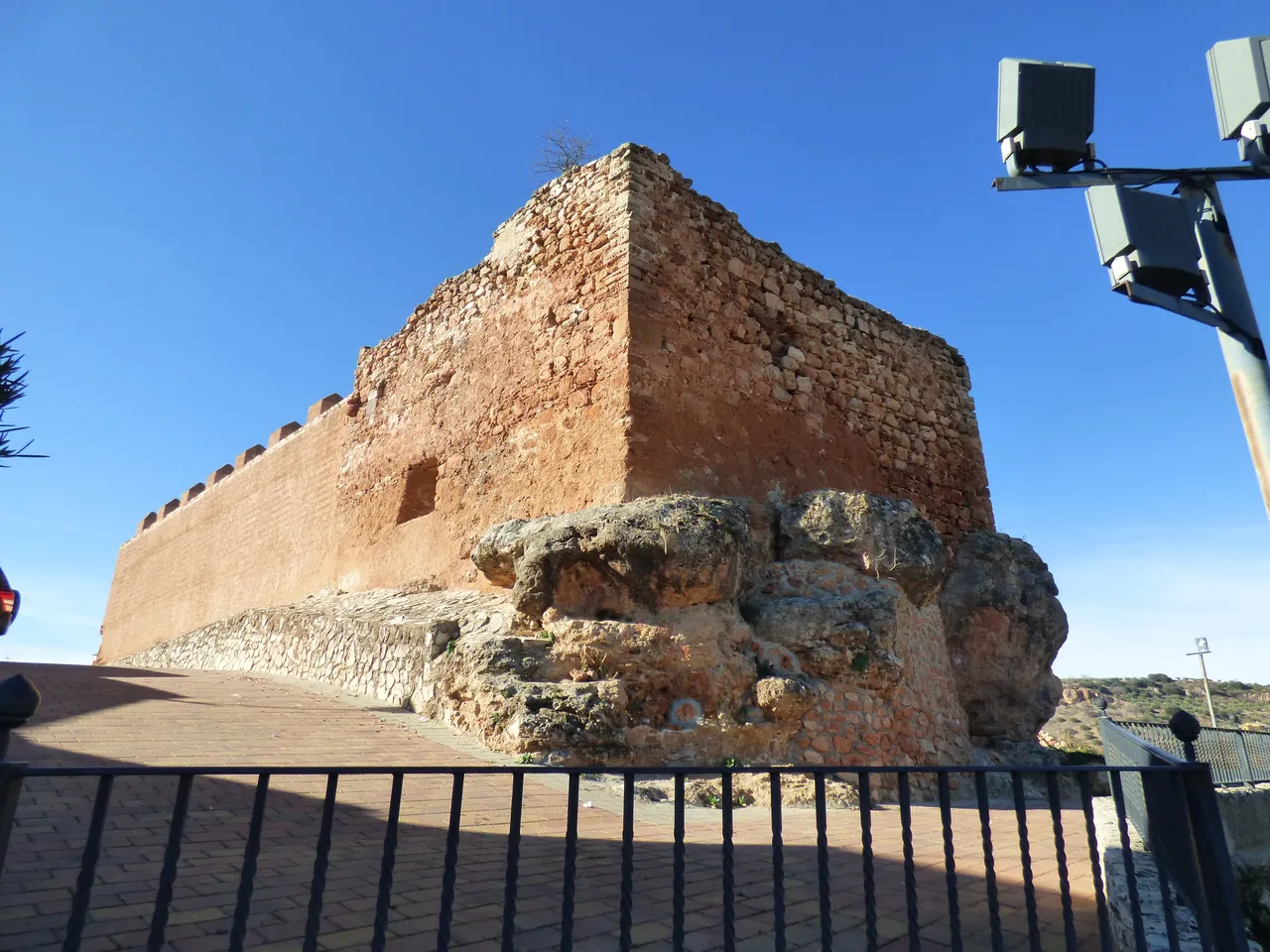


A magical tour that will allow you to enjoy the countryside and natural resources in the heart of Campo de Montiel
Distance
130 km
Duration
2 days
Difficulty
Moderate
Level difference
-
Guy
Linear
Mode
By car
Route description
A two-day route to explore the most complete defensive system of the Order of Santiago in Castilla-La Mancha. The seven sites visited were part of the same network of fortresses with which the Order defended the Campo de Montiel region after the Reconquista, and today they are preserved in very different states: from the best-preserved castle in the entire region (Montizón) to the progressive ruin of Alhambra or the elegant conversion of Terrinches Castle into an interpretation center. This variety is precisely what makes the route so rich and revealing. The first day must be on a Saturday to access Montizón Castle, which has very limited opening hours as it is located on private land.
Day 1 – SATURDAY (65 km)
Stop 1. Montizón Castle (Villamanrique)
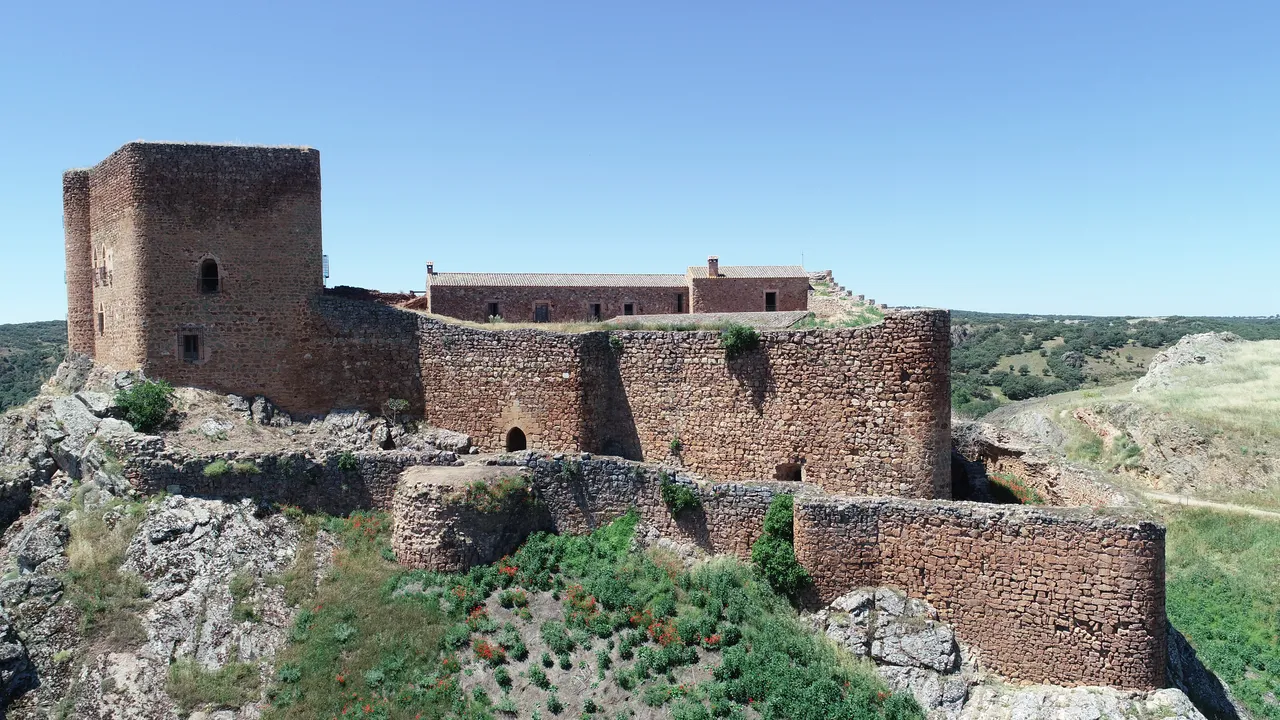
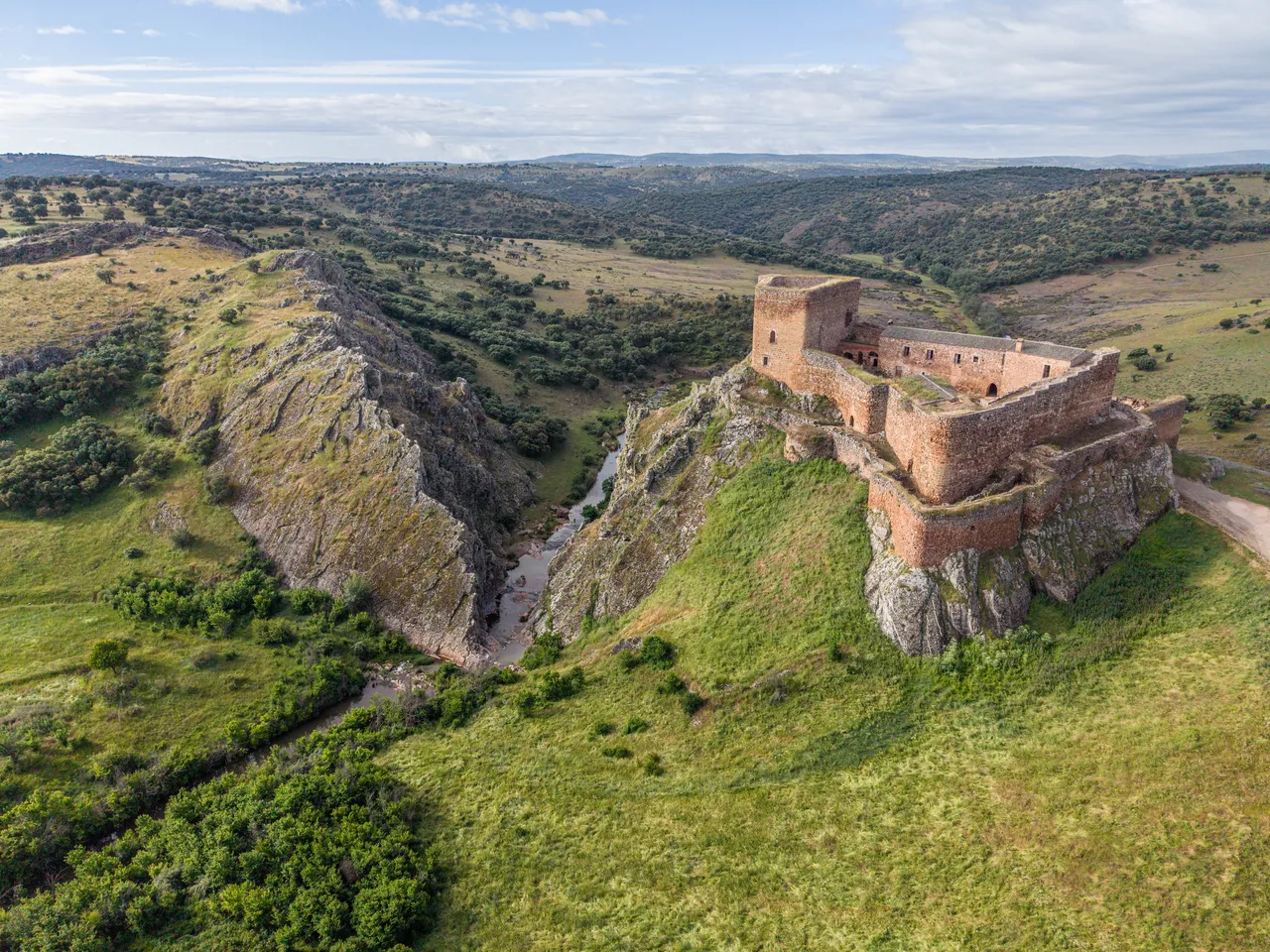
Declared a National Historic-Artistic Monument in 1983, Montizón Castle was built between 1240 and 1275 by order of Don Pelayo Pérez Correa, Master of the Order of Santiago, atop a rocky outcrop that serves as a large natural moat on the right bank of the Guadalén River. Its austere and functional structure, adapted to the hilltop's contours, preserves sections of the wall, the town, the parade ground, and the imposing keep with a ground floor and two upper floors without a roof. It controlled passage along the Via Herculea, or Augusta, from Montiel towards Jaén. The poet Jorge Manrique, son of Don Rodrigo Manrique, was a commander of the castle. He resided here for extended periods and made it the inspiration for his famous poem, "Castle of Love.".
Stop 2. Albaladejo Castle
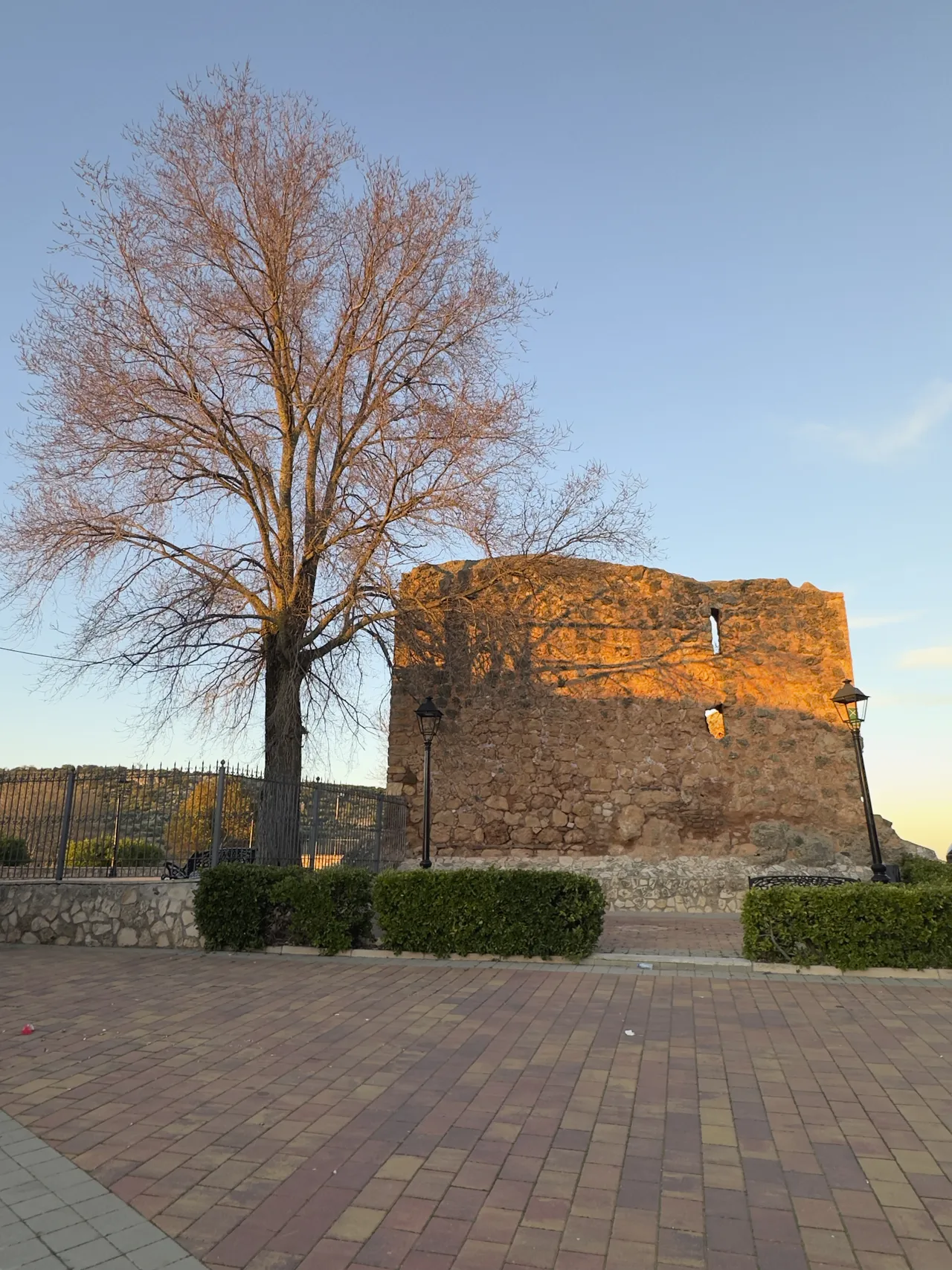
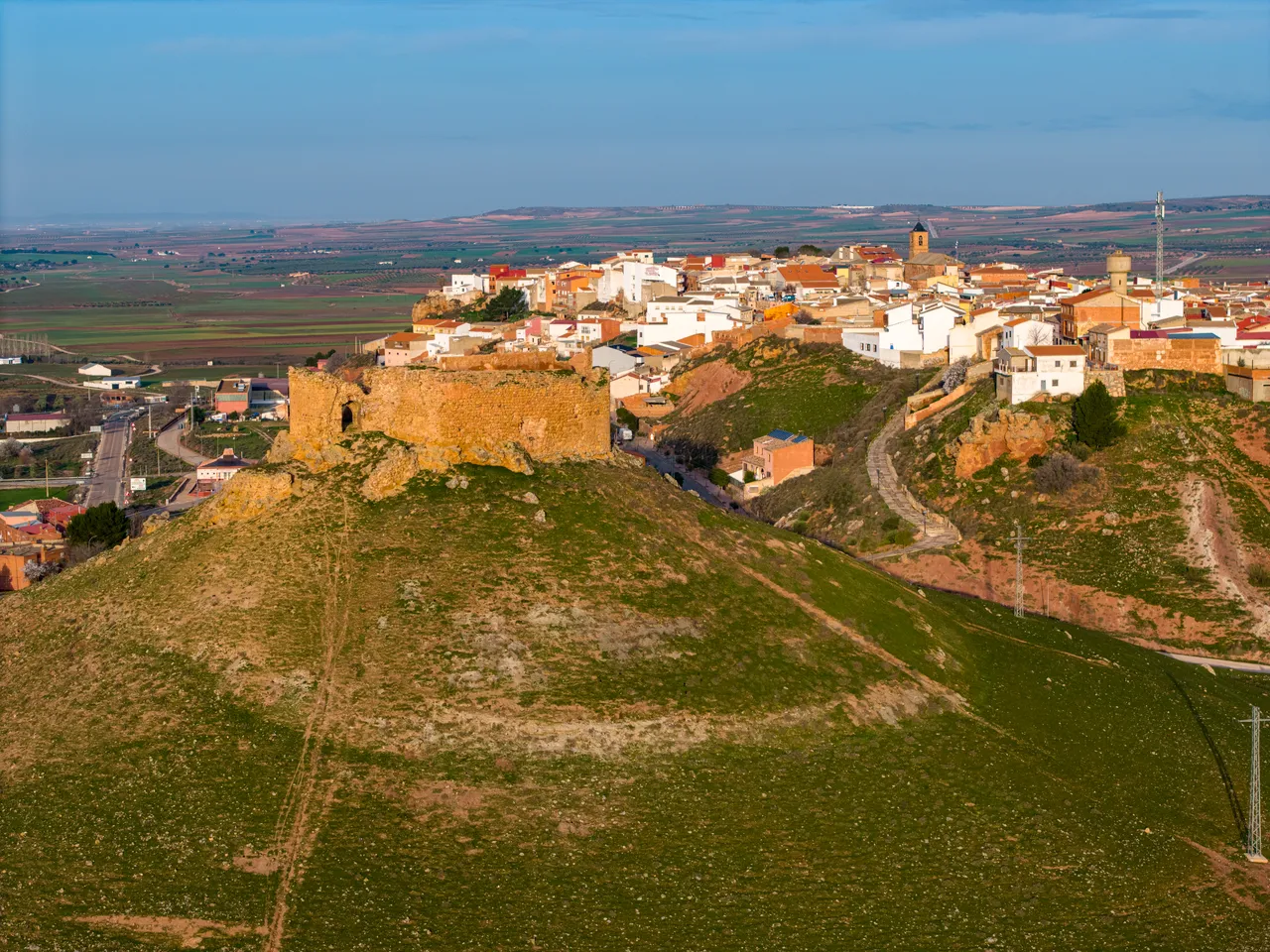
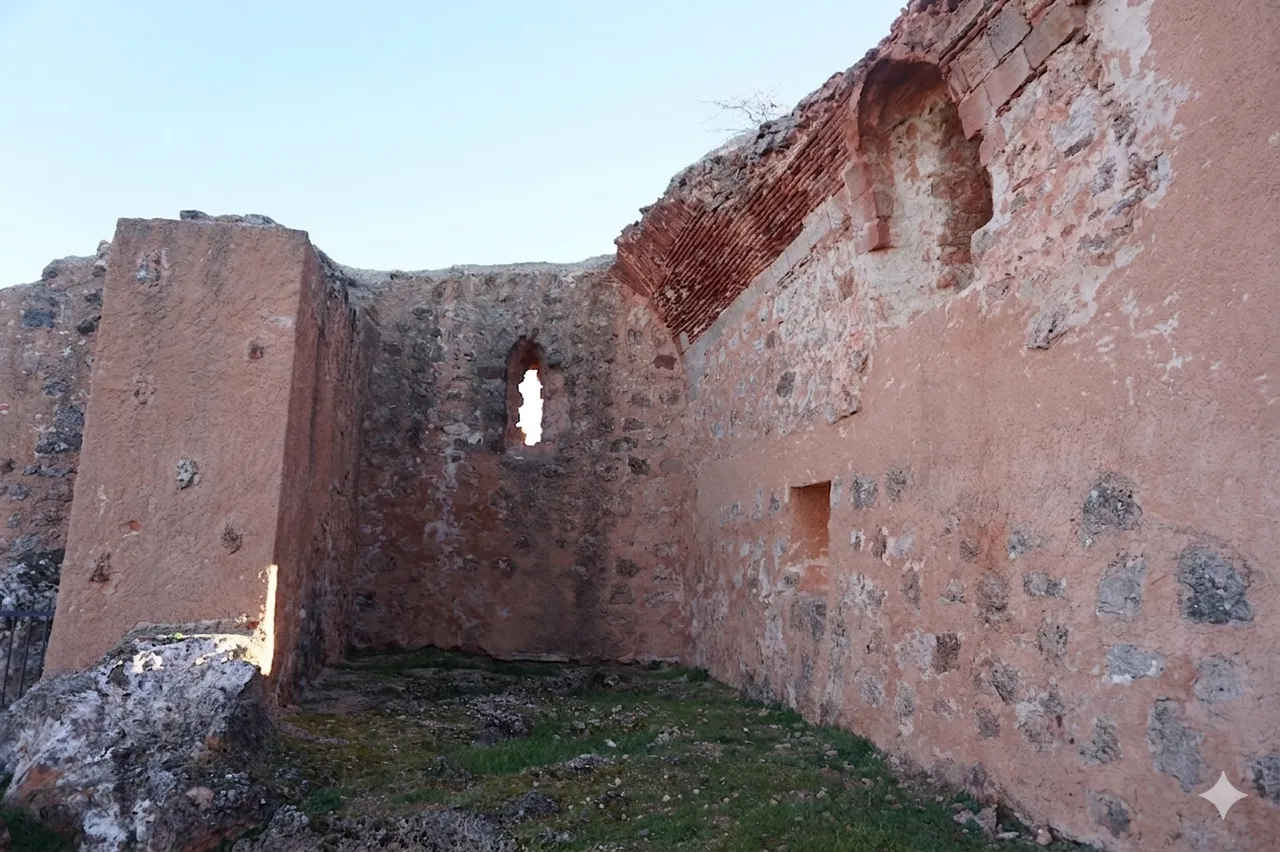
The fortress at the easternmost point. Albaladejo Castle crowns the plateau on which the town sits, next to the Parish Church of St. James the Apostle. Of possible Roman origin, it was transformed by the Arabs and expanded and rebuilt by the Order of Santiago in the second half of the 13th century as an outpost of their eastern domains, with commanding views to the south and east and over the historic Al Balah, the Arab road that gives the town its name and followed the route of the Via Augusta. The Topographical Reports of Philip II describe it not as a castle but as a very old tower, made of lime and stone, with a well-constructed brick vault. Today, a section of the wall, two attached towers, and the recently renovated interior remain, now an open-air auditorium and viewpoint surrounded by gardens.
Stop 3. Aben Yucef Castle and Interpretation Centre of the Order of Santiago (Terrinches)
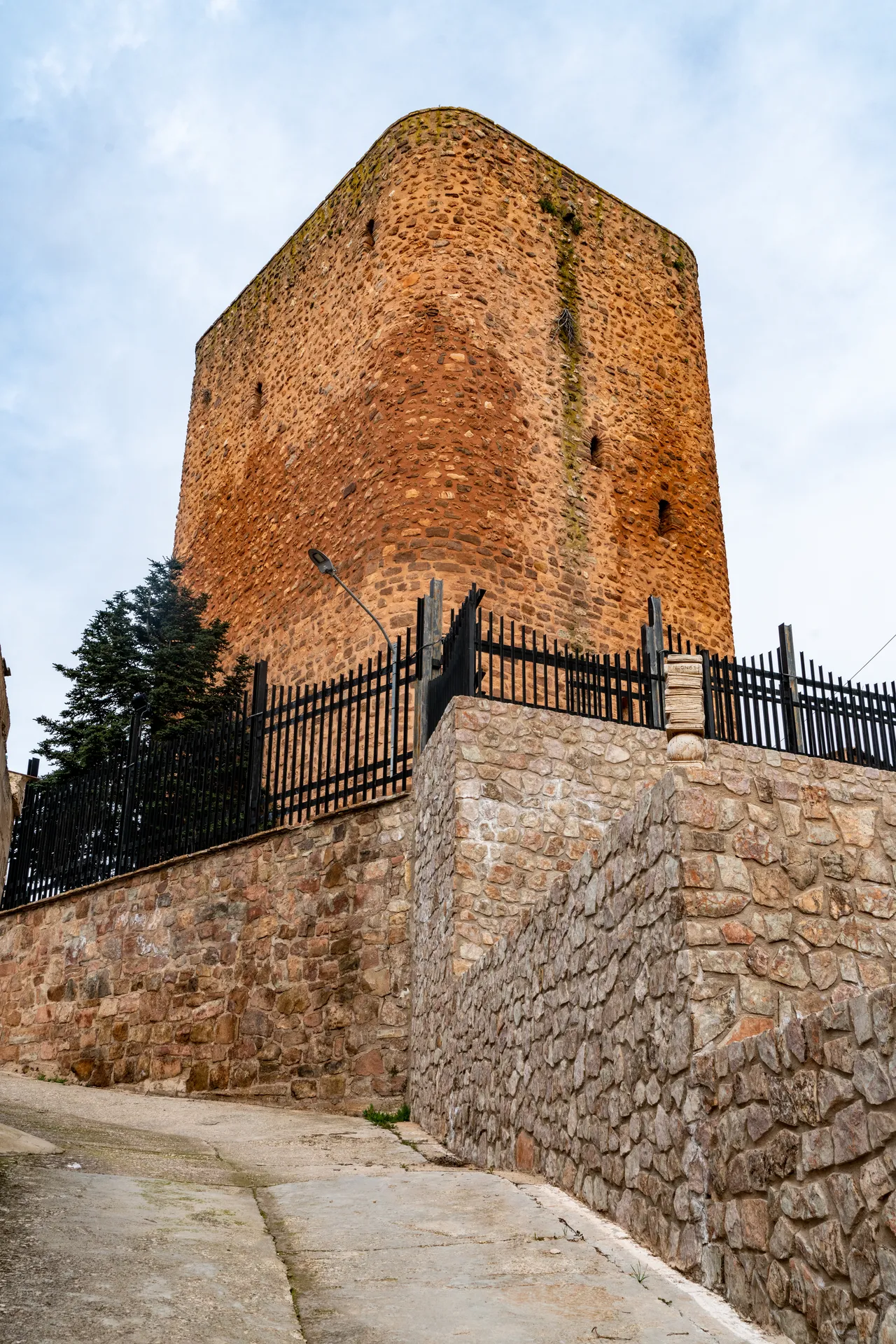
Terrinches Castle, with its slightly trapezoidal floor plan, consists of a large keep surrounded by a perimeter wall with circular turrets at its four corners. It may have been built on the site of an old Almohad tower, documented in the 1213 campaign. It was declared a Site of Cultural Interest, and in 2005 the Terrinches Town Council acquired it for restoration. In 2011, the Interpretation Center of the Order of Santiago and the Campo de Montiel region was inaugurated inside, featuring screens and models that explain the history of the region, the Santiago defensive system, and medieval life in the area. In 1282, it was the scene of a raid by the Sultan of Morocco, Ibn Yusuf: the local residents, led by the warden's wife, resisted the siege with a character that the Relaciones de Felipe II (Reports of Philip II) described as that of a manly person.
Stop 4. Torreón de Puebla del Príncipe
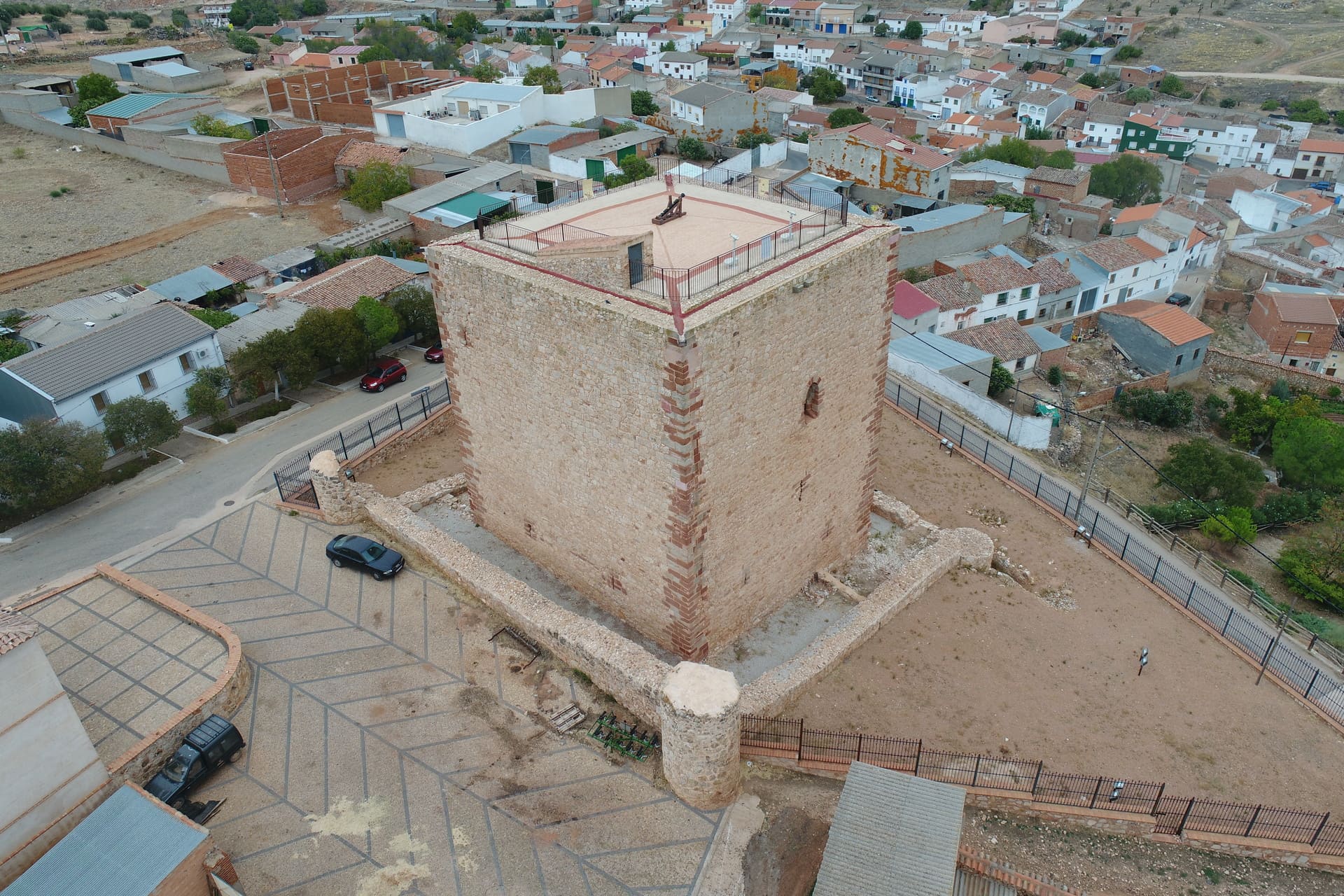
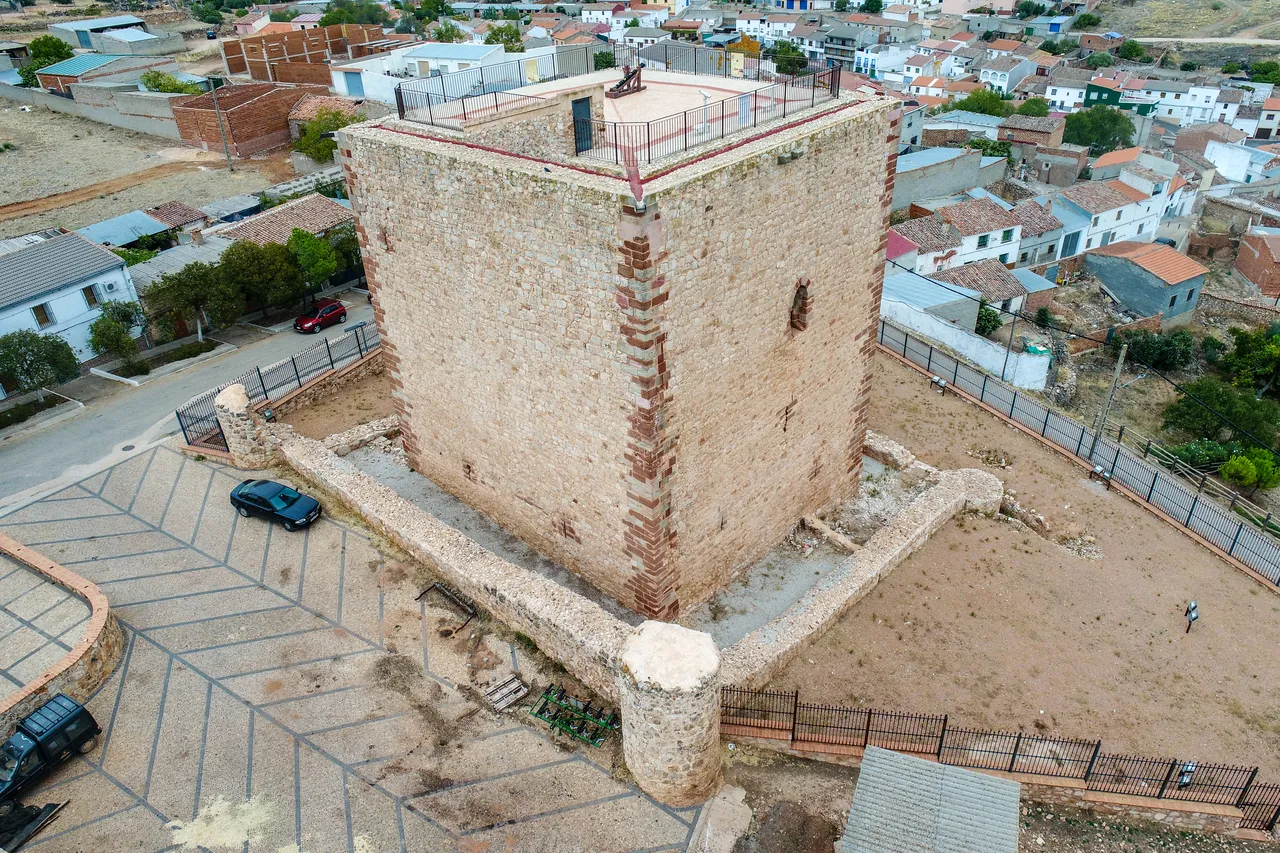
The tower that watched over books after having watched over borders. Closing the first day on the same defensive belt: the Torreón de Puebla del Príncipe, whose construction dates back to around the end of the 12th century, formed part of the second ring of watchtowers in Montiel and was visually connected to those of Terrinches and Albaladejo. With an almost square floor plan, rounded corners, and two-meter-thick masonry walls, it reaches three levels accessed by a stone staircase embedded in the wall itself. An ingenious system of stone channels collected rainwater and carried it to a cistern beneath the tower. After its military function, it served as a dwelling, wine cellar, dovecote, and granary. Today, restored, it houses the municipal library.
Day 2 – SUNDAY (60 km)
Stop 5. Castillo de la Estrella – Montiel
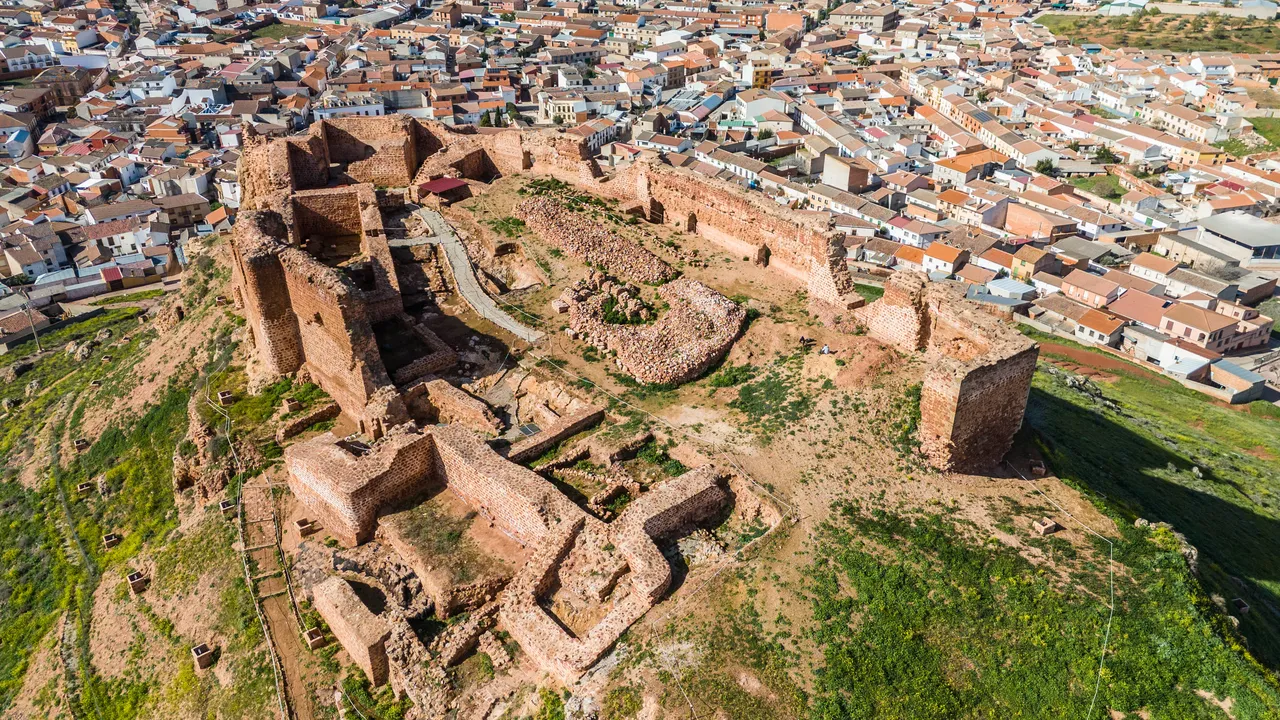
The Castle of La Estrella in Montiel stands atop a steep, 961-meter-high hill, its summit completely covered. Of Arab origin, built in the 9th century and renovated in successive phases by the Order of Santiago, it was the refuge of King Pedro I after his defeat by his brother Henry of Trastámara on March 14, 1369, where he was besieged for nine days. On the night of March 23-24, Pedro I died at the hands of his brother in what is known as the Tragedy of Montiel, marked by the famous intervention of Bertrand du Guesclin and his celebrated phrase, "I neither depose nor enthrone kings, but I serve my lord." Today, the archaeological site, managed by the Castillo de la Estrella Foundation, is home to excavations that have unearthed the medieval town, with three distinct areas: the Arab fortress (hisn), the Santiago castle, and the medieval village.
Stop 6. Rochafrida Castle – Ossa de Montiel
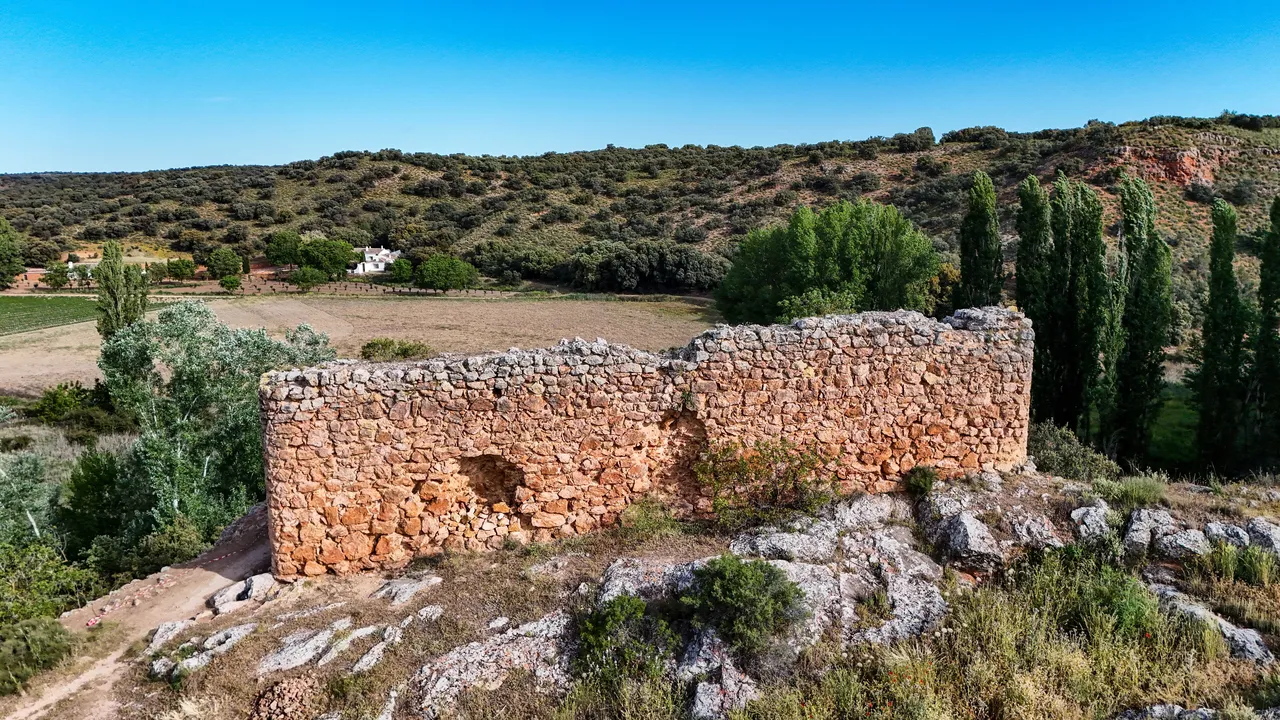
The castle of medieval romances. Located in the Lagunas de Ruidera Natural Park, 7 km from Ossa de Montiel, Rochafrida Castle is the fortress that medieval poetry transformed into the setting for the impossible love between the beautiful Rosaflorida and the nobleman Montesinos. Two 14th-century romances—those of 'Rosaflorida' and 'Fontefrida'—immortalized this enclave, whose legend was also captured by Cervantes in Don Quixote's dream within the Cave of Montesinos. Of Berber origin (Masmuda tribe), it was built in the 12th century and passed to the Order of Santiago after the Battle of Las Navas de Tolosa (1212). Its irregular twelve-sided layout, dictated by the terrain, preserves the remains of a keep and part of a wall more than two meters wide. From the top, there are extraordinary panoramic views over the Natural Park. The 4 km trail leading to the castle begins at the Hermitage of San Pedro.
Stop 7. Alhambra Castle – exterior visit ~
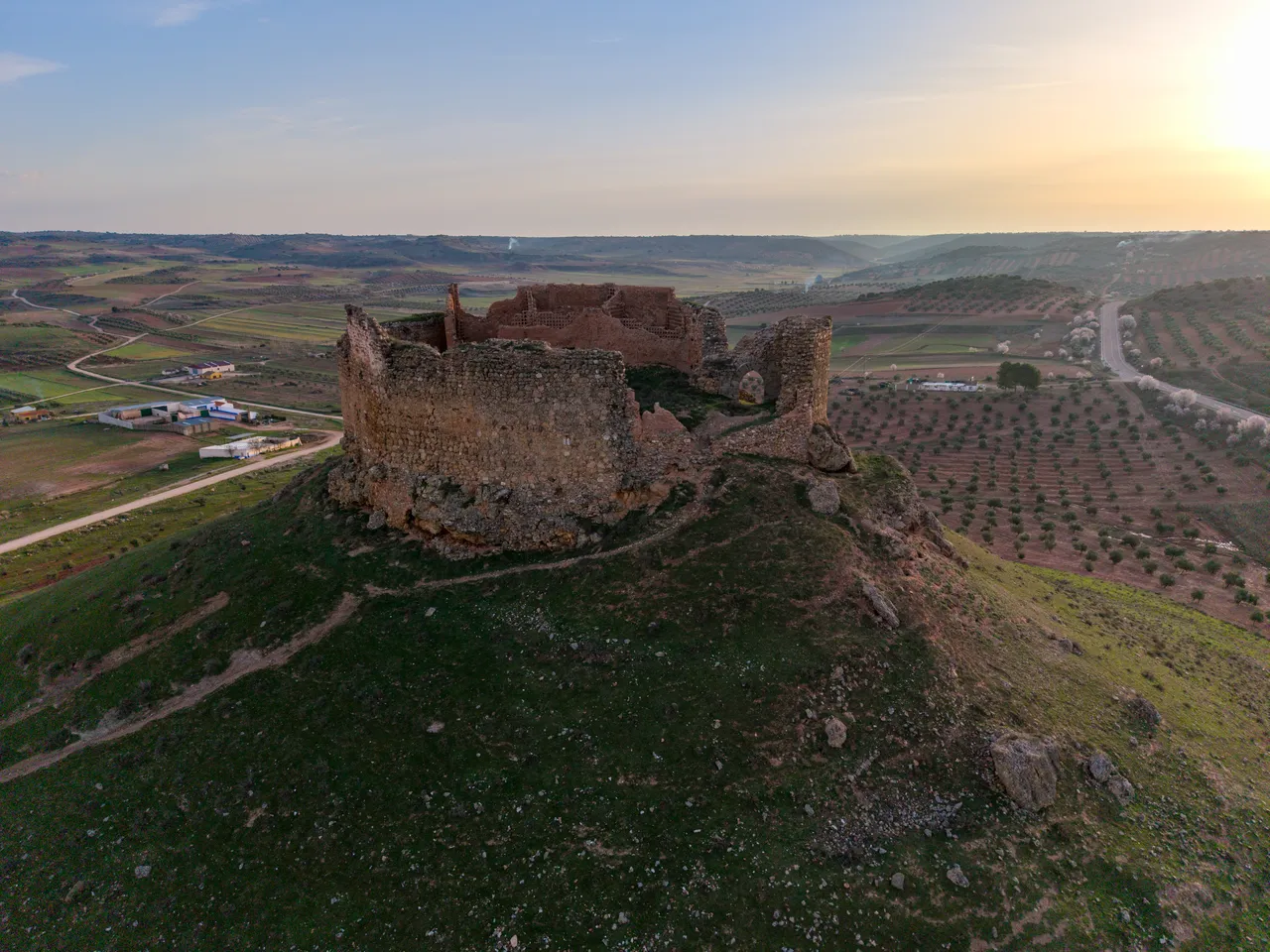
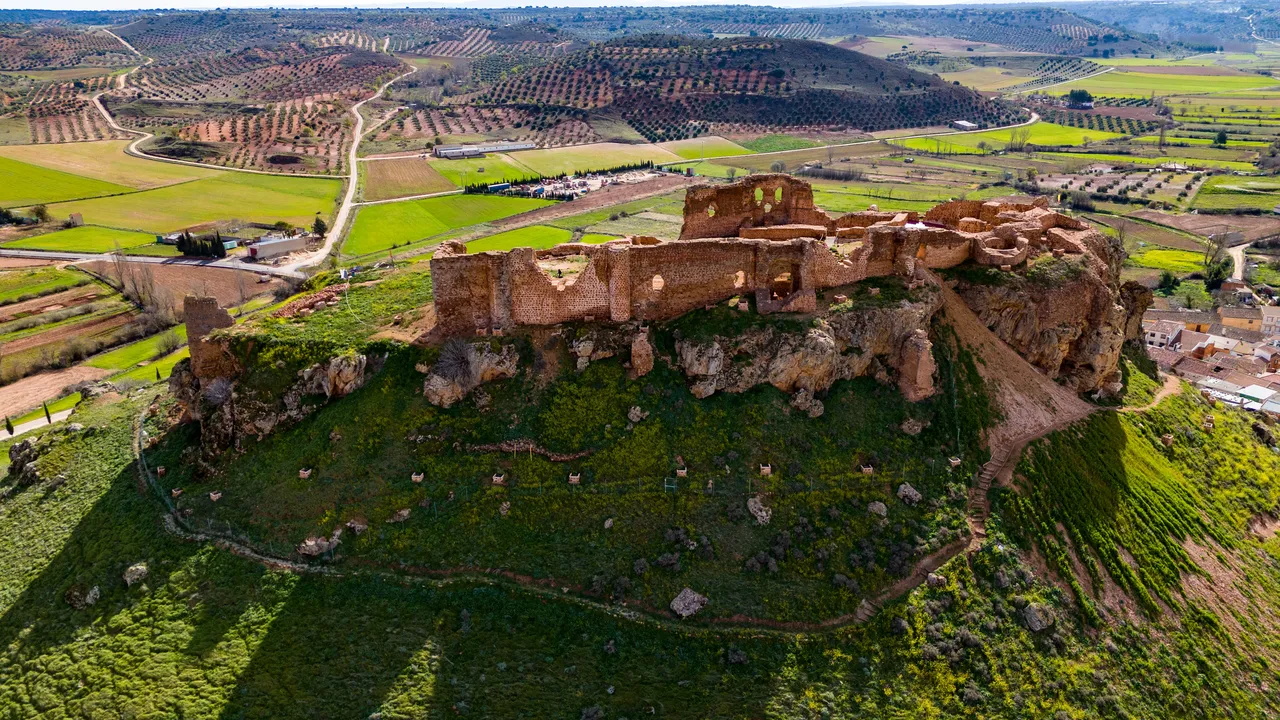
The end of the route: Alhambra Castle stands atop a nearly perfectly truncated conical hill, just over 800 meters above sea level, south of the town of the same name. Of Umayyad origin, it was conquered by Alfonso VIII and given to the Order of Santiago on June 3, 1214, a possession confirmed by papal bull in 1223. Having lost its strategic importance when its surrounding territory was divided between the Orders of Calatrava and Saint John, it began a gradual decline that has left it in a state of total disrepair. Despite being protected under Spanish Historical Heritage legislation, it is privately owned and access to the interior is prohibited due to the risk of rockfalls; the Alhambra Town Council is in the process of acquiring it to begin its restoration. It is recommended to visit the fortress exclusively from the outside: the 120-meter path that climbs the hillside allows you to admire its impressive 14 oval-shaped sections of wall, almost two meters thick and up to eight meters high, the numerous arrow slits, and the beautiful main gate with a pointed arch between two towers—perhaps the most beautiful element that the fortress retains. Comfortable footwear is essential.
Practical information
⚠️ IMPORTANT NOTICE REGARDING HOURS:
He Montizón Castle, The first stop on the route is from private property and has very limited visiting hours. It is recommended to plan your route starting on Saturday, Day 1, which is the only day with guaranteed regular opening throughout the year.
📍Montizón Castle (Villamanrique)
Address: Private estate 8 km from Villamanrique towards Torre de Juan Abad (Villamanrique, C. Real)
Property: Private
Access: Free guided tour, arranged through the Villamanrique Town Hall
Tel. 609839050
Web: www.castillomontizon.com
Schedule:
April and May: Saturdays from 9:00 a.m. to 2:00 p.m.
July and August: Thursdays, Fridays and Saturdays from 9:00 a.m. to 2:00 p.m.
January, February, March, June, October, November and December: Fridays and Saturdays from 9:00 a.m. to 2:00 p.m.
September: CLOSED, all visits prohibited
Note: Some areas of the monument are in poor condition. Visitors enter at their own risk. Pets are not allowed.
📍Aben Yucef Castle and Interpretation Centre of the Order of Santiago – Terrinches
Address: Avenida del Torreón, s/n, 13341, Terrinches (Ciudad Real)
Access: Visits on demand, with prior reservation
Tel: 926 387 201
Web: terrinches.com/turismo/
Email: turismo@terrinches.com
📍Albaladejo Castle
Address: Calle de San Juan, Albaladejo (Ciudad Real).
Property of: Albaladejo Town Hall
Access: Free and open all day
Town Hall Tel.: 926 387 301
Web: albaladejo.es
Mail: townhallalbmb@gmail.com
📍Tower of Puebla del Príncipe
Address: Tr.ª Castillo, 1, 13342, Puebla del Príncipe (C. Real)
Ownership: Public (City Council)
Town Hall Tel.: 926 387 301
Web: puebladelprincipe.es
Mail:ayuntamiento@puebladelprincipe.es
Access: The interior houses the municipal library. Please check opening hours with the Town Hall.
📍Castillo de la Estrella – Montiel
Meeting point:
C/Diputación, 8, 13326 Montiel C. Real
Contact Fundación Castillo de la Estrella:
Guided tour reservations: 926353496/688289246/644211027
Web: fundacioncastillodelaestrella.org
Mail: info@fundacioncastillodelaestrella.org
📍Rochafrida Castle – Ossa de Montiel (Albacete)
Address: Rochafrida area, municipality of Ossa de Montiel. Access via a path from near the Montesinos Cave
Access: Free
Contact Ossa de Montiel tourist office
Tel: 967 377 670
Web: ossademontiel.es
Mail: officeturismo.ossa@dipualba.es
📍Alhambra Castle – exterior visit
Address: Hill south of the town of Alhambra (Ciudad Real). Access via a steep 120m path
⚠️ StateProgressive ruin. Privately owned (the Alhambra City Council is in the process of acquiring it for restoration). Access to the interior is prohibited due to the risk of rockfalls.
Recommendation: It is recommended to visit only from the outside and the viewpoint on the hill, from where the sections of the wall and the original pointed gate can be seen.
Alhambra Town Hall Tel.: 926 895 002
♿ Accessibility:
The nature of these tourist attractions, located in natural settings and with unpaved access, significantly limits accessibility for people with reduced mobility. The Torreón de Puebla del Príncipe and the Castillo de Albaladejo, both integrated within the town itself, are the most accessible.
Emergencies: 112
Civil Guard: 062
Villamanrique Health Centre: 926 378 140
Ossa de Montiel Health Centre: 967 377 058
Montiel Health Center: 926 353 138
Puebla del Príncipe Health Center: 926 361 065
Terrinches Health Centre: 926 358 020
Albaladejo Health Centre: 926 387 301
Alhambra Health Centre: 926 895 111
Points of interest on this route
C. San Juan, 23, 13340 Albaladejo
Alhambra
Montiel
Villamanrique
Camino del Tovar, s/n, Ossa de Montiel
Terrinches
Tr.ª Castillo, 1, 13342 Puebla del Príncipe
Municipalities on the route
926 387 301
https://albaladejo.es/
ayuntamientoalbaladejo@yahoo.es
926 356 806
https://alhambra.infomancha.com/
aytoalhambra@gmail.com
926 353 031
https://ayuntamientodemontiel.es
administracion@ayuntamientodemontiel.es
967 37 70 00
https://www.ossademontiel.es/
ossa@dipualba.es
926 35 90 09
https://www.puebladelprincipe.es/
ayuntamiento@puebladelprincipe.es
926 38 72 01
https://terrinches.com
terrinchesweb@gmail.com
926 354 009
https://www.villamanrique.net
info@villamanrique.net
Other routes
Discover other nearby routes that may also interest you
Mixed
Agoras
The Campo de Montiel region offers three lively meeting places that invite you to sit and enjoy the moment, making it truly difficult to leave. These are the town squares of La Solana, San Carlos del Valle, and Villanueva de los Infantes.
Distance
40 km
Duration
1 day
Difficulty
Easy
Municipality
Several
Gothic Route – Milky Way
Medieval Christian tradition identified the Milky Way with the Camino de Santiago: that path of stars crossing the night sky was the silent guide leading pilgrims to Compostela. We propose a metaphorical journey through stars sculpted in stone by the ribbed vaults, whose ribs intertwine like constellations to support the firmament of the churches that the Order of Santiago erected throughout the Campo de Montiel. No other territory in Castilla-La Mancha...
Distance
120 km
Duration
2 days
Difficulty
Easy
Municipality
Several
Mixed
Starry skies
The Campo de Montiel, a Starlight Destination, offers high-quality skies and astronomical viewpoints in Alhambra, Villahermosa and Ruidera to enjoy stargazing tourism.
Distance
40 km
Duration
1 day
Difficulty
Easy
Municipality
Several
Baroque Art Route
During the 17th and 18th centuries, the Campo de Montiel region was one of the areas of greatest artistic ferment in Castilla-La Mancha. The consolidation of a prosperous local nobility linked to the Order of Santiago and the influence of the Counter-Reformation spurred the construction of sumptuous portals, altarpieces with Solomonic columns, soaring bell towers, convents, hospitals, and civic palaces that still grace the urban landscape of the region today. This route, which...
Distance
110 km
Duration
2 days
Difficulty
Easy
Municipality
Several
Mixed
Route of the Castles
Few regions have managed to preserve a landscape dotted with as many castles as the Campo de Montiel. More than thirty fortresses mark its geography, a legacy of centuries of frontier between Islam and Christianity, whose main protagonist was the Order of Santiago.
Distance
27 km
Duration
1 day
Difficulty
Easy
Municipality
Several
Renaissance Art Route
The Campo de Montiel region boasts one of the most remarkable collections of Renaissance architecture and visual arts in Castilla-La Mancha. Throughout the 16th century, the economic prosperity fostered by the Order of Santiago and a flourishing local nobility financed churches, Plateresque portals, Mannerist altarpieces, and stately homes that still stand as the most visible testament to the region's splendor. It was also in this landscape that Fernando Yáñez de Almedina, a direct disciple of Leonardo da Vinci, was born.
Distance
75 km
Duration
1 day
Difficulty
Easy
Municipality
Several


© Campo de Montiel - 2026