
A magical tour that will allow you to enjoy the countryside and natural resources in the heart of Campo de Montiel
Distance
110 km
Duration
2 days
Difficulty
Easy
Level difference
-
Guy
Linear
Mode
By car
Route description
A must-do two-day route to fully understand the Baroque art of La Mancha. The density and exceptional quality of the sites—churches, convents, palaces, altarpieces, portals, and processional images—make it necessary to spread the visit over two days to appreciate them at the leisure they deserve. The first day travels from north to south, from La Solana to Villanueva de los Infantes, taking in the major landmarks of public and religious Baroque architecture. The second day completes the route south with the Baroque interiors of Torre de Juan Abad and the exceptional image of Castellar de Santiago.
Day 1
Stop 1. Church of Santa Catalina and Baroque Portals – La Solana
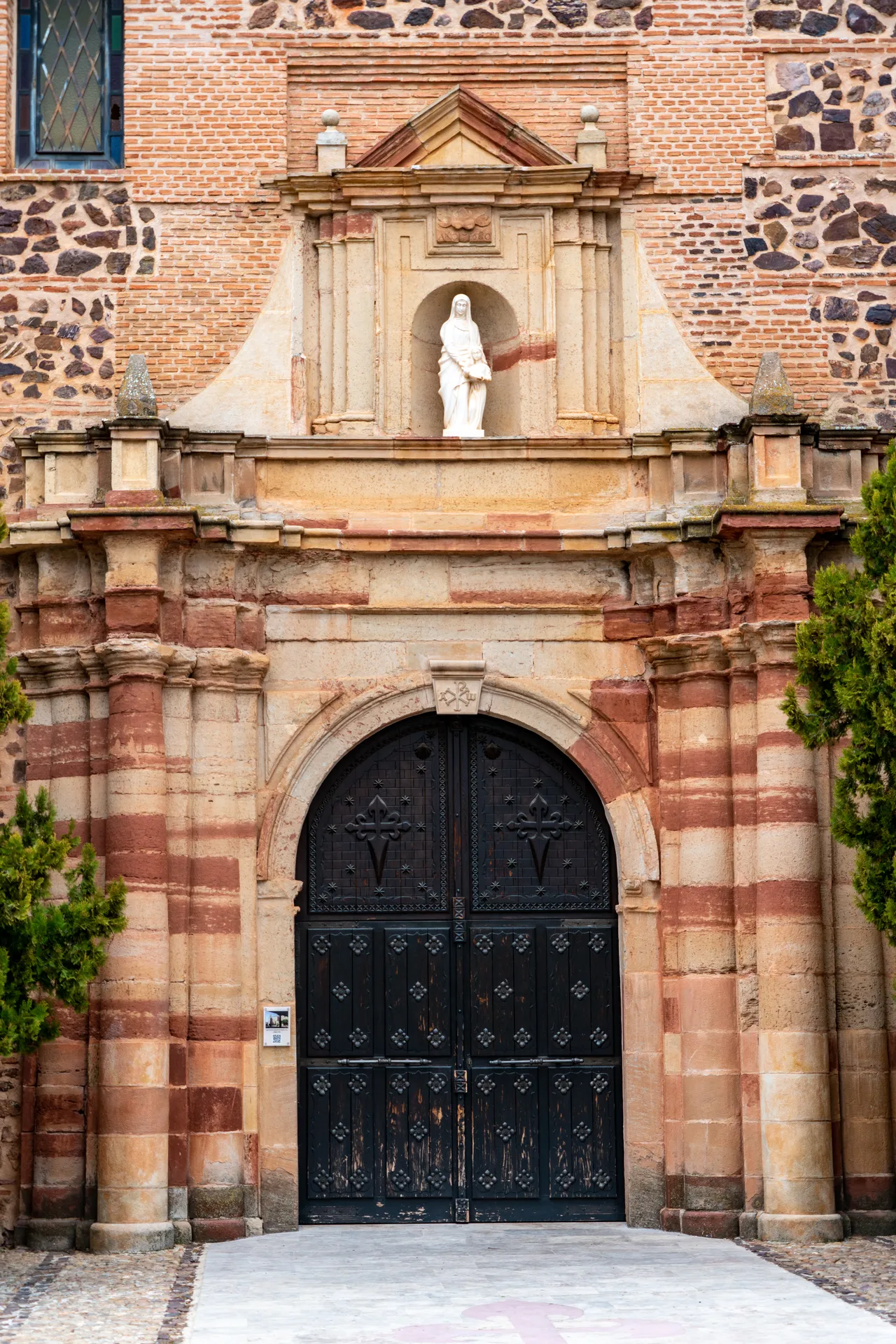
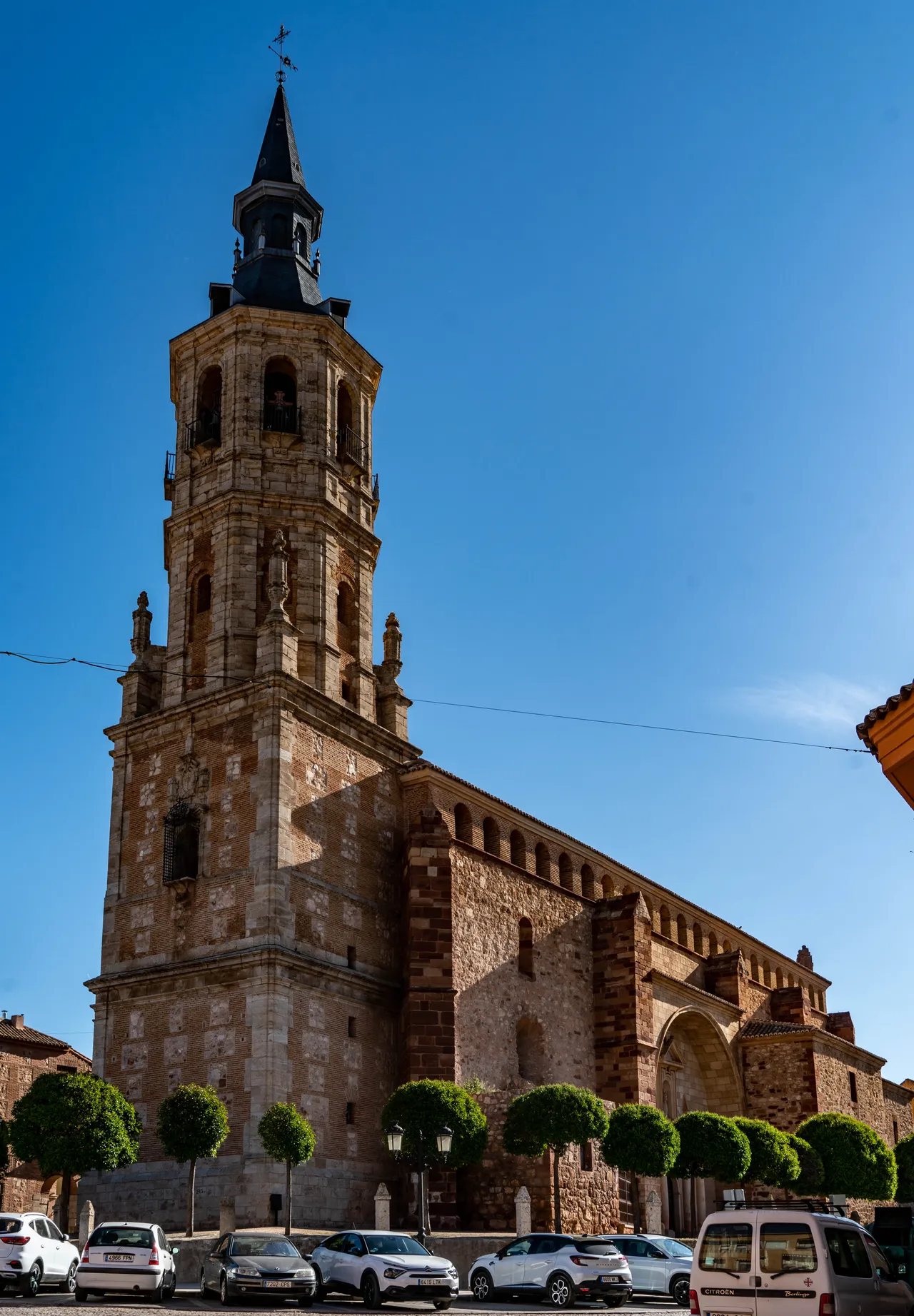
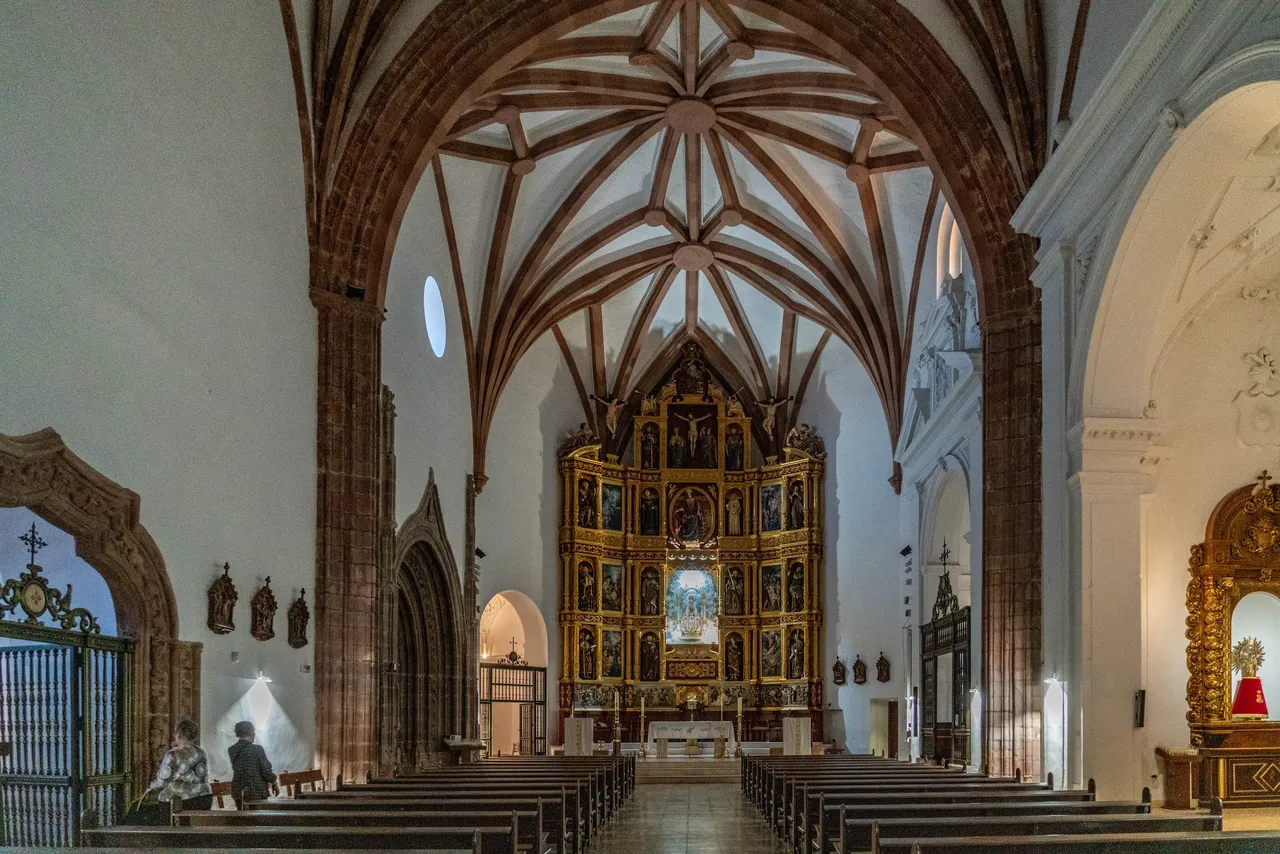
The Parish Church of Santa Catalina de La Solana, declared a Historic-Artistic Monument and restored in 2017, is one of the most remarkable churches in the Campo de Montiel region. Begun in 1420 and completed in 1524, it boasts five centuries of artistic history. Its two transitional Renaissance-Baroque portals are particularly noteworthy: the Portal of Santa Catalina (1656), built in granite by Ruíz Hurtado, with two sections—the lower one framed by double columns on a high plinth and the upper one with a niche of the saint flanked by Corinthian columns and a large curved pediment topped with spheres—and the Portal of the Sun or of Santiago (1680), under a large semicircular arch with a Baroque temple in the arch and a niche with a relief of the Apostle. The most striking feature of the exterior is the Bell Tower, the most majestic in the province, designed by Alejandro Núñez de la Barrera—the same architect as San Carlos del Valle—and Miguel Mestanza, and completed in 1765 with a magnificent spire. Inside, nestled among chapels and star-shaped ribbed vaults, the main altarpiece is preserved, a work by Luís de Vellorino and Juan Ruíz Delvira, straddling Mannerist and Baroque styles.
Stop 2. Church of the Holy Christ of the Valley and Main Square – San Carlos del Valle
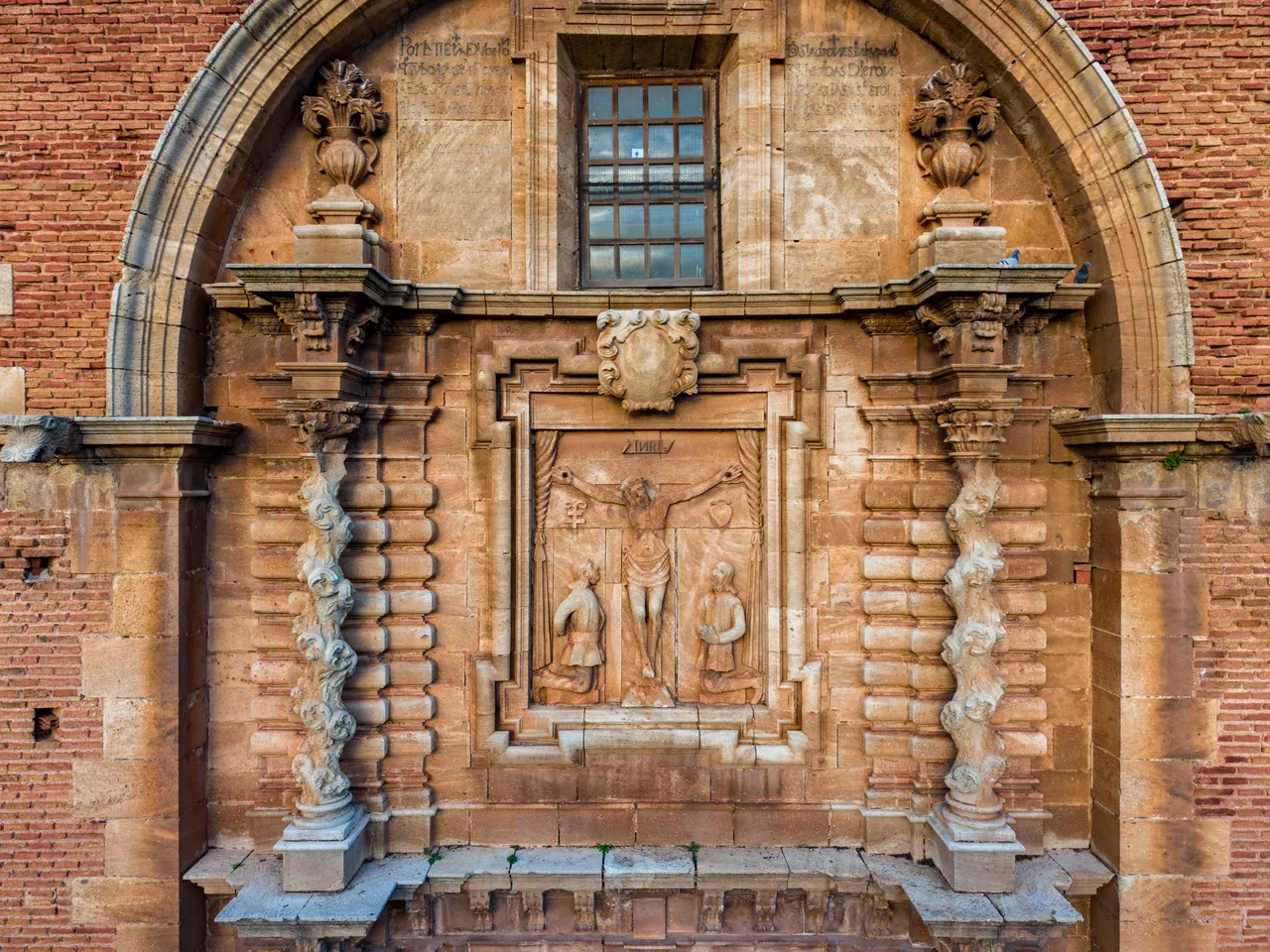
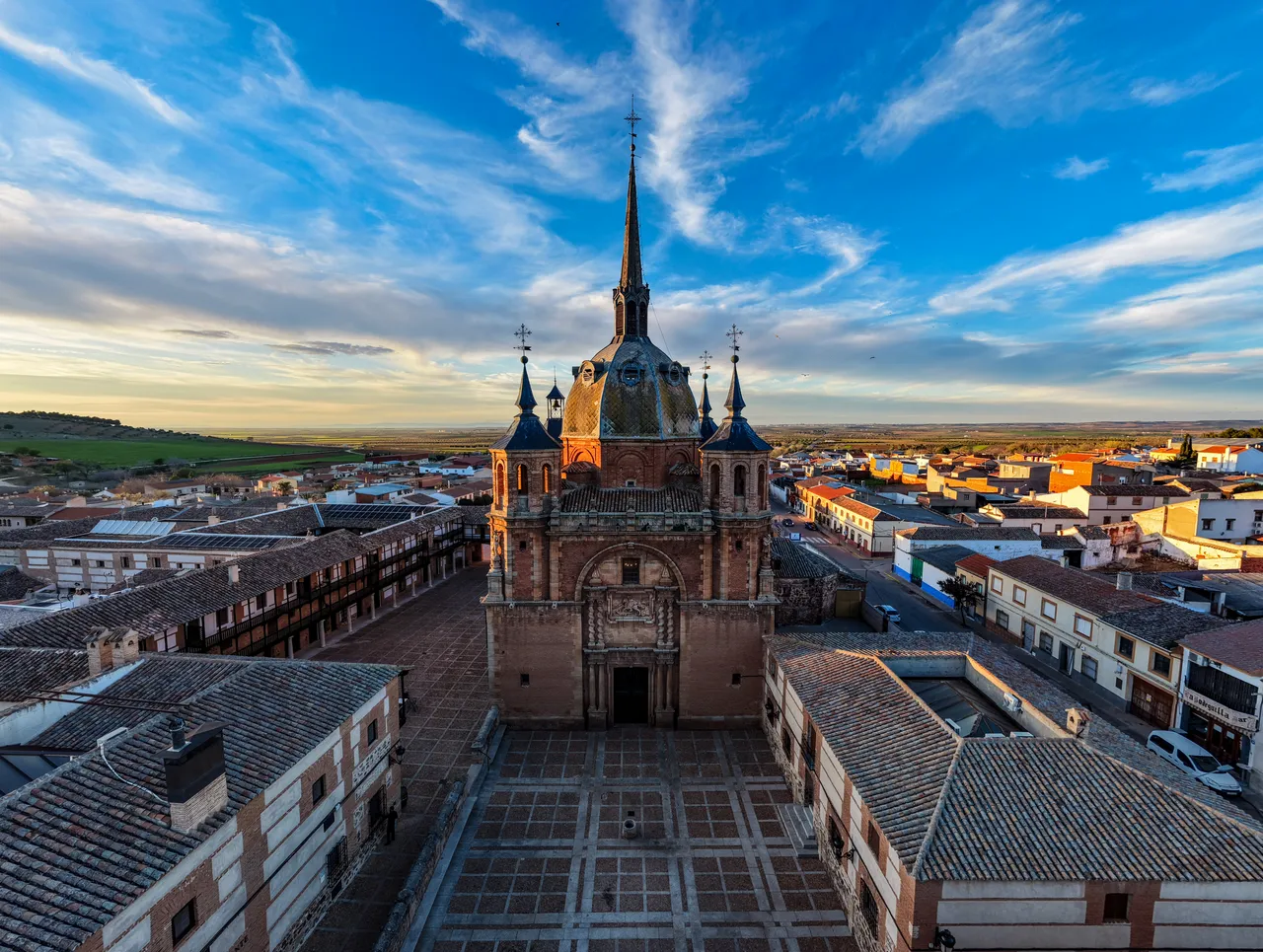
The most original and unified example of Baroque architecture in the Campo de Montiel region, the Church of the Holy Christ of the Valley, built between 1713 and 1729 by Juan Alejandro Núñez de la Barrera for the Order of Santiago, is the most striking late Baroque church in the province of Ciudad Real. Known as the "Vatican of La Mancha," its Greek cross floor plan inscribed within a square is crowned by an imposing central dome with an octagonal drum measuring 28 meters on the interior, reaching 47 meters with its slender slate spire, flanked by four octagonal towers at the corners. Its two altarpiece-like portals are masterpieces of late Baroque: the first, with a recessed arch and Tuscan and Solomonic columns on rusticated stonework, depicts the miracle of Christ with the thieves in relief; the second, more ornately decorated, features Saint James on horseback above a lintel doorway. The attached Plaza Mayor—also designed by Núñez de la Barrera—is one of the most unique Baroque civic spaces in Castilla-La Mancha, featuring Tuscan columns and galleries with wooden balustrades. The church-plaza complex has been declared a Site of Cultural Interest since 1993.
Stop 3. Baroque complex of Villanueva de los Infantes
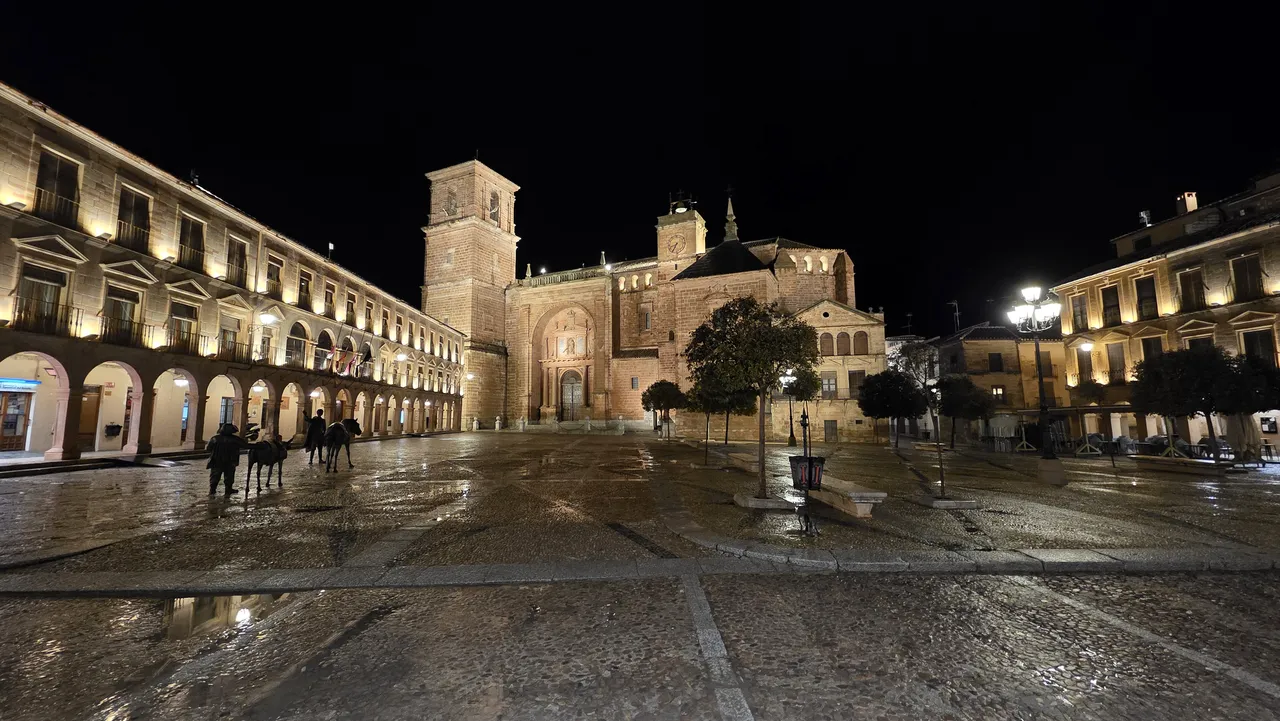
The epicenter of La Mancha's Baroque architecture. Villanueva de los Infantes, declared a Historic-Artistic Site in 1974, is the municipality that best concentrates the civil and religious legacy of the 17th century in the region. The afternoon should be dedicated entirely to exploring its many Baroque treasures.
The Portal of the Church of San Andrés (1611-1614), the work of the sculptor and architect Francisco Cano, is the key piece of the Infanteño Baroque: with a clear Herrerian and Serlio-Vignolesque influence, with double Doric columns on a plinth that support a temple of Ionic columns and a broken pediment with the coat of arms of the Habsburgs and the figure of Saint Andrew.
The Hospital of Santiago (1631), with a beautiful classicist facade in stone and coats of arms of the Order.
The Convent of Santo Domingo (17th century), where Francisco de Quevedo died on September 8, 1645, and whose cell can be visited. The convent church preserves splendid Baroque altarpieces.
The Convent of the Incarnation (1598), founded by the Dominican nuns, with a baroque altarpiece-façade of great interest on Cervantes Street with a high relief of the Incarnation.
The Oratory of Saint Thomas, a high baroque building probably built for the beatification (1618) or canonization (1648) of the saint.
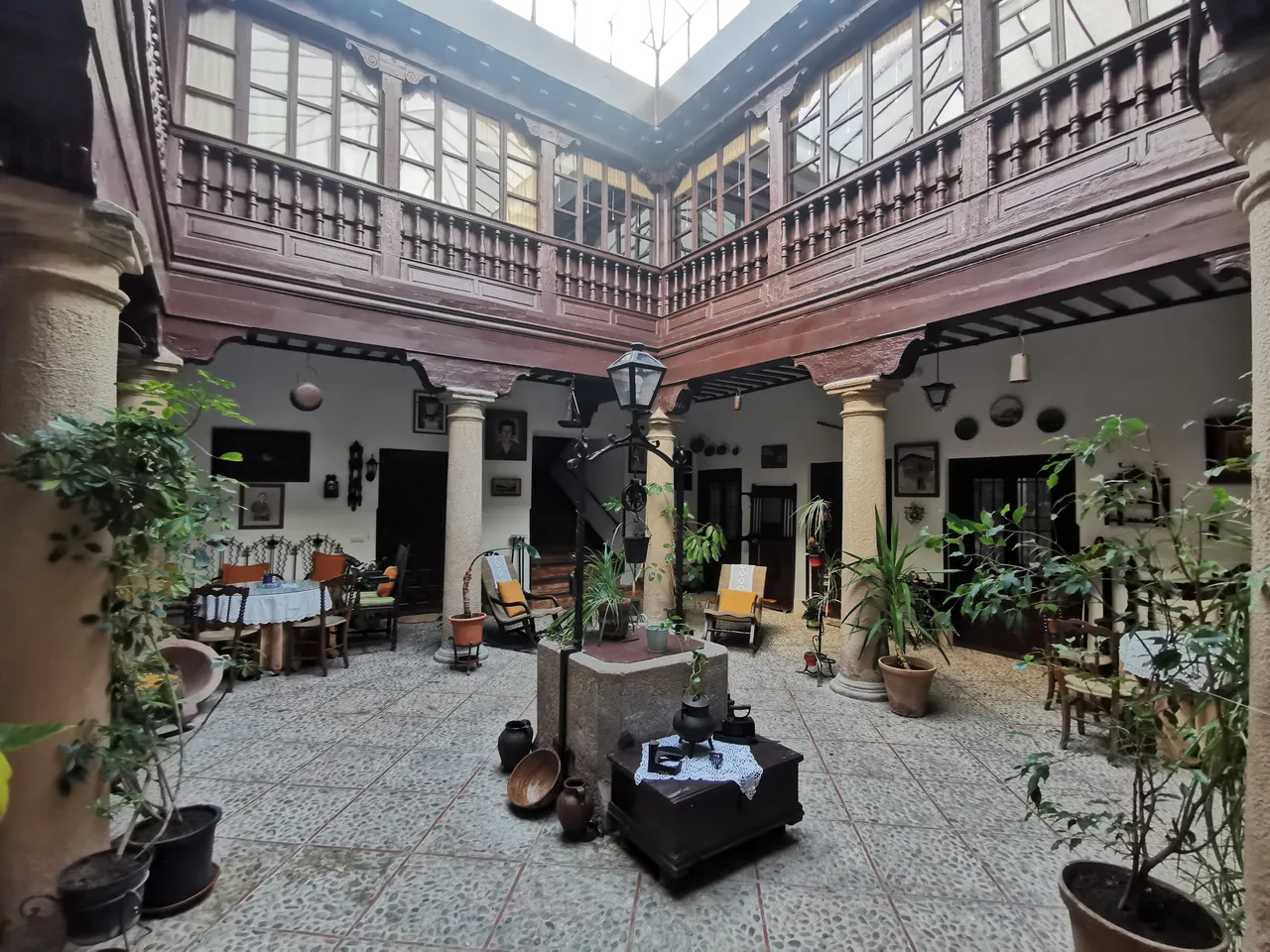
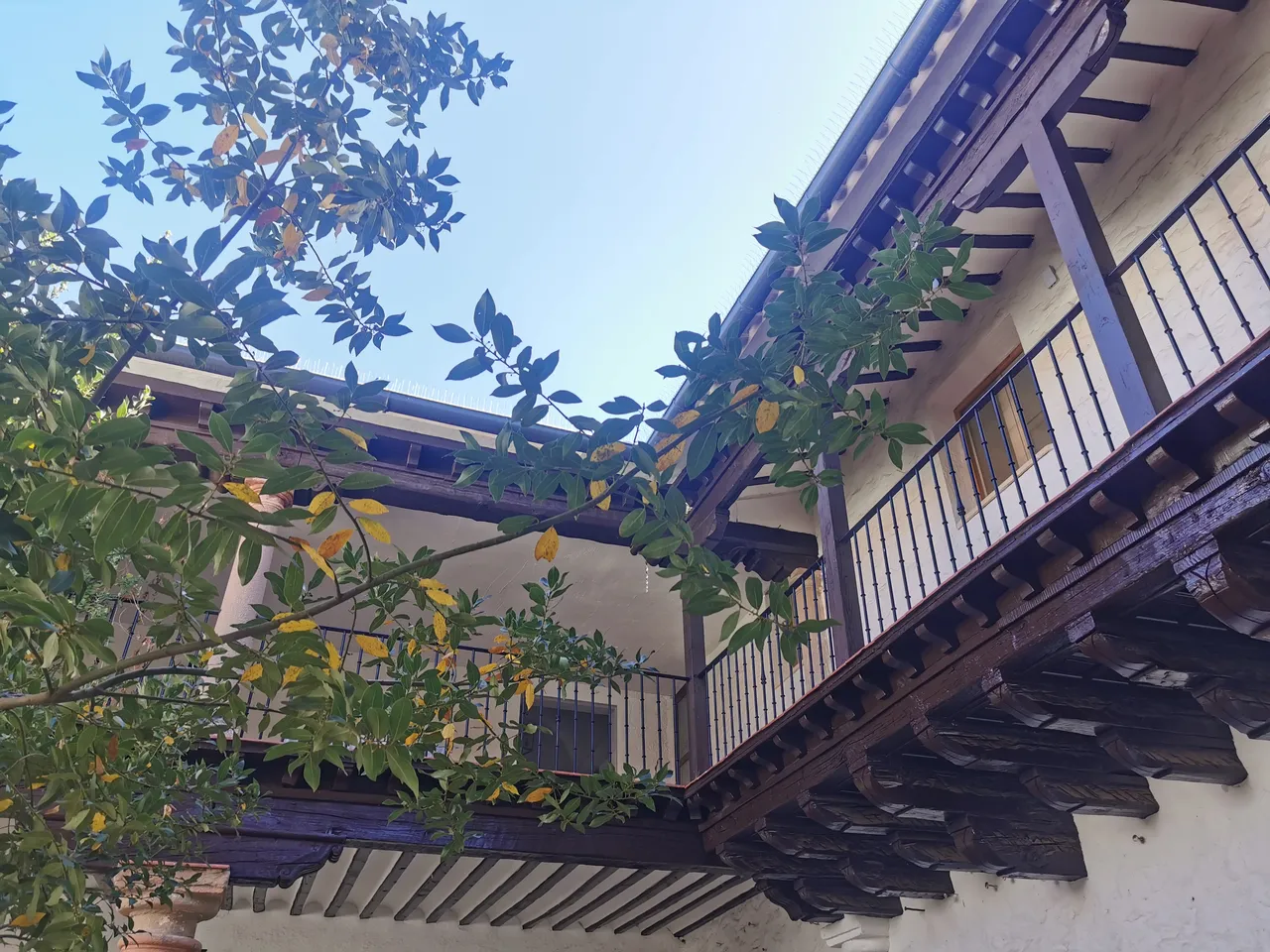
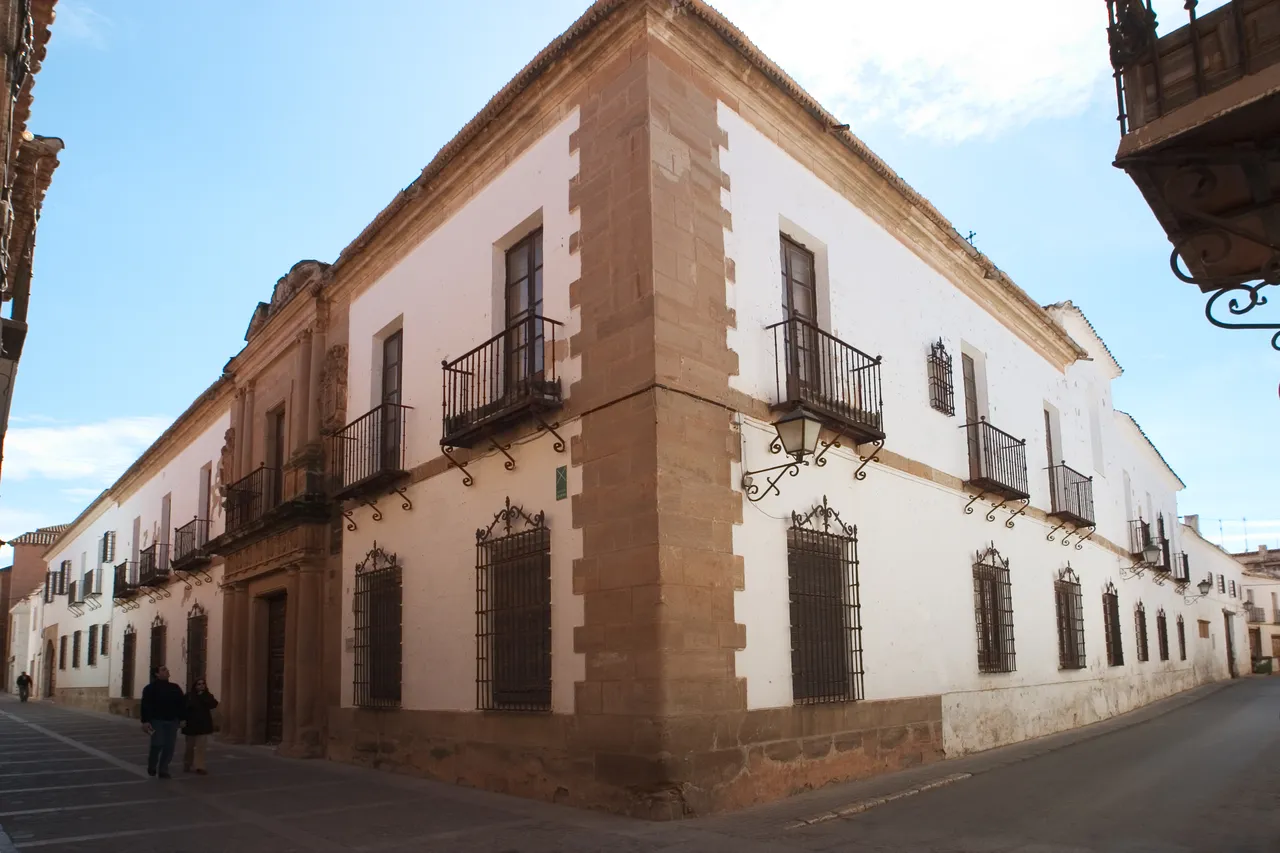
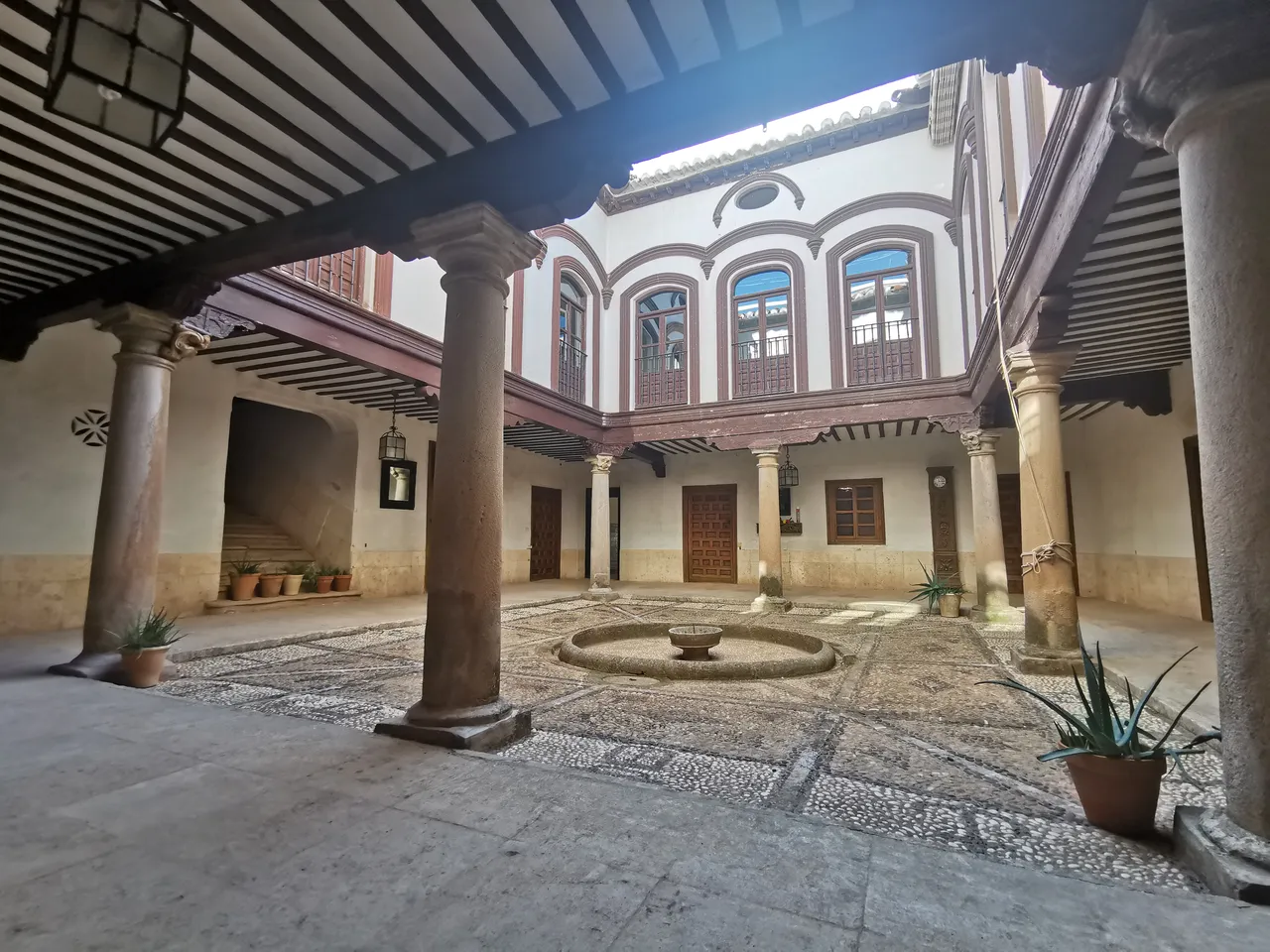
The Baroque houses and palaces: the Palace of the Marquis of Melgarejo with its grand Neoclassical façade; the Rebuelta Palace with its courtyard of pseudo-Ionic columns; the Casa del Arco, whose Neoclassical portal directly evokes that of the Church of San Andrés. More than 160 heraldic shields decorate stone portals and façades.
The Plaza Mayor (early 17th century) with its arcades and the Baroque civil architecture that surrounds it.
Day 2
Stop 4. Church of Saint Sebastian Martyr – Montiel
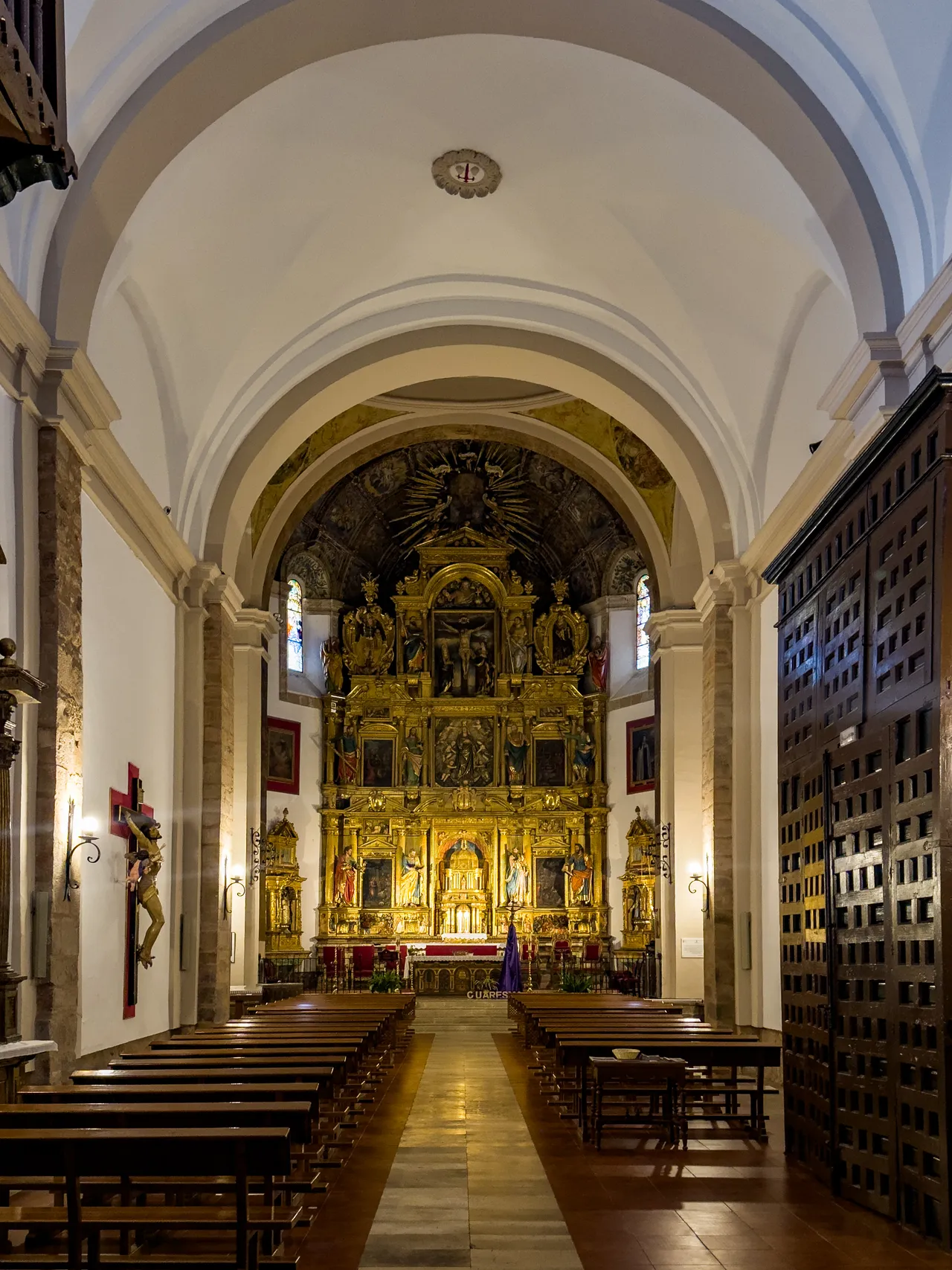
First stop of the second day: the clearest example of the Baroque transformation of a medieval church in the Campo de Montiel region. The Church of San Sebastián Mártir, parish church of the region's former historical capital, was originally built in 1440 by order of Infante Don Enrique of Aragon as a late Gothic hermitage, but successive interventions in the 17th and 18th centuries transformed it into a building with a distinctly Baroque character. The 18th-century façade is notable for its interesting portal flanked by columns rising from paneled plinths and topped by a niche containing a white-carved image of San Sebastián from 1687. Inside, the main nave's original wooden roof was replaced in the 17th century by the current barrel vault with lunettes, reinforced with transverse arches—a typical Baroque solution for replacing deteriorated Gothic roofs. An oval dome on pendentives decorated with the four Evangelists was erected in the transept, one of the church's most unique Baroque features. The sacristy, enlarged in the 17th century for meetings of the District Council, preserves a fascinating iconographic program depicting the symbols of the Passion. The altarpiece, featuring an old Baroque and Renaissance ensemble of polychrome wooden pieces, completes the interior. A few meters away, the Hermitage of the Holy Christ of the Expiration houses another image of deep popular devotion, discovered in 1520 in the ruins of the original church.
Stop 5. Church of Our Lady of the Elms and Baroque Altarpieces – Tower of Juan Abad
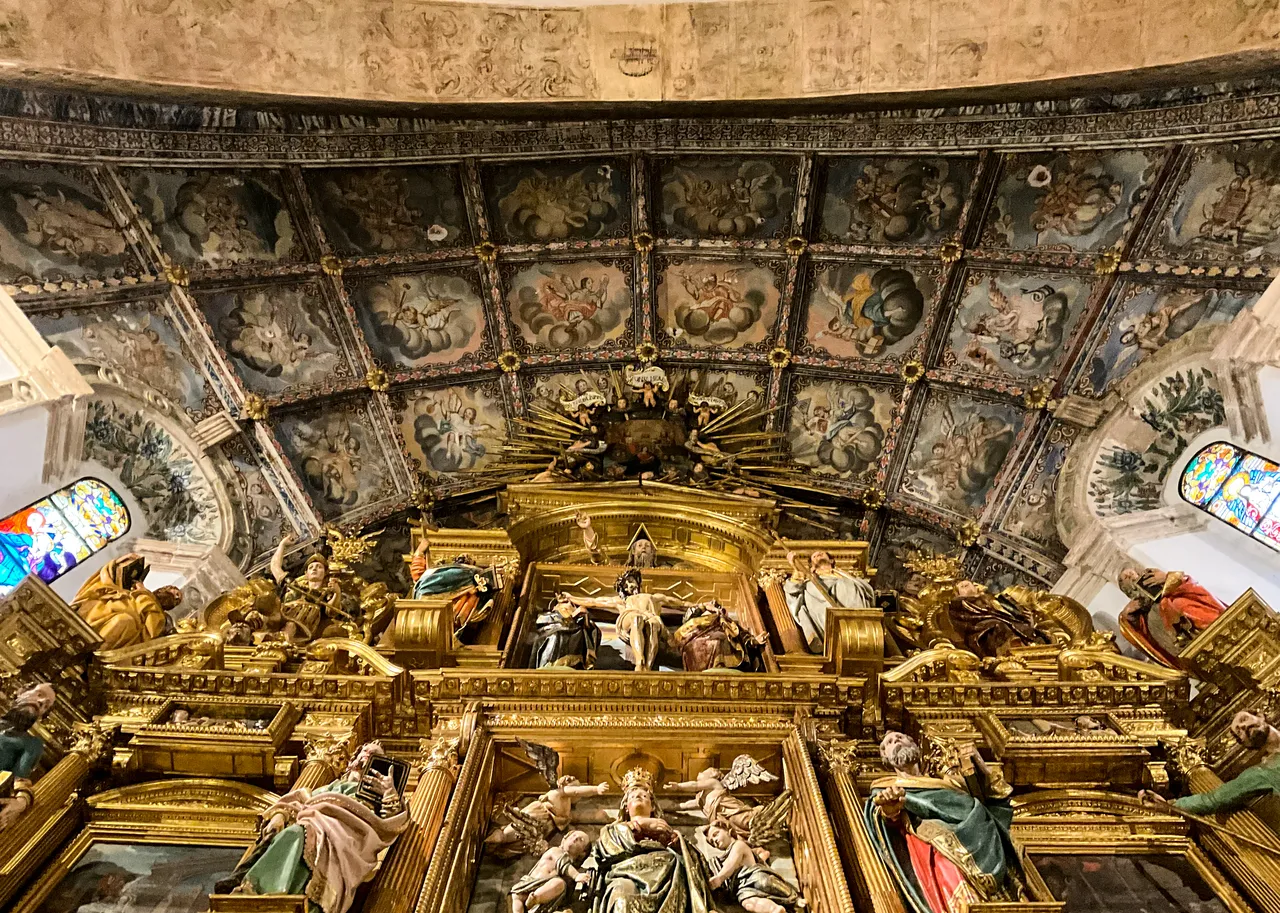
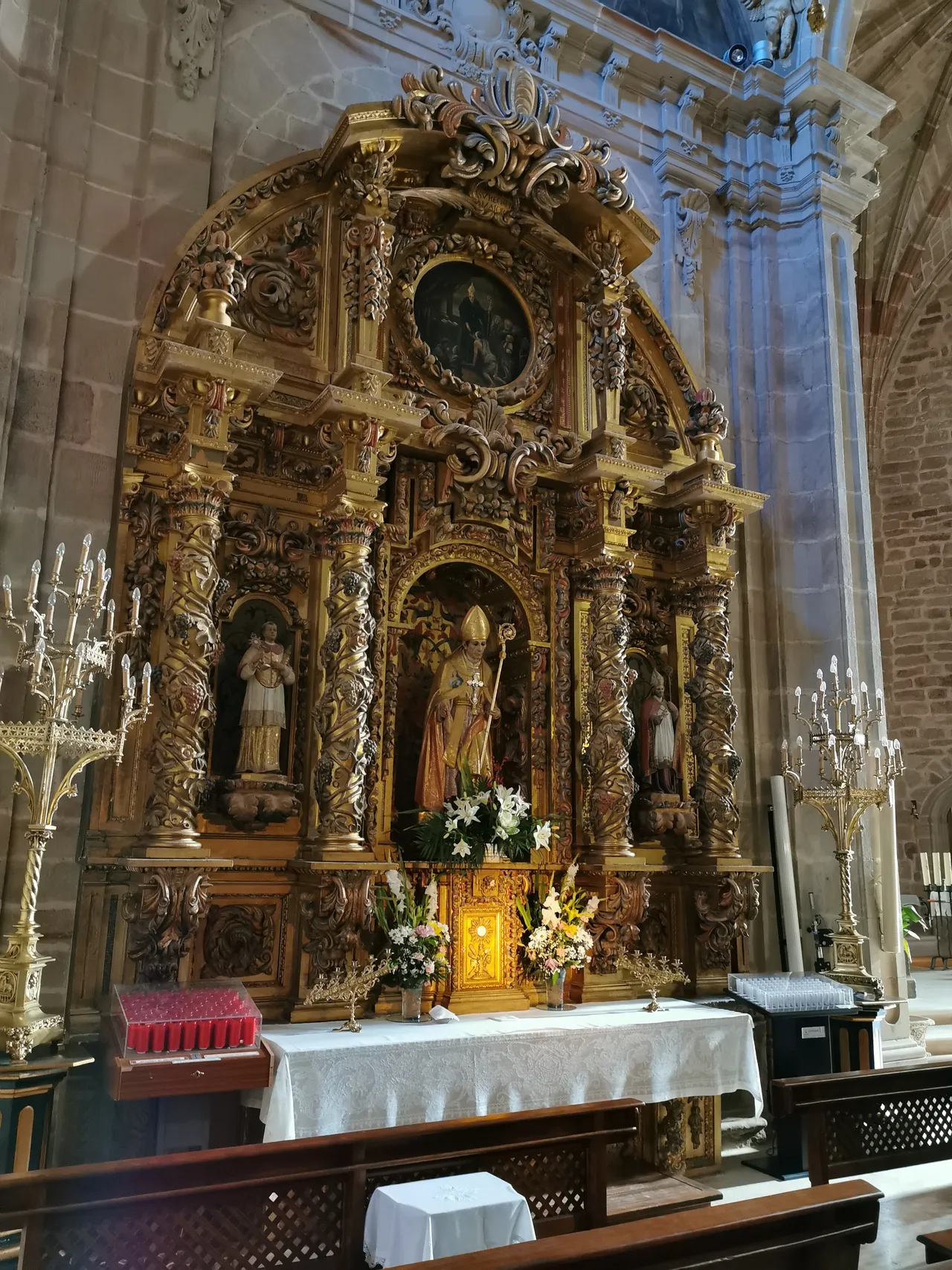
The most remarkable Baroque altarpiece in the region. The Church of Our Lady of the Elms, a Site of Cultural Interest, houses two gilded and polychrome wooden altarpieces in the Baroque style, dedicated to Saint Jerome the Penitent and Saint John the Baptist. These were created between 1759 and 1762 by Cristóbal García Hidalgo, a master woodcarver from Torre de Juan Abad, who also crafted the sacristy's cabinetry, carved from wood and featuring highly interesting ironwork. The 18th-century murals on the vault of the High Altar and those on the pilasters and pendentives of the transept complete the Baroque interior. All this Baroque decoration coexists with the Mannerist altarpiece by Francisco Cano (1581-1607) and the historic organ by Gaspar de la Redonda Zeballos (1763), forming one of the richest religious interiors in the region. Just a few meters away, the Quevedo House-Museum —in the house that belonged to his mother, now converted into a museum— recalls the presence of the great writer of the Spanish Baroque in this town, whose lordship he held between 1620 and 1645.
Stop 6. Church of Santa Ana and Christ of Mercy – Castellar de Santiago
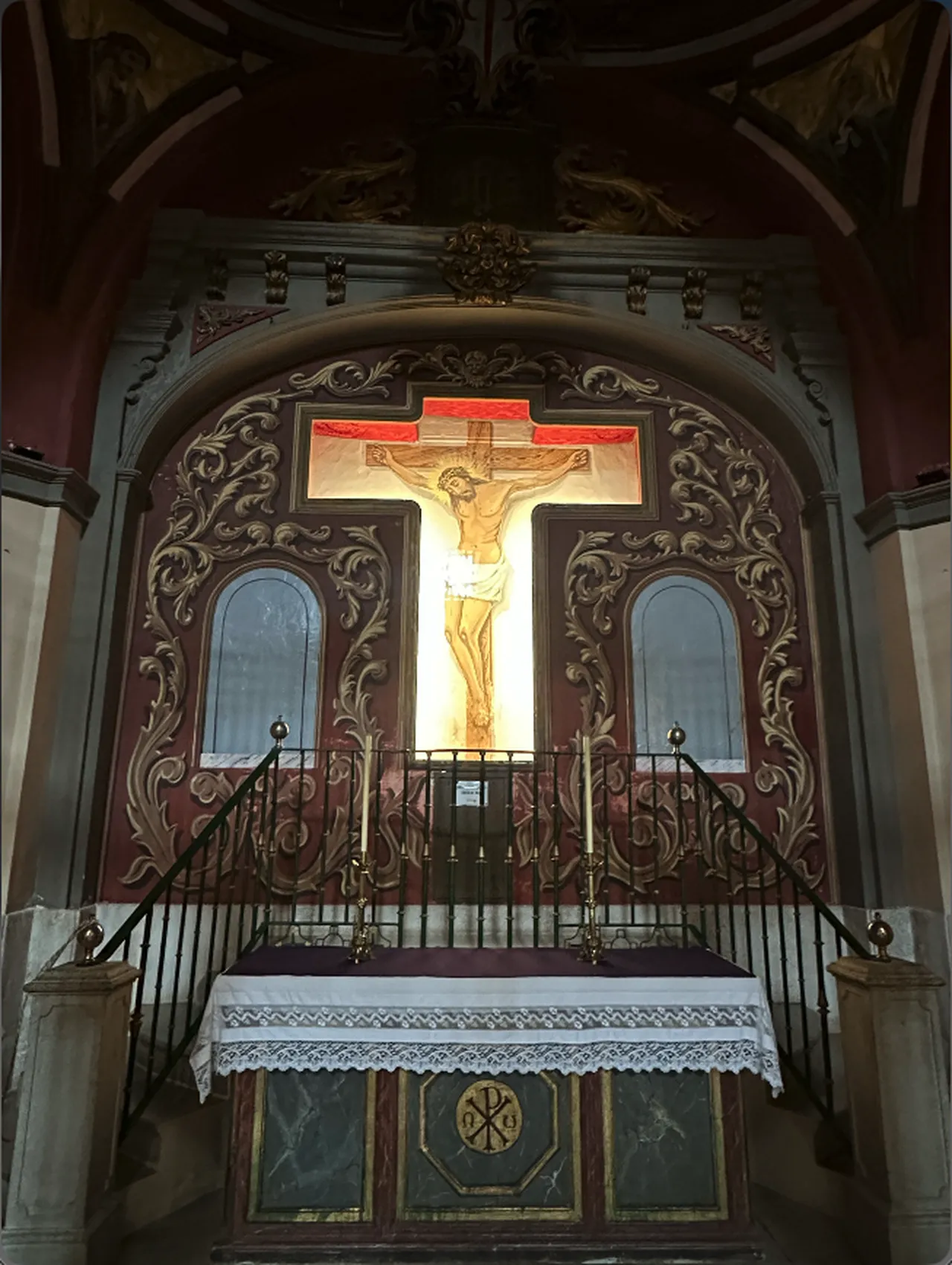
The grand finale: the magnificent Baroque image of the Campo de Montiel. The Parish Church of Santa Ana in Castellar de Santiago, built in the mid-16th century following the influence of the Herrerian style of El Escorial, houses in its chapel the most moving Baroque jewel of the route: the Christ of Mercy, patron saint of the town, a superb carving in Cuenca pine wood commissioned in 1619 by the clergyman Pedro Abarca from the Toledo master Giraldo de Merlo for 850 reales and delivered in 1620. Giraldo de Merlo, the same sculptor who created the altarpiece of the Cathedral of Our Lady of Prado in Ciudad Real, crafted in this image one of the most expressive and popularly revered Christs of the Campo de Montiel, an example of the transition from Renaissance to Baroque in religious imagery. The Baroque facade of the church, completed in 1680 according to the inscription on its keystone, with two sections, Tuscan columns, a niche under a semi-spherical dome and a brick cornice topping, completes the interest of the temple.
Practical information
📍The sunny side
Meeting point:
Church of Santa Catalina, Plaza Mayor, s/n, 13240 La Solana (Ciudad Real)
Contact City Hall and Tourism:
Tel: 926 632 500
Web: lasolana.es
The church is open to the public, respecting worship times. Bell tower: please check with the Town Hall for access information.
📍San Carlos del Valle
Meeting point:
Church of the Holy Christ of the Valley, Plaza Mayor, s/n, 13192 San Carlos del Valle (Ciudad Real)
Tourist Office Contact:
Tel: 926630280
Web: sancarlosdelvalle.com/turismo
Mail: ofitursancarlosdelvalle@outlook.es
Free access respecting worship hours
📍Villanueva de los Infantes
Meeting point:
Plaza Mayor, s/n, 13320 Villanueva de los Infantes (Ciudad Real)
Tourist Office Contact:
Tel: 926 361 321
Email: turismo@infantes.org
Web: tourismvillanuevadelosinfantes.es
Church of San Andrés: free access respecting worship times. Guided tours of the historic site are available; please inquire at the Tourist Office.
📍Montiel
Meeting point:
C/Diputación, 8, 13326 Montiel C. Real
Contact Montiel Town Hall:
Web: montiel.es
Tel: 926353031
Mail: administracion@ayuntamientodemontiel.es
📍Tower of John the Abbot
Meeting point:
Church of Our Lady of the Elms, Plaza de la Iglesia, s/n, 13344 Torre de Juan Abad (Ciudad Real)
Contact:
Town Hall Tel.: 926 383807
Mail: administracion@torredejuanabad.es
Free access respecting religious practices.
📍Quevedo House-Museum
Schedule:
Winter:
Wednesday to Friday: from 10:00 to 14:00 and from 17:00/18:00
Saturdays: from 11:00 to 14:00 and from 17:00 to 19:00
Summer:
Wednesday to Friday: from 10:00 to 14:00 and from 17:30/18:30
Saturdays: from 11:00 to 14:00 and from 18:00 to 20:00
📍Castellar de Santiago
Meeting point:
Church of Santa Ana, C/ Ermita, 5, 13340 Castellar de Santiago (Ciudad Real)
Contact City Hall:
Tel: 926 340 001
Web: castellardesantiago.com
Mail: mayora@castellardesantiago.es
Free access respecting worship hours
♿ Accessibility:
The nature of these historical tourist resources limits accessibility for people with reduced mobility.
Emergencies: 112
Civil Guard: 062
La Solana Health Centre: 926 632 618
Villanueva de los Infantes Health Centre: 926 361 065
Torre de Juan Abad Health Centre: 926 376 019
Castellar de Santiago Health Centre: 926 340 001
Points of interest on this route
Order of Santiago Barracks, C. Cervantes, 11, Villanueva de los Infantes
C. Don Tomás the Doctor, 42, Villanueva de los Infantes
C. Santo Tomás, 39, Villanueva de los Infantes
C. Ramón Herrera, 3, Villanueva de los Infantes
Dr. Alberdi Square, Villanueva de los Infantes
C. Cervantes, 12, Villanueva de los Infantes
C. Quevedo, 36, Torre de Juan Abad
C. Rey Juan Carlos, I, 19, 13320 Villanueva de los Infantes, Ciudad Real
C. Ramón Herrera, 3, Villanueva de los Infantes
C. Cervantes, 18, Villanueva de los Infantes
C. Cervantes, 18, Villanueva de los Infantes
Montiel
C. Ramón y Cajal, 12, Villanueva de los Infantes
C. San Antón, 1, Torre de Juan Abad
Plaza Mayor, 1, Villanueva de los Infantes
Church Street, 1, Montiel
C. Ermita, 5 Castellar de Santiago
Plaza Mayor, 9, La Solana
San Carlos del Valle
Main Square, San Carlos del Valle
Municipalities on the route
926 340 001
https://castellardesantiago.com
castellardesantiago@castellardesantiago.es
926 63 10 11
https://www.lasolana.es/
ayuntamiento@lasolana.es
926 353 031
https://ayuntamientodemontiel.es
administracion@ayuntamientodemontiel.es
926 630 011
https://sancarlosdelvalle.es
ayuntamiento@sancarlosdelvalle.org
926 383 001
https://torredejuanabad.es/
administracion@torredejuanabad.es
926 360 024
https://infantes.org
info@infantes.org
Other routes
Discover other nearby routes that may also interest you
Route of the castles of the Order of Santiago
Following the Christian victory at Las Navas de Tolosa (1212), the Order of Santiago was tasked with repopulating and defending the Campo de Montiel region against Almohad incursions from the south. To this end, they established a defensive system of over thirty fortresses scattered throughout the area, comprised of watchtowers and large castles such as the Castle of La Estrella de Montiel and Montizón Castle in Villamanrique. This two-day route explores the most significant military sites, following the same arc...
Distance
130 km
Duration
2 days
Difficulty
Moderate
Municipality
Several
Mixed
Agoras
The Campo de Montiel region offers three lively meeting places that invite you to sit and enjoy the moment, making it truly difficult to leave. These are the town squares of La Solana, San Carlos del Valle, and Villanueva de los Infantes.
Distance
40 km
Duration
1 day
Difficulty
Easy
Municipality
Several
Don Quixote's Trail through the Ruidera Lakes
In chapters XXII through XXIV of Part Two of Don Quixote, Cervantes sends Don Quixote of La Mancha, accompanied by Sancho Panza and a student who is a cousin of the skilled licentiate, to descend into the Cave of Montesinos. There, the knight dreams that he finds the characters of the Carolingian ballads enchanted by the wizard Merlin, and that the Lady Ruidera, her seven daughters, and two nieces have been transformed into the lagoons that bear her name, while her squire, Guadiana, has become a river. This route continues...
Distance
35 km
Duration
1 day
Difficulty
Easy
Municipality
Ruidera and Ossa
Golden Age Literature
The Campo de Montiel region was the birthplace and refuge of the leading authors and figures of Spanish Golden Age literature. Therefore, we propose a route that includes the main locations where history continues to unfold even today.
Distance
43 km
Duration
2 days
Difficulty
Easy
Municipality
Several
Mixed
Starry skies
The Campo de Montiel, a Starlight Destination, offers high-quality skies and astronomical viewpoints in Alhambra, Villahermosa and Ruidera to enjoy stargazing tourism.
Distance
40 km
Duration
1 day
Difficulty
Easy
Municipality
Several
Renaissance Art Route
The Campo de Montiel region boasts one of the most remarkable collections of Renaissance architecture and visual arts in Castilla-La Mancha. Throughout the 16th century, the economic prosperity fostered by the Order of Santiago and a flourishing local nobility financed churches, Plateresque portals, Mannerist altarpieces, and stately homes that still stand as the most visible testament to the region's splendor. It was also in this landscape that Fernando Yáñez de Almedina, a direct disciple of Leonardo da Vinci, was born.
Distance
75 km
Duration
1 day
Difficulty
Easy
Municipality
Several

© Campo de Montiel - 2026